
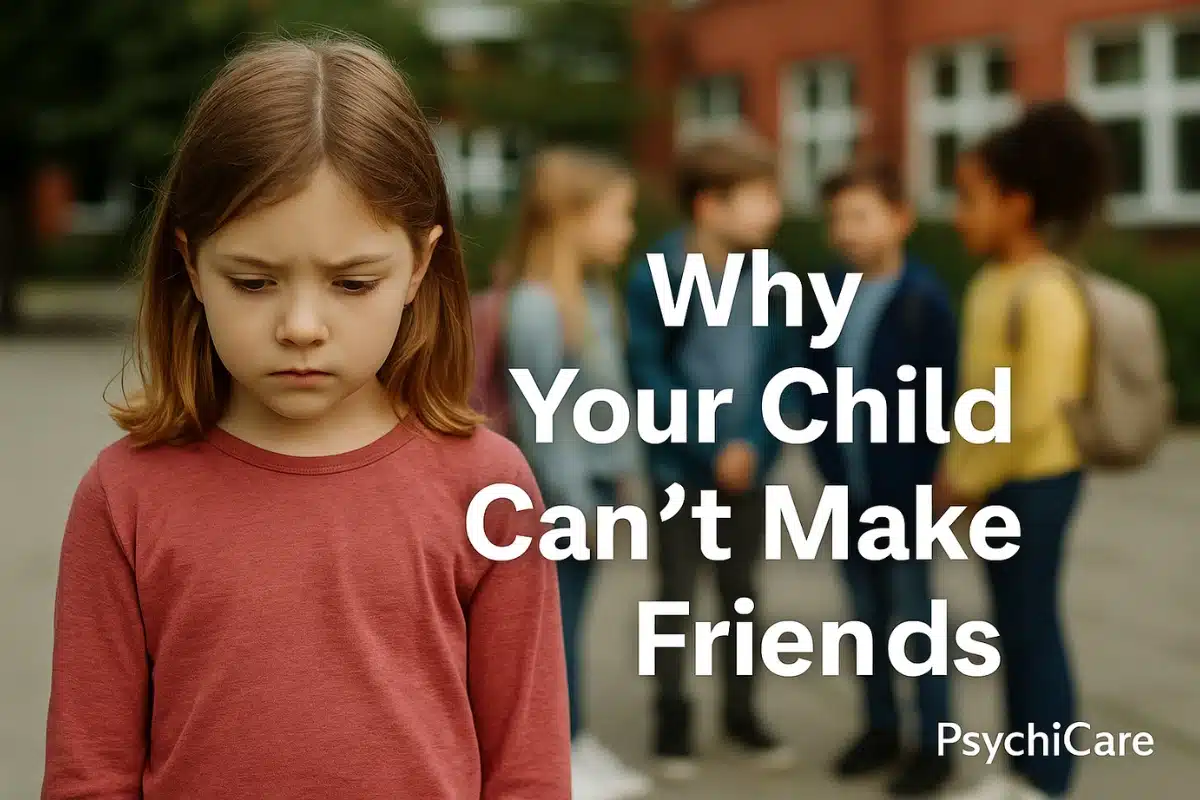
Why does my child struggle to make friends?
Why is it so easy for other kids to connect, but mine always ends up alone? What if they never find their people?
If you’ve been asking these questions, you’re not alone.
Some kids make friends without even trying. Others really want to connect, but something just doesn’t click. They might be kind, smart, and funny at home, but still come back from school saying, “I played by myself today.”
It’s hard to watch, and even harder to figure out why it’s happening. Is it just a phase? Is my child shy? Are they being left out? Or is there something deeper going on, like anxiety, ADHD, or feeling different?
This guide is here to help. Not with quick fixes or pressure, but with real signs to look for, honest reasons some children struggle socially, and ways you can support your child without forcing friendships or making them feel like something’s wrong with them.
Whether you have a 6-year-old, an 11-year-old, or a child in Reception who’s struggling to make friends, the worry is real and valid.
Not all kids will say, “I feel left out.” Some won’t say anything at all. But if you’re watching closely, the signs are there.
They eat lunch by themselves. They’re always the ones walking alone after class. They say they like playing alone, but you can tell they’re just used to it.
These aren’t big red flags. They’re quite clues.
Some children who struggle to make friends won’t cry or complain. They’ll just stop trying. They might hover near a group but never join in. They might pretend not to care when they don’t get invited to birthday parties. They may even act like they prefer being alone, but deep down, they don’t.
These small moments matter. They’re often your child’s way of saying, “I want connection, but I don’t know how to get it.”
A lot of people say, “They’re just shy. Give it time.”
But if you’re a parent, you know when something feels off. It’s not just about being quiet. It’s when your child freezes up when someone says “hi.” Or talks nonstop about Minecraft but goes completely blank when asked what someone else’s name is. Or clings to adults at birthday parties even though they’re in Year 4.
Let’s talk about what I actually see in real sessions, the stuff that doesn’t show up in neat parenting lists.
One boy told me, “I walk near them and just wait. If no one talks to me, I leave.” To adults, it looks like he’s avoiding others. But to him, not being invited in is a clear “no.”
I worked with a girl who could name every planet and its moon but didn’t know how to ask someone, “Want to play?” When her classmates didn’t respond to her long space facts, she said, “No one wants to talk to me.” She wasn’t trying to dominate the conversation; she just didn’t know what shared talking felt like.
Some kids seem fine at school but come home completely drained. I had an 11-year-old who said, “I smile all day so people won’t think I’m weird. Then I’m too tired to talk at home.” To her teachers, she was “well-behaved.” To her, she was barely surviving the social pressure.
One boy I saw laughed when other kids got hurt, not because he was cruel, but because he was nervous and didn’t know what to do. That one moment labeled him as “mean,” and he got left out after that. He had no idea why.
I hear this a lot: “I’m not a friendly person.” “Nobody likes me.” “Other kids think I’m weird.” When kids say this, they’ve usually been trying quietly, in their own way, and it hasn’t worked. So now they’ve shut the door to avoid more disappointment.
So, no it’s not always shyness. Sometimes it’s fear, exhaustion, missed cues, or old pain that no one noticed. And when we treat every quiet kid like they’re “just shy,” we miss what’s really going on.
You’ve probably said it. Or heard it. “Just go say hi.” “Just ask to join in.” “You’ll make friends if you try.”
But for kids who are already struggling, “just talk to them” sounds like telling someone with a broken leg to “just walk.” It’s not about effort. It’s about not knowing how or being too scared to try again after failing.
I worked with a boy who struggled to start conversations. So we made a game: He had to say one friendly thing to someone in his class that week. Just one. Do not make a friend, just plant the seed. We called it “Friend Experiments.” No pressure. Just test-and-see.
Try this:
The point isn’t memorizing, it’s feeling less blank in the moment.
A parent I worked with helped her son bring two Beyblades to school and say, “Want to battle?” That was the beginning of his first real friendship.
Instead, say things like:
Connection grows from safety, not pressure.
One mom told me, “After every birthday party, my son goes quiet for hours. Now we schedule nothing else that day. That helps him want to go again next time.”
This is one of the most common questions I get: “Should I be worried that my child doesn’t have friends?”
And here’s what I always say: Worry isn’t the problem, silence is.
If a child is struggling emotionally, not just socially, that’s when we pay closer attention. Not to panic, but to gently step in with support.
Let’s be honest, most advice out there sounds great… until you try it with your own kid and it totally backfires.
Your child isn’t a checklist. And if they’re struggling to make friends, they don’t need “fixing.” They need support that fits them, how they think, how they feel, and how they move through the world.
“He stands near the kids but doesn’t join in. When I ask why, he says, ‘I’m waiting for them to invite me.’”
What helped: He started bringing two of his favorite toy cars to school. One for him, one to offer. He didn’t have to say much. The cars did the talking.
“She always comes home saying, ‘I don’t get it, why don’t they want to play with me?’”
What helped: We practiced a simple game at home: “Wait 3 Mississippis before talking.” At school, she found a lunch buddy with similar energy, and it clicked.
“My daughter hangs out with her teachers more than with kids. She says other kids are loud and silly.”
What helped: They found a chess club where things were quieter and more structured. She started bonding over strategy instead of small talk.
“My son started faking a ‘funny voice’ to make other kids laugh because otherwise they ignored him.”
What helped: They joined a science club. We also worked on helping him “meet others halfway” without changing who he was.
New environments can feel like starting from scratch. Try setting up casual meet-ups outside school library events, birthday parties, or playdates with one peer at a time.
Sometimes we say things to encourage our kids, but it backfires.
To an anxious child, this sounds like: “You’re the problem.”
They don’t. And your child knows it.
They’re already trying. You just can’t see it.
It is. To them, it is.
That sensitivity is part of their strength.
If your child is struggling to make friends, it doesn’t mean you failed as a parent.
Some kids are wired differently. Some get left out because they don’t fit the mould. Some just need more support than others and that’s not a reflection of your parenting. It’s just the truth of who they are right now.
And if you’re worried, you’re already doing the most important thing: you care enough to look for answers.
And just so you know, kids do change. With the right support, many learn to connect in their own way, at their own pace. It might not look like everyone else’s path, but that doesn’t make it any less meaningful.
Book An Appointment For Online Child Counselling
Your child may struggle to make friends due to social anxiety, communication difficulties, low self-esteem, or not yet finding peers who understand them. Each child’s social journey is unique.
Yes, it is normal for kids to struggle with friendships, especially during transitions like starting school or moving. Some children take longer to develop social confidence.
If your child has no friends, start by creating low-pressure opportunities to socialize, like one-on-one playdates or shared hobbies. Encourage without forcing and validate their feelings.
Your son may struggle to make friends due to emotional sensitivity, hyperactivity, or discomfort in group settings. Understanding his temperament helps in offering the right support.
Yes, a child with ADHD or autism can make friends with the right environment and support. Smaller groups, structured settings, and shared interests often help build connections.
If your child is struggling socially, signs may include always playing alone, avoiding group activities, not talking about classmates, or dreading school.
You should worry about your child’s social skills if they seem persistently lonely, express self-doubt like “no one likes me,” or avoid any kind of social interaction.
Only children don’t always struggle to make friends, but some may be more used to adult interactions and need extra support navigating peer group dynamics.
It’s okay if your child prefers playing alone, as long as they appear emotionally content. If they seem isolated or upset, it may signal a deeper issue.
Yes, many children grow out of friendship struggles as they develop better emotional awareness and social confidence. Early support can ease this process.
Imagine suddenly feeling a tight, twisting sensation in your stomach that makes it hard to…
Constipation is a common digestive problem that affects millions of people worldwide. Many wonder if…
Broken bones, or fractures, are common injuries that can range from minor hairline cracks to…
A blood clot in the leg, also known as deep vein thrombosis (DVT), can be…
A fever is your body’s natural response to infection, signaling that your immune system is…
The respiratory system is one of the most essential systems in the human body, responsible…

