
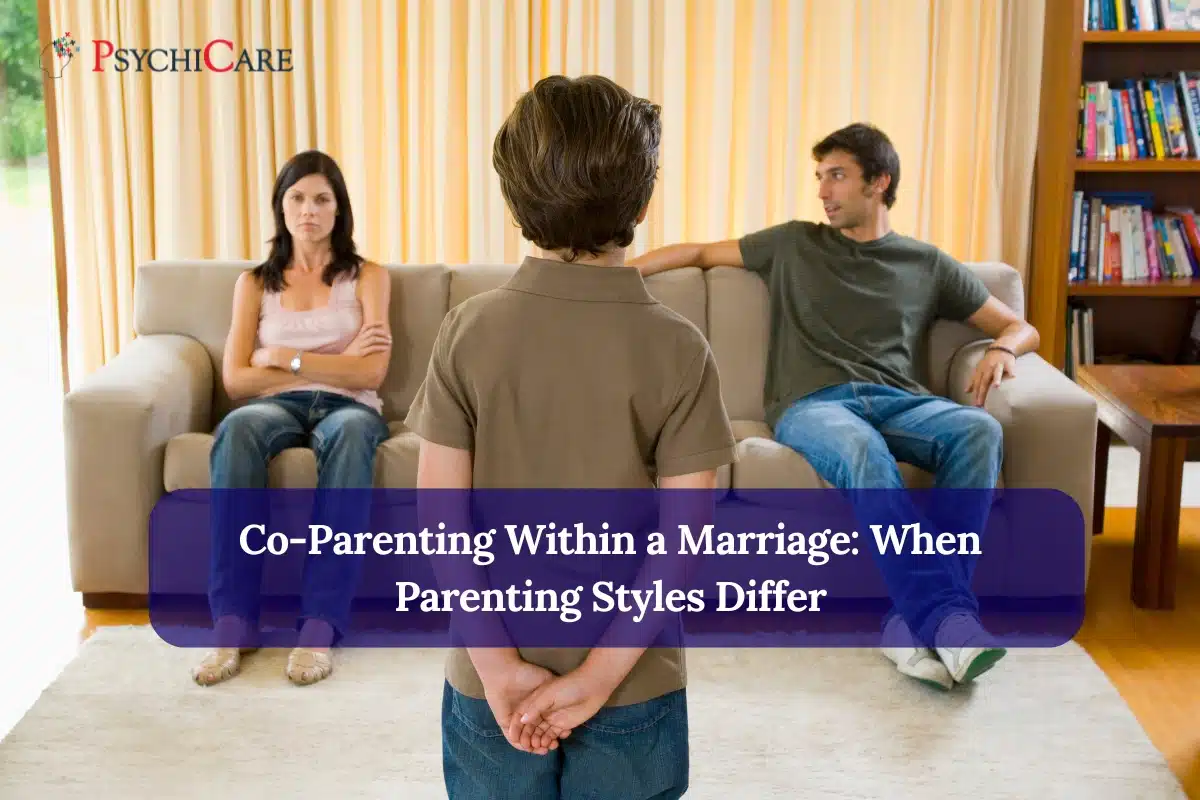
You love your child. You love your partner. But parenting together? That part feels hard.
Maybe one of you is stricter, the other more relaxed. Maybe you clash over discipline, routines, or what “good parenting” even means. You’re not on opposite sides but it sure feels that way sometimes.
This article is for couples trying to co-parent within a marriage when their styles don’t match. We’ll talk about why it happens, how it affects your relationship, and what to do when it starts to wear you down.
You’re not alone. And you don’t have to keep parenting like you’re on different teams.
One of you believes in firm rules and routines. The other is more relaxed, “let kids be kids.” One says no screen time, the other hands over the tablet just to get through dinner. Sound familiar?
These differences aren’t random. They usually come from how we were raised, what we feared as kids, or what we’re hoping to give our children now.
There are four common parenting styles:
Most couples don’t sit down and pick a style, it just shows up. And that’s where the tension begins. What feels “normal” to one parent can feel harsh, lazy, or confusing to the other.
This isn’t about one person being wrong. It’s about unspoken expectations clashing in real time, usually when you’re tired, stressed, and just trying to make it to bedtime.
So what does co-parenting look like when your styles don’t match? Sometimes it’s a compromise. Sometimes it’s a conflict. But at its best, it’s two people learning how to work together even when they don’t always agree.
Parenting isn’t just about rules, it’s about identity. How you parent is often shaped by how you were parented, what scared you as a child, or what you swore you’d do differently.
So when your partner disagrees with your approach, it can hit deep. It’s not just “I don’t like that rule.” It feels like, “I don’t trust you as a parent.” Or worse, “You’re doing it wrong.”
That’s why parenting conflict in marriage can feel so emotional. It’s rarely just about bedtime or discipline; it’s about feeling seen, respected, and included.
Sometimes it goes a step further into something called parental gatekeeping when one partner takes over, criticises, or dismisses the other’s way of parenting. This can look like:
Even if it’s unintentional, this kind of dynamic can lead to resentment, emotional distance, and power struggles especially if one parent feels shut out or constantly judged.
This is what co-parenting with a difficult person can look like, but sometimes, the “difficult” part is just unspoken fear or miscommunication. Naming it is the first step toward fixing it.
Parenting disagreements usually explode in the worst moments during a tantrum, right before bed, or after a long day. That’s the worst time to try and fix anything.
Talk when things are calm, not in the middle of the conflict. Pick a quiet moment, no distractions, no kids around and make it clear this isn’t about blame.
Use language that brings you closer, not language that pushes your partner away.
Say things like:
Avoid “you always” or “you never.” That kind of talk turns a disagreement into a personal attack. Instead, try phrases that centre shared values, like:
Communication in parenting takes practice, especially when you’re tired, stressed, and running on fumes. But the more you focus on your shared goals instead of each other’s flaws, the easier it gets.
Sometimes, no matter how many talks you’ve had, the gap stays wide. That’s not uncommon but it can take a toll on your marriage.
You’re not weak for needing help.
Therapy doesn’t mean you’re failing; it means you’re trying to break the cycle.
Even one session can change how you communicate. And if your partner isn’t open to it, going solo still gives you tools to protect your peace and your parenting.
You don’t have to parent exactly the same way to raise a happy, secure child. What matters most is that your child sees respect, connection, and consistency between the two people raising them.
That’s what conscious co-parenting looks like, not perfect parenting, but intentional parenting. Choosing to be present. Choosing to talk things out instead of shutting down. Choosing to work together, even when it’s hard.
At the end of the day, kids don’t need identical rules from both parents; they need to feel like their home is emotionally safe. That’s where resilience, trust, and emotional strength begin.
Need help making co-parenting work in your marriage?
Talk to a licensed therapist at PsychiCare today.
Real support. Real solutions. No judgment.
Imagine suddenly feeling a tight, twisting sensation in your stomach that makes it hard to…
Constipation is a common digestive problem that affects millions of people worldwide. Many wonder if…
Broken bones, or fractures, are common injuries that can range from minor hairline cracks to…
A blood clot in the leg, also known as deep vein thrombosis (DVT), can be…
A fever is your body’s natural response to infection, signaling that your immune system is…
The respiratory system is one of the most essential systems in the human body, responsible…

