
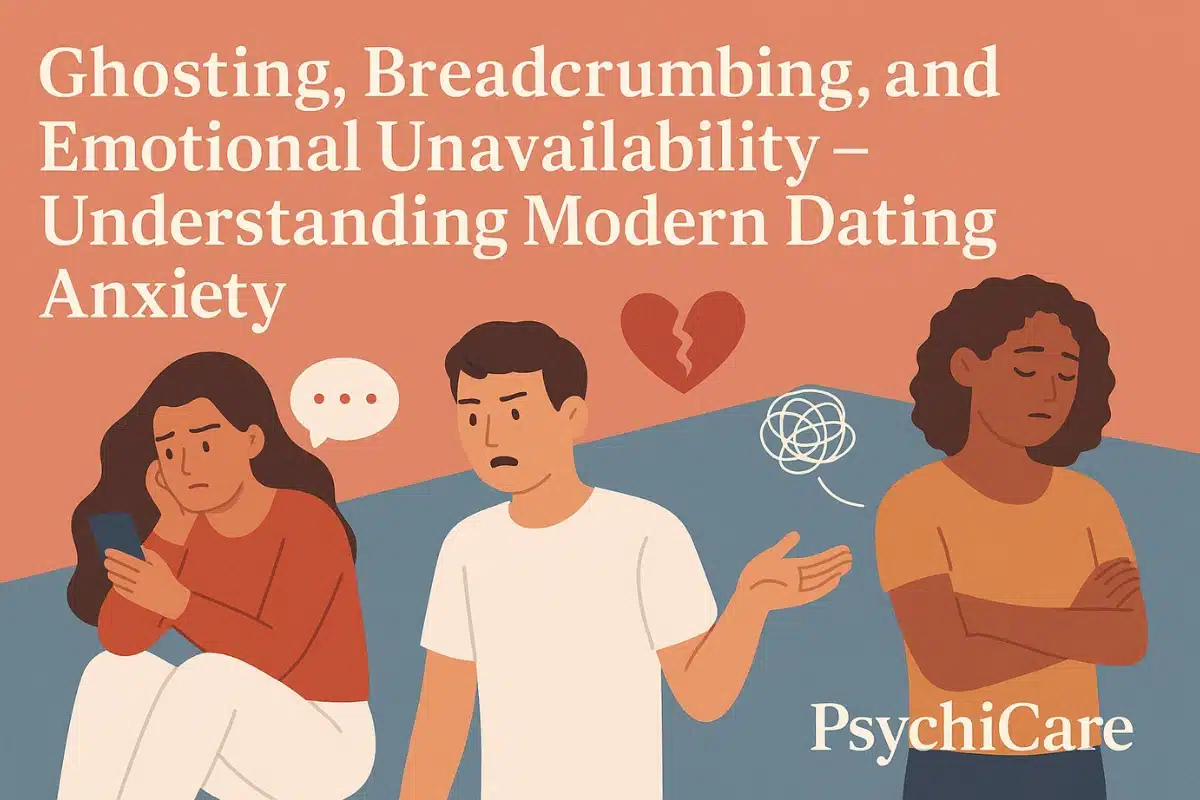
Dating in 2025 feels harder than ever. People disappear without a word, send mixed signals, or stay emotionally closed off. And all of this is leaving people anxious and tired of dating.
Research shows 44% of people say ghosting affects their mental health for a long time. It can trigger overthinking, anxiety, and even depression. No wonder many singles are stepping away from dating apps.
Gen Z especially feels burnt out. Almost 4 in 10 under 30 say they don’t want to date anymore because of ghosting and “situationships.” For them, dating feels less exciting and more like emotional stress.
These behaviors may look casual, but they cut deep. Psychologists say ghosting and breadcrumbing trigger old fears of rejection and abandonment. That’s why the pain feels so heavy even when the relationship wasn’t serious.
In this article, we’ll talk about what ghosting, breadcrumbing, and emotional unavailability really mean. We’ll look at why they hurt, how they shape modern dating, and what you can do to protect your mental health.
Ghosting is when someone suddenly cuts off all contact. No text, no call, no explanation. One moment you’re talking, and the next, it’s silence.
It happens a lot in online dating. People swipe, chat for a while, maybe even go on a few dates, and then vanish. It leaves you confused, wondering what went wrong.
Studies show ghosting feels worse than a clear rejection. Why? Because your brain doesn’t get closure. You’re stuck replaying every detail, asking yourself if you did something wrong.
For some, ghosting brings old wounds to the surface. If you’ve struggled with rejection or abandonment before, ghosting can hit especially hard. That’s why it can trigger anxiety and even depression.
And here’s the truth: ghosting isn’t about you. Most of the time, it’s about the other person’s fear of being honest or their inability to deal with conflict. Knowing that can help you take it less personally.
Breadcrumbing is when someone gives you small bits of attention but avoids real commitment. They keep you hanging on with “maybe” energy, but nothing solid ever happens.
It could be a random text, a like on your story, or a promise to meet up that never becomes real. These little crumbs feel like progress, but they only leave you waiting.
The danger is that breadcrumbing traps you in limbo. You don’t move forward, but you also can’t fully walk away. That uncertainty fuels stress and anxiety.
Psychologists note that breadcrumbing can hurt even more than ghosting. Ghosting ends the story. Breadcrumbing keeps you hooked on false hope.
Emotional unavailability is when someone avoids real closeness. They may talk, laugh, and even spend time with you, but they don’t open up or let you in. It feels like there’s a wall you can’t break through.
This isn’t always intentional. Sometimes it comes from past trauma, fear of commitment, or even childhood patterns. But for the person on the receiving end, it often feels like rejection.
Over time, emotional unavailability can create anxiety, sadness, and even depression. You keep giving more, but the other person keeps pulling away.
Ghosting doesn’t hit everyone the same way. Men and women often experience it and react to it very differently. This comes from a mix of social expectations, communication styles, and even how we’re taught to handle emotions.
Research shows women report being ghosted more often than men. They also tend to feel the pain more deeply, often blaming themselves or replaying the story to find answers. Men, on the other hand, are more likely to ghost and more likely to hide their feelings when it happens to them.
For both genders, ghosting creates stress. But the way it shows up can look very different.
Ghosting and breadcrumbing don’t come out of nowhere. Many of these patterns start in childhood. The way we learned about love, trust, and safety as kids often shapes how we connect as adults.
If a child grew up with distant or unpredictable caregivers, they may learn to avoid closeness. Later in life, this can show up as emotional unavailability or ghosting. On the other hand, kids who felt abandoned may grow into adults who cling to relationships, even when they’re unhealthy.
Psychologists call this attachment style and it explains a lot about why some people ghost and why others struggle so much when it happens.
Ghosting and breadcrumbing may look like small acts. But emotionally, they cut much deeper. They leave people stuck in confusion, overthinking, and self-doubt.
Studies show 44% of adults say ghosting has long-term effects on their mental health. Research in 2025 also links these behaviors to higher paranoia, depression, and anxiety, especially for people with anxious or avoidant attachment styles.
Over time, these patterns don’t just hurt your dating life. They can spill into your confidence, friendships, and even your work.
For some, the pain of ghosting or breadcrumbing can even trigger sexual anxiety or intimacy struggles. When someone repeatedly pulls away, your brain starts linking closeness with fear.
Yes, there is. Ghosting and breadcrumbing don’t just hurt your heart. They can also affect how safe and confident you feel in intimacy.
When someone disappears after closeness, your mind links sex with rejection. That can make you pull back or overthink in future relationships.
You don’t have to deal with the pain of ghosting alone. Therapy gives you a safe space to talk, process, and rebuild trust in yourself.
Psychologists can help you see the patterns clearly. They show you that ghosting is not about your worth; it’s about the other person’s struggles.
Talking to a professional takes the weight off your shoulders. It helps you move from confusion and pain to clarity and healing.
Different therapies can help you heal from the anxiety and self-doubt these experiences create. Each one works in a slightly different way, but the goal is the same: helping you feel secure again.
Working with a therapist gives you tools to process the hurt, set boundaries, and build healthier connections moving forward.
Dating culture is shifting. People are tired of games, mixed signals, and disappearing acts. More singles now want honesty, transparency, and emotional safety.
Gen Z is leading this change. Nearly 4 in 10 under 30 say they’ve stepped back from dating because of ghosting and “situationships.” Many prefer slower, intentional connections instead of endless swiping.
The future of dating may still be messy, but it’s moving toward more conscious, emotionally healthy connections.
At PsychiCare, we know how painful ghosting, breadcrumbing, and emotional unavailability can feel. These aren’t just dating struggles; they touch your mental health, your self-esteem, and your hope for real connection.
Our team of PhD and RCI-licensed psychologists has worked with thousands of people worldwide facing the same challenges. With over 500+ positive reviews, we’re trusted for offering therapy that is professional, compassionate, and effective.
Whether you’re coping with rejection, anxiety, or intimacy issues, we’re here to guide you. Every session is private, judgment-free, and designed to help you heal, grow, and feel in control again.
👉 Take the first step today. Book your online session with PsychiCare and talk to an expert who truly understands.
Imagine suddenly feeling a tight, twisting sensation in your stomach that makes it hard to…
Constipation is a common digestive problem that affects millions of people worldwide. Many wonder if…
Broken bones, or fractures, are common injuries that can range from minor hairline cracks to…
A blood clot in the leg, also known as deep vein thrombosis (DVT), can be…
A fever is your body’s natural response to infection, signaling that your immune system is…
The respiratory system is one of the most essential systems in the human body, responsible…

