
Updated: October 2025 · Reviewed for accuracy and improved with current clinical context.
If you’ve ever struggled to get aroused, lost the mood halfway, felt pain during sex, or simply thought, “Why don’t I enjoy sex anymore?” – that’s sexual dysfunction. It’s far more common than most people admit, and it’s not just about the body. It affects how you see yourself, how you connect with your partner, and how safe intimacy feels in your relationship.
Globally, 31% of men and 43% of women will face some form of sexual dysfunction in their lifetime. In India, the numbers are even higher in many studies, between 22% and 76%, depending on the group studied. That means it’s not rare, and it’s not just happening to “other people.”
Here’s what that looks like in real life:
This guide is for you if you’re tired of wondering “what’s wrong with me,” or if you’re watching your relationship drift because of unspoken struggles in bed.
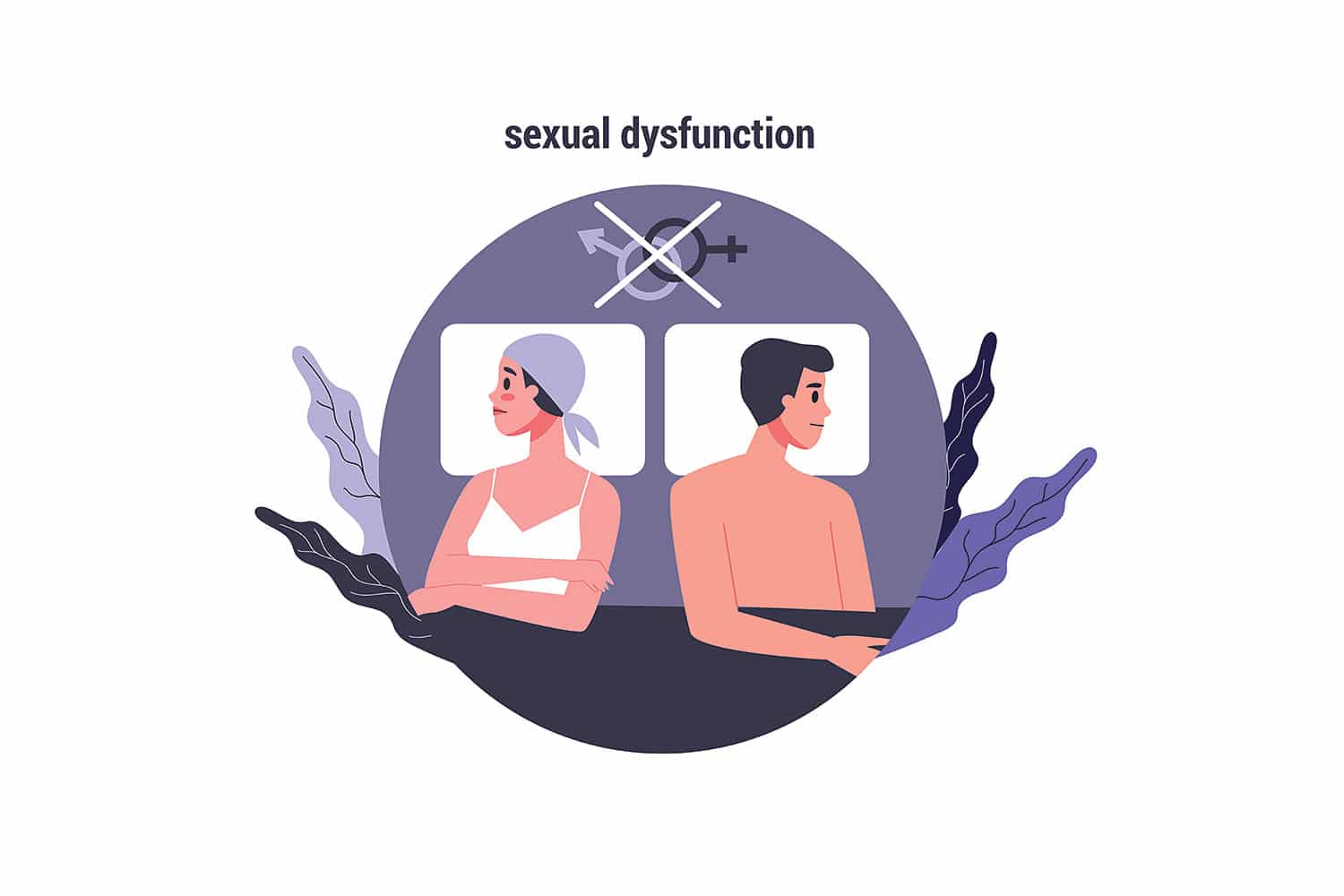
Sexual dysfunction is a repeated difficulty with sexual desire, arousal, orgasm, or pain during sex. It can affect both men and women at any age. Beyond physical problems, it often causes emotional distress, lowers confidence, and creates strain in relationships.
Sexual dysfunction isn’t about one off-night. It’s when sex repeatedly feels difficult, unsatisfying, or even painful. Over time, it stops being a source of connection and becomes a source of worry.
The most common forms include:
But there’s more to it than physical challenges. Many people experience what therapists call sexual distress, the emotional suffering that comes with the problem. You might feel anxious, ashamed, guilty, or even “broken.” In many cases, the distress ends up damaging the relationship more than the dysfunction itself.
Whether you call it “sexual dysfunction,” “sex problems,” or “sexual difficulties,” the experience is real. And while silence makes it worse, support and therapy can help rebuild both sexual well-being and emotional closeness.
Sexual dysfunction doesn’t look the same for everyone. Men and women experience it differently, and the impact often shifts with age, health, and life circumstances. Understanding this helps break the silence and shows you’re not alone if you’re facing it.
For men, the most common issues include:
These problems are often linked to stress, anxiety, or medical conditions like diabetes and high blood pressure. Younger men may notice performance anxiety or porn-related expectations creeping in, while older men are more likely to face erectile issues due to health changes.
For women, sexual dysfunction usually shows up differently:
Women often face unique triggers such as hormonal shifts (postpartum, perimenopause, menopause), stress from family or work, and in some cases, unresolved trauma.
Unlike men, where performance is often the focus, women tend to carry distress quietly, feeling guilt or self-blame when sex becomes difficult.
Despite the differences, one thing is common: the emotional impact. Men may feel “less masculine,” while women may feel “undesirable.” Both can lead to avoidance, silence, and distance in the relationship.
Sexual dysfunction doesn’t look the same for everyone. At different stages of life, it can appear in different ways, sometimes physical, sometimes emotional, sometimes both. The details may vary, but the feelings of frustration, worry, and silence are universal.
At this age, many people expect sex to feel natural and effortless. But for some, anxiety takes over – erections don’t last, climax comes too quickly, or sex feels tense instead of enjoyable.
For women, it may mean pain during sex, struggling to let go, or guilt about desire. Not everyone goes through this, but if you do, it can feel isolating because few people talk about it.
Responsibilities grow heavier – careers, marriages, and parenting. You might notice desire fading, or sex slipping into routine. For some, exhaustion, work stress, or family pressure overshadow intimacy.
New parents may find sex painful or feel disconnected from their partner. Not every couple faces this, but when it happens, it often feels like a hidden burden.
This is a stage where health and hormones start to shift. Some men find erections less reliable, while some women notice changes in arousal or comfort during sex.
Others may feel emotionally distant because life is so full of demands – children, ageing parents, financial worries. The form may differ, but the impact is often the same: sex feels harder to talk about.
Here, physical changes are more common – menopause for women, erectile changes for men. But the deeper struggle is often emotional: worrying about desirability, feeling that “sex is over,” or missing closeness with a partner.
Yet many couples also find this stage brings a chance to reconnect and explore intimacy in new, less pressured ways.
At this age, the body is usually healthy, but the mind often becomes the biggest barrier.
👉 In your 20s, dysfunction is rarely a medical issue. It’s more about stress, self-image, and silence.
Now the weight of responsibility shows up in the bedroom.
👉 In your 30s, dysfunction is usually the product of stress colliding with intimacy.
The physical body starts to demand attention here.
👉 Dysfunction here is usually a mix of health, hormones, and emotional disconnection.
Here, the changes are more visible and harder to ignore.
👉 In your 50s and beyond, dysfunction is often less about performance itself and more about identity, confidence, and connection.
Sex in your twenties is often painted as adventurous and carefree, but the reality can be very different.
👉 In your 20s, dysfunction often comes from emotional scars and performance pressure, not physical decline.
This stage brings both new joys and new pressures.
👉 In your 30s, dysfunction often reflects the collision of physical changes and emotional weight.
Here, hormonal changes and emotional shifts often overlap.
👉 Dysfunction here is usually a mix of hormones, stress, and long-standing emotional patterns.
Menopause reshapes the body, but the emotional impact often feels heavier.
👉 In your 50s and beyond, dysfunction is less about biology alone and more about confidence, self-image, and communication.
Sexual dysfunction often starts with small, frustrating changes that build up over time. Recognising the signs of sexual dysfunction early can help you seek support before it begins to harm your confidence or relationship.
For men, the body often gives clear signals:
👉 Many men with sexual dysfunction describe feeling anxious or “less masculine,” even though these problems are common and treatable.
In women, sexual dysfunction often shows up more quietly but can be just as distressing:
👉 Many women don’t report these symptoms of sexual dysfunction, worried about being judged or letting their partner down.
Sexual dysfunction doesn’t stop at physical symptoms. The emotional impact is just as real:
The impact of sexual dysfunction isn’t just about sex itself. It sneaks into how you feel about yourself, how you look at your partner, and even how you carry yourself at work or with friends. What begins in the bedroom slowly shows up everywhere else.
When your body doesn’t respond the way you expect, self-doubt creeps in fast.
Over time, these thoughts don’t stay limited to sex. They spill into everyday life, you may feel distracted, less confident in social situations, or simply “off” in your skin.
Anxiety and depression often follow, and sometimes the fear of the next sexual encounter becomes more stressful than the dysfunction itself.
The effects of sexual dysfunction in relationships are rarely talked about, yet almost every couple feels them.
Arguments may not even be about sex at all, they erupt over chores, money, or parenting but underneath, the sexual distance fuels the tension. Some couples start living more like flatmates than lovers, and neither knows how to break the silence.
Sexual dysfunction can change the rhythm of your whole day.
These coping strategies don’t heal the problem, they often deepen the loneliness.
Most people start with quick fixes – pills, supplements, or late-night Google searches — because it feels easier than saying the words out loud.
But while these may help for a moment, they rarely solve the real problem. Lasting recovery usually means looking at both body and mind.
For many, therapy is the missing piece.
Research shows that psychological and relational therapies are often more effective than medication alone, especially for problems rooted in stress, anxiety, or relationship conflict.
Sometimes the cause is physical, and medical help makes a difference.
Medical treatment works best when paired with emotional support, not as a replacement for it.
Small, everyday changes often make a big difference in sexual health.
These aren’t “cures,” but they help the body and mind stay ready for intimacy.
The treatment of sexual dysfunction is not one-size-fits-all. For some, it’s therapy. For others, medical support. Most often, it’s a mix of both.
What matters most is that you don’t ignore it because sexual dysfunction is treatable, and closeness can be rebuilt.
Pills may help the body, but they don’t fix the fear, guilt, or silence that drive sexual dysfunction. That’s why therapy is often the most effective treatment.
Unlike quick fixes, therapy works on the mind, emotions, and relationships, the real roots of sexual dysfunction.
Sexual dysfunction can make you feel isolated, ashamed, or even “broken.” But here’s the truth: sex is not a luxury, it’s part of being human. You have the right to enjoy it, to feel close to your partner, and to experience pleasure without fear or pain.
Too many people settle for silence or quick fixes. Pills may mask the problem, but they don’t bring back confidence, desire, or the warmth of feeling wanted. Real change happens when you look at the roots – stress, past experiences, health, or relationship strain and work through them with the right support.
At PsychiCare, we believe no one should have to suffer in silence. Our team of trained sexologists and psychologists has already helped more than 5,000 people worldwide both men and women, singles and married couples to reclaim their sexual wellbeing. Backed by 200+ positive reviews, we’ve seen time and again that when you give yourself permission to talk, to seek therapy, and to heal, sex can stop being stressful and start becoming joyful again.
Sexual dysfunction is treatable. More importantly, intimacy, closeness, and sexual happiness are your right, and with the right support, you can have them back.
For some women, painful or anxious sex comes from early experiences – unwanted touching, strict families, or fear around sex. For some men, it’s smoking, drinking, or stress at home. Even in your 20s, these things can block desire or arousal.
2. Why do I get hard alone but not with my partner?
This is usually not a body problem – it’s anxiety. When you’re with a partner, pressure takes over and your body shuts down. Many men in their 20s and 30s describe this. Therapy helps calm the fear so sex feels natural again.
3. Why does sex feel like pressure instead of fun?
When sex feels like another job, it’s often because of stress, fights, or exhaustion. For women, carrying too many responsibilities kills desire. For men, work or financial stress often lowers performance. Therapy helps couples shift from pressure back to play.
4. Why do I avoid sex after one bad experience?
A single “failure” – losing an erection, finishing too fast, or painful sex can make you panic about the next time. Many people then avoid sex completely. Therapy breaks this cycle and rebuilds confidence one step at a time.
5. Can family stress affect sex?
Yes. Growing up in chaotic or critical families often leaves hidden stress that shows up later in relationships. Some people carry guilt, some carry anger, and both can block desire or performance. Therapy helps untangle family patterns from your sex life.
6. Why does sex hurt even when I want it?
For women, pain can come from dryness, vaginismus, or past trauma. It feels confusing when the mind says yes but the body says no. It’s not weakness. Therapy and medical care together make sex safer and more comfortable.
7. Can alcohol or smoking cause problems in bed?
Yes. Many young men in forums share how heavy drinking, smoking, or late-night partying made erections or desire weaker. What feels fun at first can create long-term dysfunction. Cutting back, alongside therapy, usually brings things back on track.
8. Why do I feel guilty after sex?
Guilt often comes from upbringing – being told sex is “wrong” or dirty. Even when you want it, the old messages create shame. Therapy helps replace guilt with acceptance, so sex feels natural and happy instead of heavy.
Imagine suddenly feeling a tight, twisting sensation in your stomach that makes it hard to…
Constipation is a common digestive problem that affects millions of people worldwide. Many wonder if…
Broken bones, or fractures, are common injuries that can range from minor hairline cracks to…
A blood clot in the leg, also known as deep vein thrombosis (DVT), can be…
A fever is your body’s natural response to infection, signaling that your immune system is…
The respiratory system is one of the most essential systems in the human body, responsible…


