
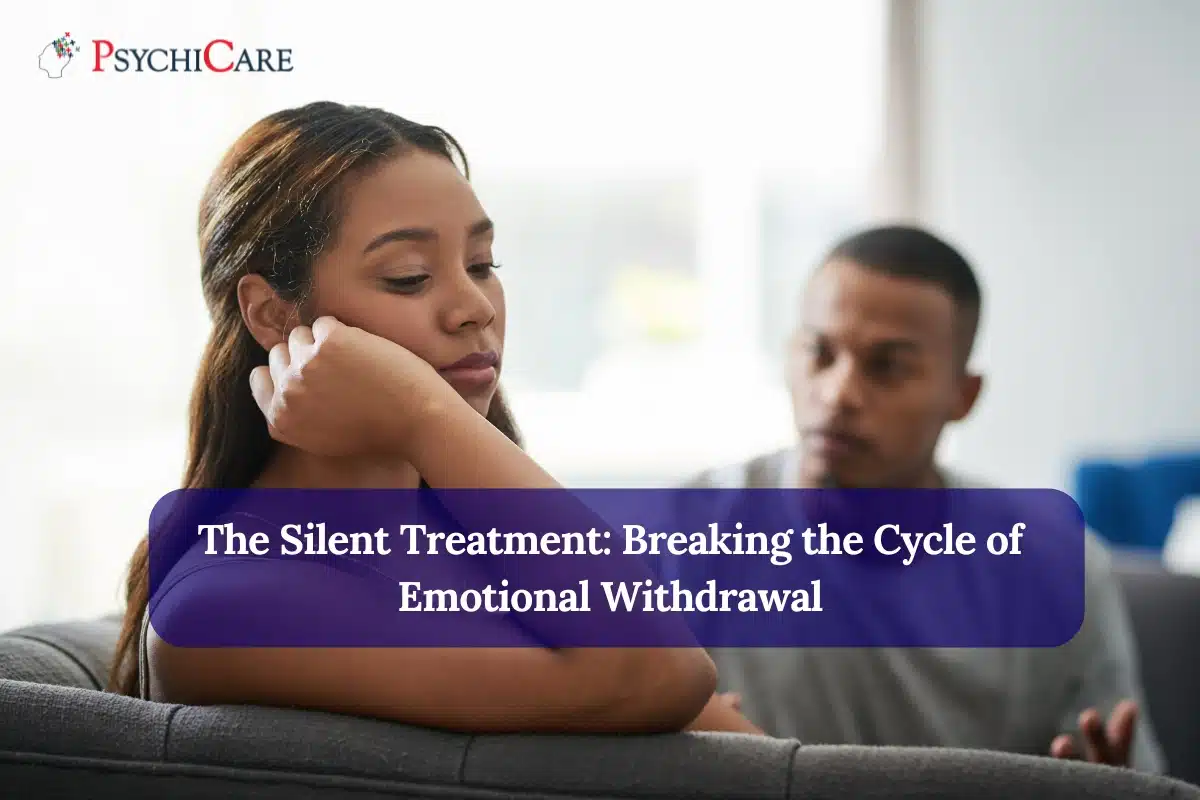
It’s not the yelling that breaks most couples. It’s the silence.
The kind that lasts for hours… sometimes days. No eye contact. No words. Just two people, in the same space, emotionally miles apart.
As a marriage therapist, I’ve sat with countless couples who say the same thing:
“We don’t even fight anymore. We just shut down.”
The silent treatment may seem like a way to avoid conflict, but over time, it becomes a slow erosion of connection. It doesn’t bring peace, it creates emotional distance. And for many, it hurts more than any argument ever could.
But here’s the truth: the silent treatment isn’t a personality flaw or a relationship death sentence. It’s a learned pattern one you can unlearn. In this article, I’ll help you understand what’s really happening underneath the silence, how it affects both partners, and what it takes to break the cycle with clarity, compassion, and lasting change.
Most people think the silent treatment is just “needing space.” And sometimes it is. Taking a break to calm down, gather your thoughts, or avoid saying something hurtful? That’s healthy.
But the silent treatment becomes a problem when it turns into emotional withdrawal, when one partner uses silence not to cool off, but to shut the other person out.
It can look like:
It doesn’t always come from a place of control. Sometimes it comes from overwhelm. People who shut down emotionally often don’t know how to express anger or fear, so they go quiet instead.
But here’s the key difference:
Silence that heals is temporary, respectful, and followed by reconnection.
Silence that hurts is cold, dismissive, and used as a weapon or escape.
Knowing which one is happening in your relationship is the first step to changing it.
Silence might seem harmless from the outside, but it can feel like emotional abandonment for the person on the receiving end.
When someone you love goes quiet on you, your brain doesn’t just register absence. It registers rejection. You start asking yourself:
Over time, that silence becomes louder than any words. It sends a message: “You’re not worth engaging with.” Whether that’s the intention or not, that’s how it lands.
As a therapist, I see the ripple effects often. The person being shut out begins walking on eggshells, trying to “fix it,” even when they didn’t cause it. The person withdrawing feels misunderstood or overwhelmed, but doesn’t know how to re-engage without making things worse.
The longer this emotional withdrawal continues, the deeper the disconnection grows.
In many relationships, the silent treatment doesn’t just cause pain, it becomes the new normal. That’s when resentment, fear, and emotional neglect start replacing intimacy.
And here’s the hardest part: the more often it happens, the less likely either partner is to speak up. You stop fighting, but you also stop connecting.
In most couples, the silent treatment doesn’t start with bad intentions. It usually begins with a moment of being overwhelmed, someone needing space, emotions being high, and silence feeling safer than saying something they’ll regret.
But when silence becomes the go-to response every time there’s conflict, it slowly creates a damaging pattern.
Here’s what it often looks like:
This pattern is what Dr. John Gottman calls stonewalling, one of the “Four Horsemen” that predict relationship breakdown. It’s more than just not speaking. It’s an emotional wall that makes a connection feel impossible.
And the more it happens, the easier it is to repeat. Silence feels like protection… until it becomes isolation.
As a therapist, I’ve seen couples stuck in this cycle for years. One person becomes the fixer, always initiating repair. The other becomes the avoided, too overwhelmed or scared to engage. But deep down, both are hurting. Both want to feel safe. They just don’t know how to get there without going silent or getting loud.
When your partner withdraws emotionally, your instinct might be to chase, fix, or explode. But that usually backfires. Instead of connection, you end up with more silence and even more hurt.
Here’s how to respond in a way that protects your peace, invites reconnection, and sets clear boundaries.
Silence can feel like rejection, but reacting with anger or panic only deepens the shutdown. Take deep breaths. Remind yourself: This is their way of coping, not a reflection of your worth.
Saying things like “Please just talk to me” or “Why are you doing this?” might come from a place of pain, but it puts you in a powerless role. Instead, keep your message clear and respectful.
Try:
“I’m here when you’re ready to talk. I care about this, but I also care about your space.”
Silence isn’t the enemy. Unending silence with no context is. Agree on a pause, not a shutdown.
Say:
“If you need space, I respect that. Can we check back in after 30 minutes?”
This gives both of you a clear path to return to the conversation.
Use “I feel” instead of “You never.” Don’t accuse express.
Say:
“This quiet is making me feel shut out, and I don’t want us to keep drifting apart.”
It keeps the focus on your experience, not their failure.
Giving the silent treatment back can feel tempting, but it doubles the distance. Instead of punishing back, model what a healthy space looks like.
That might mean doing something nurturing for yourself, not just waiting in pain.
Sometimes, no matter how kind your words are, your partner isn’t ready. Respect that.
Let them know:
“I won’t push right now, but I do want to reconnect when you’re ready.”
You’ve said your truth. Now it’s okay to step back with dignity.
You deserve emotional availability. If silent treatment becomes a repeated pattern, it’s time to ask harder questions:
Therapy, individually or together, can help you rebuild balance and safety.
Not everyone who gives the silent treatment is trying to hurt their partner. In fact, many people who go quiet do so because they feel overwhelmed, anxious, or emotionally flooded.
As a therapist, I often hear:
“I didn’t mean to hurt them. I just didn’t know how to say what I was feeling.”
If that sounds like you, here’s what to know and what to try.
Why You Might Shut Down
Shutting down is a form of self-protection. But over time, it turns into emotional avoidance and creates distance where you want closeness.
“I need a little space to calm down. Can we talk in 30 minutes?”
This lets your partner know you’re not abandoning them, you’re just pausing.
You don’t have to explain everything perfectly. Just try saying:
“I shut down earlier because I was overwhelmed, not because I don’t care.”
That one sentence can open a door.
Once you’ve cooled off, revisit the conversation. Even if it’s hard.
Try:
“I’ve had time to think. I’m ready to listen now, and I want to understand your side, too.”
If you know silence is your go-to, own it. Let your partner know you’re working on it and invite their support.
Say:
“When I go quiet, it’s not because I want to punish you. It’s because I freeze. I’m learning how to stay present.”
You don’t need to be perfect. You just need to be willing. Most partners don’t expect flawless communication; they just want to feel like you’re still in it with them.
Not all silence is abusive. But when silence is used to control, punish, or emotionally isolate someone over and over again, it crosses a line.
In therapy, we often look at patterns. If the silent treatment happens once in a while after a tough moment, and it’s followed by reconnection, that’s emotional avoidance, not abuse.
But if the silence is ongoing, intentional, and causes fear, confusion, or emotional damage, that’s a different story.
Signs the Silent Treatment Has Turned Toxic
This is often paired with other emotionally abusive behaviours:
Why This Is So Damaging
Emotional abuse through silence creates a deep sense of unworthiness. It tells you:
“You’re not even worth speaking to.”
Over time, it can lead to anxiety, depression, low self-esteem, and emotional exhaustion.
And because it doesn’t leave bruises or loud fights behind, it’s often dismissed by outsiders, and by the person living in it.
The silent treatment might feel safer in the moment. But silence doesn’t solve anything. It just pushes pain further underground and leaves both people feeling alone.
You don’t need perfect communication to have a strong relationship. But you do need presence, honesty, and emotional safety. That means learning how to pause without punishing. How to express hurt without retreating. And how to reconnect even when the conversation is hard.
As a marriage therapist, I’ve seen couples break out of this pattern. Not through blame but through new tools, deeper self-awareness, and a shared desire to grow.
If silence has become your relationship’s loudest pattern, it doesn’t have to stay that way.
It’s when one partner intentionally ignores the other, refusing to speak, respond, or engage, especially during or after conflict. While it might seem like a break, it often feels like an emotional shutdown to the other person.
If it’s used to punish, control, or make the other person feel guilty, yes it can be emotionally abusive. Occasional space is healthy. Repeated silence that causes harm is not.
Some people shut down when they feel overwhelmed, anxious, or unsure how to handle conflict. Others may use silence as a way to avoid accountability or regain control. The motive matters, and so does the impact.
If silence lasts more than a few hours and happens often without resolution or healthy follow-up it can start damaging the relationship. Especially when it leaves one partner feeling anxious, rejected, or invisible.
Needing space is okay. But silence becomes harmful when it’s used to avoid, punish, or withhold connection. A healthier option: say “I need a break, but I’ll come back to talk.”
It can trigger anxiety, low self-esteem, confusion, and emotional exhaustion. Over time, it can erode trust and intimacy, especially if one partner feels chronically ignored.
Imagine suddenly feeling a tight, twisting sensation in your stomach that makes it hard to…
Constipation is a common digestive problem that affects millions of people worldwide. Many wonder if…
Broken bones, or fractures, are common injuries that can range from minor hairline cracks to…
A blood clot in the leg, also known as deep vein thrombosis (DVT), can be…
A fever is your body’s natural response to infection, signaling that your immune system is…
The respiratory system is one of the most essential systems in the human body, responsible…


