
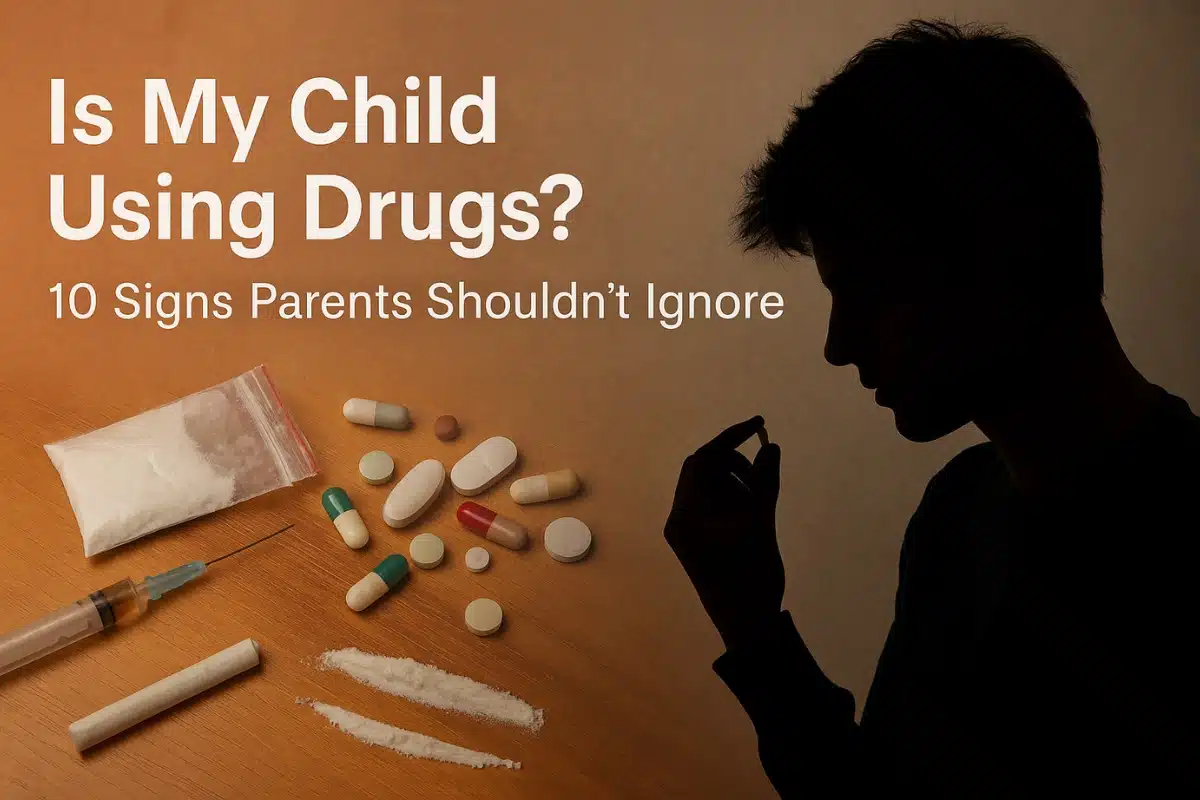
You know your child. You’ve seen their moods, habits, and quirks for years. So when something suddenly shift, maybe they’re unusually quiet, constantly in their room, or just off your gut notices.
And then the questions start:
“Is this just teenage moodiness… or something more?”
“Am I overreacting?”
“Could they be using drugs or hiding something from me?”
With vaping, pills, edibles, and party drugs more accessible than ever, it’s not paranoia to be concerned. It’s awareness. And catching the signs early could be the difference between a passing experiment and a growing addiction.
In this guide, we’ll break down:
Let’s start with the signs.
These signs don’t always mean your child is using drugs or alcohol but they do mean something is going on. Whether it’s emotional distress, peer pressure, or substance use, these changes are signals worth noticing.
One minute they’re calm, the next they’re shouting or shutting down completely. If your child starts reacting in extreme or unpredictable ways, especially to small frustrations, it could be a red flag for substance use or emotional dysregulation.
⚠️ Watch for: sudden irritability, emotional numbness, or laughing inappropriately.
If they’re spending more time locked in their room, avoiding eye contact, or pulling away from close relationships, they might be hiding something. A common tactic among teens using substances is isolation, especially from those who might notice changes.
⚠️ Watch for: avoiding family dinners, ignoring calls/texts, or giving vague answers about their day.
Kids don’t always dress up but if your child suddenly stops showering, wears the same clothes for days, or looks disheveled all the time, it could be more than just a lazy phase. Certain drugs (especially depressants or opioids) can reduce self-care motivation.
⚠️ Watch for: red eyes, persistent body odor, wearing long sleeves even in hot weather, or unusual smells (like smoke, chemical odor, or burnt plastic).
Has your child become unusually private? Are they quick to hide their phone screen, shut their laptop, or get defensive when asked simple questions? Secretiveness about daily habits especially online or social interactions, can indicate they’re trying to hide risky behavior.
⚠️ Watch for: locked bedroom doors, erased text messages, or odd late-night phone activity.
Substance use often causes concentration issues, lack of motivation, or missed classes. If a child who once did well in school suddenly starts failing, skipping assignments, or gets calls home from teachers, don’t ignore it.
⚠️ Watch for: falling grades, complaints from teachers, or a sudden disinterest in school altogether.
Stimulants (like Adderall or cocaine) can cause insomnia and appetite loss. Depressants (like alcohol or marijuana) may lead to sleeping more or late-night cravings.
⚠️ Watch for: being up all night, sleeping through the day, skipping meals, or binge eating.
You might notice your child’s stories don’t add up. They’re evasive about where they were, what they spent money on, or who they were with. This pattern of deception often increases with substance use.
⚠️ Watch for: excuses that feel too rehearsed, blaming others, or gaslighting (“You’re just being paranoid”).
Substance use can take a toll on the body. While kids get sick sometimes, repeated physical symptoms without clear cause might point to something deeper.
⚠️ Watch for: frequent headaches, nosebleeds, shaking hands, bloodshot eyes, or unexplained weight loss/gain.
If cash starts disappearing from wallets or you notice valuables going missing, it may be time to ask tough questions. Substance use can become expensive, and teens without income may start taking risks to fund it.
⚠️ Watch for: unexplained purchases, missing cash, or odd transactions on your card.
If your child ditches longtime friends for a new crowd or refuses to let you meet their current group, it could be because they’re surrounding themselves with people who normalize or enable risky behavior.
⚠️ Watch for: no longer mentioning old friends, hanging out with older teens, or going places they won’t tell you about.
The way you approach your child can make the difference between a defensive shutdown and an honest conversation. Your goal isn’t to catch them, it’s to connect with them.
Here’s how to start:
Don’t confront your child when emotions are high, they’re tired, or they’re in the middle of something. Pick a calm, quiet time, like during a drive, a walk, or when you’re both relaxed at home.
✅ Example: “Hey, can we talk for a few minutes after dinner? Just us.”
Saying “You’re lying to me!” or “You’re on drugs, aren’t you?” will instantly trigger defensiveness. Instead, focus on what you’re noticing and how it’s making you feel.
✅ Try: “I’ve noticed you’ve been really distant lately, and I’m worried something’s going on.”
Your child might deny, lie, or lash out. They may also confess something you weren’t ready to hear. Stay steady. Your reaction tells them whether you’re a safe person to talk to.
✅ Say: “You don’t have to tell me everything now. I’m here to listen whenever you’re ready.”
Invite them into the conversation instead of dominating it. Give them space to talk even if it’s uncomfortable.
✅ Ask:
Make it clear that your concern is about them, not just their behavior. This builds trust.
✅ Say: “No matter what’s happening, I love you. We’ll get through this together.”
Love doesn’t mean allowing dangerous behavior. If you discover substance use, it’s okay to enforce rules and consequences but make sure they’re paired with empathy and support.
✅ Example: “We’re going to talk to a counselor about this, not to punish you, but to support you.”
Realising your child might be using drugs or alcohol is overwhelming but you’re not powerless. These next steps can help you move from fear into focused action.
Your child needs calm, present leadership, not panic or punishment. Take a breath. Write down what you’ve observed and gather any concrete signs (e.g., paraphernalia, smells, changes in mood or behavior).
✅ Document patterns over time. This helps in conversations and with professionals.
Use the tips from the last section and talk to them. You don’t need all the answers before you begin, you just need to show up with honesty, concern, and love.
✅ Say: “I’m not here to punish you. I’m here to help you figure this out, together.”
If your child shuts down, denies everything, or the issue seems beyond you, get support early. You don’t have to wait until things spiral.
🧠 Consider professional help when you notice:
✅ Explore child & adolescent therapy with PsychiCare for confidential, expert care.
You can speak to your child’s school counselor, pediatrician, or a licensed therapist to assess what’s going on. If needed, you can also request a drug screening but only after careful, non-threatening discussion.
Reach out to teachers, coaches, or trusted adults who may have insight or influence. Look into local teen programs, support groups, or digital platforms for recovery support if needed.
If you’ve found substances in the home, remove them. If they’re getting it through friends, phones, or apps, monitor technology more closely without resorting to total surveillance that shuts down trust.
You can’t help your child if you’re running on guilt, fear, or exhaustion. This isn’t your fault and you’re not alone.
✅ Join a parent support group, seek therapy, or talk to your partner/family.
✅ Take breaks to protect your own mental health.
You can’t control everything your child faces out in the world but you can shape the kind of environment they come home to. Prevention isn’t just about rules, it’s about connection, trust, and resilience.
Don’t wait for something to go wrong. Ask how they’re really feeling regularly. Many teens turn to substances not out of rebellion, but to escape anxiety, sadness, or peer pressure.
✅ Ask casually: “You seemed a little off today. Wanna talk, or just hang out for a bit?”
Kids learn more from what you do than what you say. If they see you numbing stress with alcohol or always avoiding hard conversations, they may mirror that.
✅ Let them see you:
Start age-appropriate conversations about drugs, vaping, alcohol, and peer pressure before they’re exposed and keep them going over time.
✅ Example: “If someone offered you something you weren’t sure about at a party, what would you do?”
Kids with strong interests sports, music, art, coding, even gaming have more to fall back on when pressured. Encourage their passions and make them feel seen for who they are, not just what they do.
Set expectations, but leave space for mistakes. Teens need to know there are consequences, but they also need to know your love doesn’t depend on their perfection.
✅ Example: “I expect you to be honest with me. If something’s ever too big for you to handle alone, I want to be the first person you call.”
Know where they are, who they’re with, and what’s going on but give them some autonomy too. Over-surveillance can push teens into secrecy.
✅ Try: “I trust you, and I want to keep trusting you. Let’s work on keeping that trust strong.”
If your gut says something isn’t right, it’s worth paying attention. You’re not being paranoid. You’re being involved.
Substance use doesn’t make your child a “bad kid” it means they’re struggling. The earlier you step in with love, structure, and support, the more likely they are to heal and grow.
If you feel like you’re out of your depth, don’t wait.
👉 PsychiCare’s child & teen therapists are here to help with compassionate, professional guidance for families just like yours.
Talk to your teen about drugs by using calm, non-judgmental language. Focus on how you feel, ask open-ended questions, and listen without interrupting. Keep it a two-way conversation, not a lecture.
Start talking to your child about drugs around age 10–11. Use simple, age-appropriate language and build on it as they grow. Don’t wait for a problem to start the conversation.
You can tell if your teen is using drugs by watching for mood swings, changes in friends, poor hygiene, secrecy, or slipping grades. Multiple signs together may indicate a problem.
No, even flavored vapes can contain nicotine and harmful chemicals. Many “nicotine-free” vapes still damage lung and brain health in teens.
Drug testing your teen is best done with their awareness and consent. It should support a plan for recovery, not be used as punishment or control.
Good refusal skills for teens include saying “No thanks,” giving an excuse like “My parents would kill me,” or walking away. Practicing these in advance builds confidence.
If your child is addicted, start with a mental health professional or pediatrician. You can also reach out to teen counseling services like PsychiCare for therapy and family support.
Imagine suddenly feeling a tight, twisting sensation in your stomach that makes it hard to…
Constipation is a common digestive problem that affects millions of people worldwide. Many wonder if…
Broken bones, or fractures, are common injuries that can range from minor hairline cracks to…
A blood clot in the leg, also known as deep vein thrombosis (DVT), can be…
A fever is your body’s natural response to infection, signaling that your immune system is…
The respiratory system is one of the most essential systems in the human body, responsible…

