
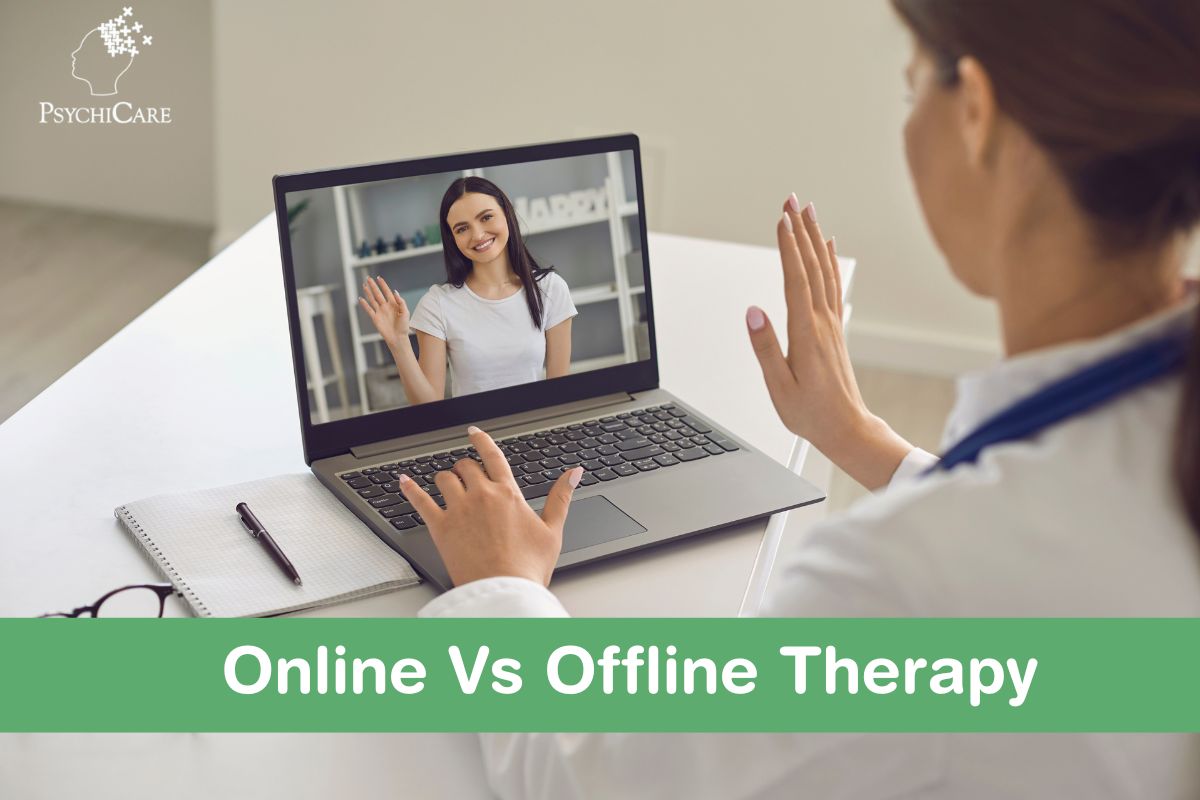
Therapy no longer happens only in quiet clinic rooms. Today, healing flows through screens, voices, and safe spaces built across distance. For many, a laptop has become their therapy room and for others, nothing replaces the warmth of an in-person presence.
So, which one truly works better, online or offline therapy?
The truth is, both have their own kind of power.
Online therapy brings comfort, flexibility, and reach for working adults, long-distance couples, and teens who open up more easily at home. Offline therapy, though, still carries a certain depth, the kind that comes from shared presence, eye contact, and the quiet assurance of being seen.
In this article, let’s explore what really makes therapy effective, beyond technology, beyond trends, and through the lens of real human connection.
Therapy used to mean showing up somewhere, a physical room, a chair across from someone who’d listen as you tried to hold yourself together. That image still holds power. But somewhere along the way, therapy quietly broke out of those four walls.
Now, connection happens differently. Sometimes it’s a voice call with a client who’s sitting in their car because that’s the only private space they have. Sometimes it’s a young mother whispering during her baby’s nap, laptop balanced on the bed. Sometimes it’s a man thousands of miles away, who says this is the first time he’s ever said these words out loud, even if it’s over a screen.
That’s therapy too. Just without the waiting room.
Online spaces have given people something they were too afraid to ask for before, privacy without exposure, access without judgment, help without the commute. But what makes therapy work hasn’t changed. It’s still about two humans, showing up with honesty, even when the world outside feels too loud or too far away.
It’s no longer about where therapy happens.
It’s about whether the space, virtual or physical allows you to feel safe enough to be real.
Research keeps saying the same thing, both online and offline therapy work.
Studies show little difference in recovery rates for anxiety, depression, and even couples therapy.
But therapists know what data can’t measure, connection.
Some clients open up faster online, where distance feels safer. Others need presence, the energy of sitting across from someone who doesn’t look away.
So, it’s not the format that heals.
It’s the trust, honesty, and consistency that happen inside it.
Online therapy often helps people who would otherwise never start.
Clients who travel often, live abroad, or feel anxious about being seen walking into a clinic, they finally show up.
It works well for working professionals who can’t step out midweek, parents managing home chaos, or couples trying to reconnect from different cities.
Sometimes, even trauma survivors feel safer opening up when there’s a little distance between them and the therapist.
It’s not “less real.” It’s just more reachable.
Healing doesn’t always need a couch, it needs a space where you feel safe enough to speak.
There are moments when being in the same room changes everything.
Children who can’t sit still on a video call, couples caught in silence, or people processing trauma, they often need presence more than words.
In-person sessions capture what screens can’t, body language, tone, and the comfort of shared quiet.
Sometimes healing starts not with talking, but with simply being seen.
Offline therapy still holds that space, real, grounded, and human.
Younger kids often need movement, eye contact, and play, things that screens can’t give.
But for older teens, online therapy can feel freeing. They talk more easily when they don’t have to face the room.
Video sessions help partners living apart or avoiding public arguments.
Still, when emotions run deep or trust feels fragile, being in the same room with a therapist helps them reconnect beyond words.
Many find online therapy fits their lives, less travel, more consistency.
Yet those facing deep grief, burnout, or emotional numbness sometimes need in-person presence to feel alive again.
Different modes, same goal, finding the space where honesty feels safe.
For many people, the decision isn’t emotional, it’s practical.
Online therapy usually costs less, saves travel time, and feels easier to keep up with. That’s why more working professionals and students prefer it.
But comfort isn’t just about money.
Some clients feel safer logging in from their own room, while others need the quiet ritual of walking into a therapist’s office, a space that signals “this hour is for me.”
Accessibility has changed everything.
You can now start therapy from anywhere and that freedom, for many, is what finally makes healing possible.
Online therapy reaches you anywhere, home, office, or another country.
Offline therapy depends on local availability and travel.
Online feels safer for many who get anxious face-to-face.
Offline offers warmth, presence, and shared energy.
Online sessions are flexible and easy to fit into busy days.
Offline therapy often needs fixed time slots and planning.
Online therapy usually costs less and saves travel time.
Offline may cost more but adds structure and routine.
Online lets you choose your environment, complete control over comfort.
Offline sessions happen in a confidential but shared professional space.
Online builds emotional trust slowly but steadily.
Offline allows stronger non-verbal connection, tone, eye contact, body cues.
Online limits what’s visible on camera.
Offline gives your therapist the full picture, posture, movement, emotion.
Some clients share more freely online.
Others need the grounding presence of a real room to open up.
Online therapy makes attendance easier, fewer skipped sessions.
Offline therapy faces more cancellations due to travel or timing.
Online suits mild to moderate concerns or lifestyle stress.
Offline supports deeper emotional work, trauma, grief, or intense conflict.
In essence:
Online therapy gives accessibility and comfort.
Offline therapy gives depth and presence.
Healing grows where you feel safe enough to be honest.
Therapy isn’t about where you sit, it’s about how deeply you show up.
Some people open up more easily behind a screen; they feel safer, more in control. Others need that grounding moment of sitting across from someone who understands without words. Both are therapy. Both can heal.
The truth is, healing doesn’t depend on furniture, format, or platform.
It depends on connection, the kind that makes you feel seen, understood, and safe enough to be honest. Whether you’re a parent learning to breathe again, a couple trying to rebuild trust, or someone simply trying to feel okay, the best therapy is the one that meets you where you are.
At PsychiCare, that’s what we do.
We don’t make you choose between online and offline. We help you find what fits your life, your pace, your comfort.
Our licensed therapists work with adults, couples, and children across countries and time zones, helping people rediscover calm, clarity, and connection.
If you’re ready to begin, start where it feels right.
Online or in person, what matters is that you start.
👉 Book a confidential session with PsychiCare, your space to heal, in your own way.
Online therapy is as effective as in-person sessions for most issues like anxiety, depression, and relationship stress. Research and therapist experience both show that consistency and comfort matter more than where therapy happens.
Online therapy offers flexibility, privacy, and easier scheduling, while offline therapy provides stronger emotional connection and body-language cues. The right choice depends on your lifestyle and how you feel most comfortable opening up.
You may feel slightly less connected online at first, but emotional closeness builds quickly when trust develops. Many clients find they open up more online once they feel safe and unjudged.
Online therapy privacy depends on your environment. Choose a quiet, private space, some clients use headphones or even sit in their car to ensure you can speak freely without interruption.
Online therapy is worth it for people who value time, flexibility, and affordability. It works especially well for mild to moderate emotional concerns, couples in long-distance relationships, and busy professionals who prefer consistent support.
Most modern therapists use a hybrid model. In-person therapy suits trauma, children, or deep emotional work, while online sessions work well for maintenance, stress, and relationship counselling.
Online therapy helps with mild trauma and anxiety, but in-person therapy is often better for complex trauma where non-verbal cues and physical grounding matter. Many clients start online and transition to offline as comfort grows.
Yes, you can switch anytime. Many clients start with online sessions for convenience and move offline once they feel ready for in-person connection. Therapy is flexible, you don’t have to choose one forever.
Yes. Online therapy improves attendance because it removes travel and scheduling barriers. Clients are less likely to miss sessions, which leads to faster and steadier progress.
Online therapy in India costs around ₹1,000–₹2,000 per session, while offline therapy averages ₹1,500–₹3,000. Globally, online sessions are 20–30% cheaper due to no overhead costs and greater flexibility.
Imagine suddenly feeling a tight, twisting sensation in your stomach that makes it hard to…
Constipation is a common digestive problem that affects millions of people worldwide. Many wonder if…
Broken bones, or fractures, are common injuries that can range from minor hairline cracks to…
A blood clot in the leg, also known as deep vein thrombosis (DVT), can be…
A fever is your body’s natural response to infection, signaling that your immune system is…
The respiratory system is one of the most essential systems in the human body, responsible…

