
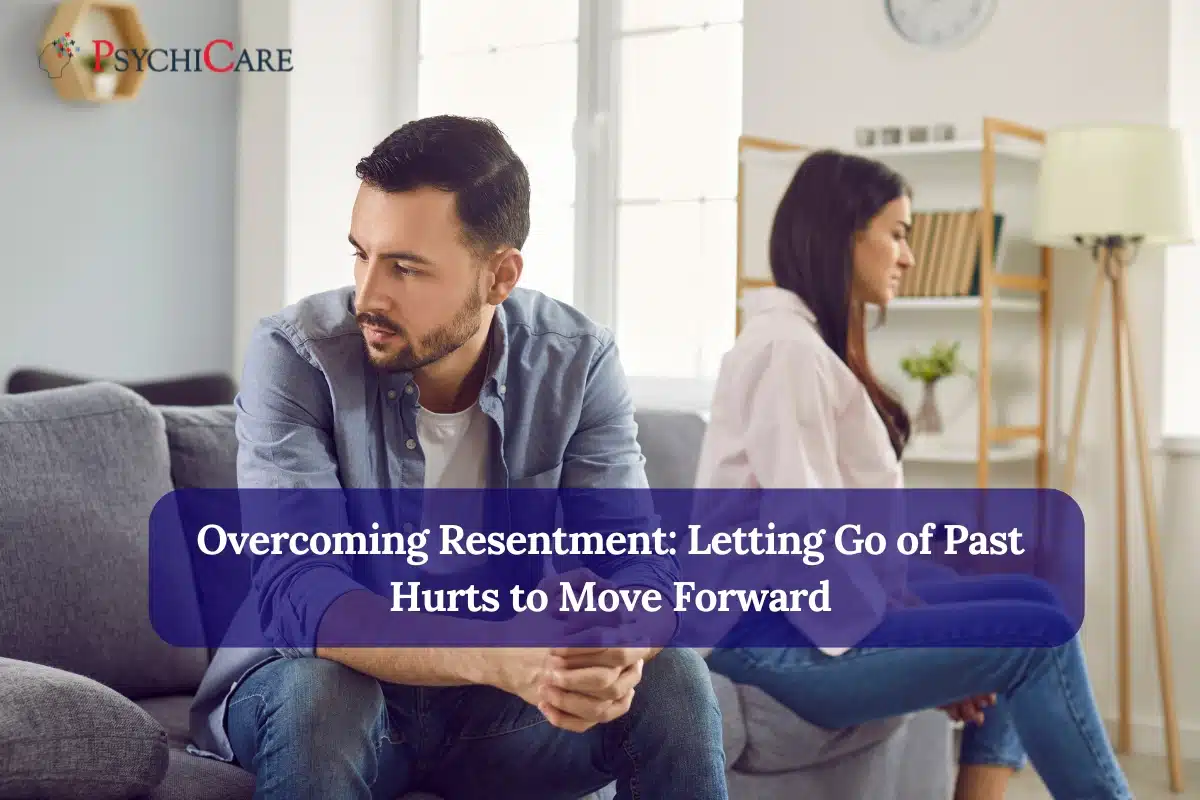
Ever find yourself holding onto something your partner did something that still stings, even after all this time?
That lingering ache? That’s resentment. And it’s a lot more common than most people realise.
Research says more than 60% of couples in long-term relationships are carrying emotional wounds that never really got addressed. These aren’t always massive betrayals either.
Sometimes it’s the birthday they forgot, a careless comment, or just feeling emotionally invisible, but over time, those little moments can stack up.
And resentment doesn’t always show up loud and angry. Sometimes it slips in as silence. Or that quiet, sinking thought: “What’s the point in trying anymore?”
Therapists see it all the time how resentment, if left to fester, can chip away at closeness, even in couples who still care deeply about each other.
The good news? It doesn’t have to stay that way. With honest conversations, the right support, and a bit of patience, healing is possible.
Resentment in marriage goes deeper than just feeling upset. It’s that slow, steady buildup of frustration, disappointment, and emotional pain that forms when needs are ignored or conflicts stay unresolved.
It often grows in the quiet spaces when one partner keeps giving, keeps accommodating, keeps the peace… and still feels invisible.
People often think resentment comes from some huge betrayal. But honestly, in most couples I’ve worked with, it’s rarely one big thing.
It’s a string of small, unresolved hurts. The sarcastic joke that stung more than expected. The apology that never came. The silence during moments that mattered.
Take this for example: one partner has handled most of the housework for years. At first, they don’t complain.
They just do it. But after a while, they start feeling taken for granted. No recognition, no shared responsibility, no thank-you. It doesn’t erupt into a fight, it lingers, quietly building. That’s resentment.
And it doesn’t always look like anger, either. Sometimes it’s the cold shoulder. The emotional distance. That subtle disconnection that creeps in when words are left unsaid. If it’s not acknowledged, it can quietly reshape the entire relationship.
Resentment doesn’t always storm in. Most of the time, it creeps in quietly in the middle of everyday life, without much warning. Here’s how it tends to show itself:
You’re sitting next to each other, but it feels like there’s this weird distance. You talk, but it’s surface-level stuff. The deep, real connection? It kind of fades out.
A forgotten errand, a delayed reply suddenly, it’s a full-blown argument. But you know deep down, it’s not really about that one thing. It’s the weight of all the unspoken stuff that’s been building up.
Even when they’re trying, you can’t help but question their intentions. You catch yourself wondering, “Do they care?” That sense of comfort and safety starts slipping.
Physical touch feels weird. Being vulnerable feels exhausting. You stop reaching for hugs or honest conversations, not because you don’t want to, but because it feels… off.
It’s like you’ve got a mental highlight reel of everything they’ve done wrong. And even when they try to fix things, it never quite feels like enough.
Relationship researcher Dr. John Gottman puts it like this: when resentment turns into constant criticism or contempt, it’s a red flag. He’s found that this pattern is one of the biggest predictors of divorce. It’s not just about being mad, it’s about what happens when we stop giving each other the benefit of the doubt.
Resentment doesn’t just appear out of thin air. It usually grows in the quiet moments when hurt is left unspoken or when emotional needs are brushed aside. These are some of the patterns I’ve seen come up again and again in couples therapy:
You hoped for comfort. Support. Maybe just a little more affection. But when those needs go unanswered for too long, the disappointment starts to pile up. Eventually, you stop asking… and start resenting.
Maybe you’re doing most of the housework, carrying the emotional weight, or just keeping things afloat. Even if your partner doesn’t mean to put it all on you, it creates this quiet imbalance. And after a while, it doesn’t just feel unfair, it starts to feel personal.
Trust isn’t just about cheating. It’s about honesty, presence, and emotional connection. When that gets fractured, whether through betrayal or emotional withdrawal, the hurt runs deep. And if that hurt doesn’t get worked through, it doesn’t go away. It just settles in as resentment.
Misunderstandings are normal. But when you stop talking or when your tone keeps getting misread, you end up stuck in the same loop. It’s like walking on eggshells. And when the honest stuff never gets said, resentment starts brewing quietly in the background.
You don’t have to be yelling to feel hurt. Sometimes, what stings most is the silence. When your partner stops paying attention, stops noticing you, or stops showing up emotionally, it leaves a mark. That kind of neglect is something I see often… and it’s one of the deepest roots of resentment in long-term relationships.
Resentment doesn’t just stay hidden in the background; it shifts the entire tone of your relationship. Over time, if it’s not dealt with, it can wear you both down in ways that feel heavy and hard to shake.
Carrying around unspoken hurt is exhausting. You both start to feel wiped out, not just physically, but emotionally. You pull back, stop showing up all the way, because deep down it feels like… what’s the point? It’s not just being tired, it’s being burned out from feeling stuck and unheard.
Resentment doesn’t just sit in the relationship; it gets into your head. It chips away at confidence, feeds anxiety, and makes it harder to relax or feel secure. A lot of people begin questioning themselves or just go emotionally numb to get through it.
When that quiet tension builds up, closeness starts to feel unsafe. Touch feels distant. Vulnerability feels like a risk. Instead of reaching for each other, you pull away, protecting yourself instead of connecting.
Small stuff turns into something bigger. It’s never just about the dishes or the tone, it’s about everything you’ve been carrying underneath. Resentment adds weight to every disagreement.
And here’s the hard part: if it goes unspoken for too long, the gap can feel impossible to close. Hope fades. You stop believing things can change, and sometimes, that numbness becomes the quiet reason people walk away, not out of hate, but out of emotional exhaustion.
Letting go of resentment isn’t a one-time fix. It’s a process often slow, sometimes messy, and it starts by being real with yourself, before you can even begin being real with your partner.
You can’t move through what you won’t admit. Start by getting honest about what’s coming up: anger, sadness, disappointment… whatever it is. Don’t brush it off or sugarcoat it. Your feelings matter, even if they’re complicated. In my experience, this is often where things finally start to shift in therapy.
Resentment festers in silence. It doesn’t need to explode, it just needs to be spoken. Talk to your partner, gently and honestly. Less blame, more vulnerability. Saying something like, “I’ve been feeling overlooked lately, and it’s been weighing on me,” hits way different than, “You never notice anything.”
Forgiveness isn’t about letting someone off the hook, it’s about letting yourself breathe again. You’re not saying what happened was okay. You’re saying, I don’t want to carry this pain every day anymore. Blame keeps you in rewind. Forgiveness gives you space to move forward, but only if both people are ready to show up differently.
Ask yourself: What did I push aside just to keep the peace? What needs did I ignore to avoid conflict? Resentment is often tied to self-abandonment. Be gentle with yourself here. Healing doesn’t mean beating yourself up; it means noticing the pattern and slowly choosing differently.
Trust doesn’t come from promises, it comes from patterns. It shows up in the small stuff: the texts followed through, the moments of real listening, the honest check-ins. No grand gestures required, just steady, repeated care.
In the therapy room, we’re not just talking about what went wrong. We’re practising something new, how to stay curious instead of reactive, how to cool things down instead of escalating. These are skills. And the best part? They’re learnable.
Letting go of resentment is rarely a single decision. It’s one you’ll probably revisit more than once. But with consistency, compassion, and the right kind of support, that disconnection doesn’t have to be permanent. Real repair is possible.
Tune in when your partner speaks, not to respond, but to understand. Reflect what they’re saying so they feel heard, not judged. It sounds simple, but it changes everything.
If you’ve caused hurt, acknowledge it. No excuses, no defensiveness. Just honesty. It’s tough, but it’s also how trust starts to rebuild.
Reignite that emotional closeness through date nights, deeper conversations, even just laughing together again. It’s not about being perfect, just intentional.
Sometimes, the cycle is too deep to break alone. A good therapist can help both of you untangle the past, communicate better, and start healing in a space that feels safe.
Sometimes, no matter how much love is still there, the hurt feels too big to sort out on your own. Here’s when it might be time to reach out for professional support:
Online counselling makes it easier than ever to get support, no commute, no waiting rooms. Just you, your partner, and a licensed marriage therapist, all from the comfort and privacy of your own space. And yes, it works.
Forgiveness is a process; it starts with honesty, and often, with help. It’s not about forgetting, but about deciding not to carry the pain alone anymore.
Yes. Resentment often points to long-standing unmet needs, emotional disconnect, or communication patterns that aren’t working.
Yes. Many couples experience it at some point. The key is recognising it early and being willing to work through it, together.
If both partners are willing to be honest, take accountability, and put in the effort, there’s hope. Healing is possible, even after years of distance.
Resentment doesn’t have to end your marriage. In many cases, it’s a turning point, a sign that something needs to change. And that change can lead to deeper understanding, connection, and trust.
If unspoken resentment is keeping your relationship stuck, you don’t have to face it alone. Start your healing journey today with PsychiCare’s compassionate, professional marriage counselling because your relationship is worth the effort.
Imagine suddenly feeling a tight, twisting sensation in your stomach that makes it hard to…
Constipation is a common digestive problem that affects millions of people worldwide. Many wonder if…
Broken bones, or fractures, are common injuries that can range from minor hairline cracks to…
A blood clot in the leg, also known as deep vein thrombosis (DVT), can be…
A fever is your body’s natural response to infection, signaling that your immune system is…
The respiratory system is one of the most essential systems in the human body, responsible…

