
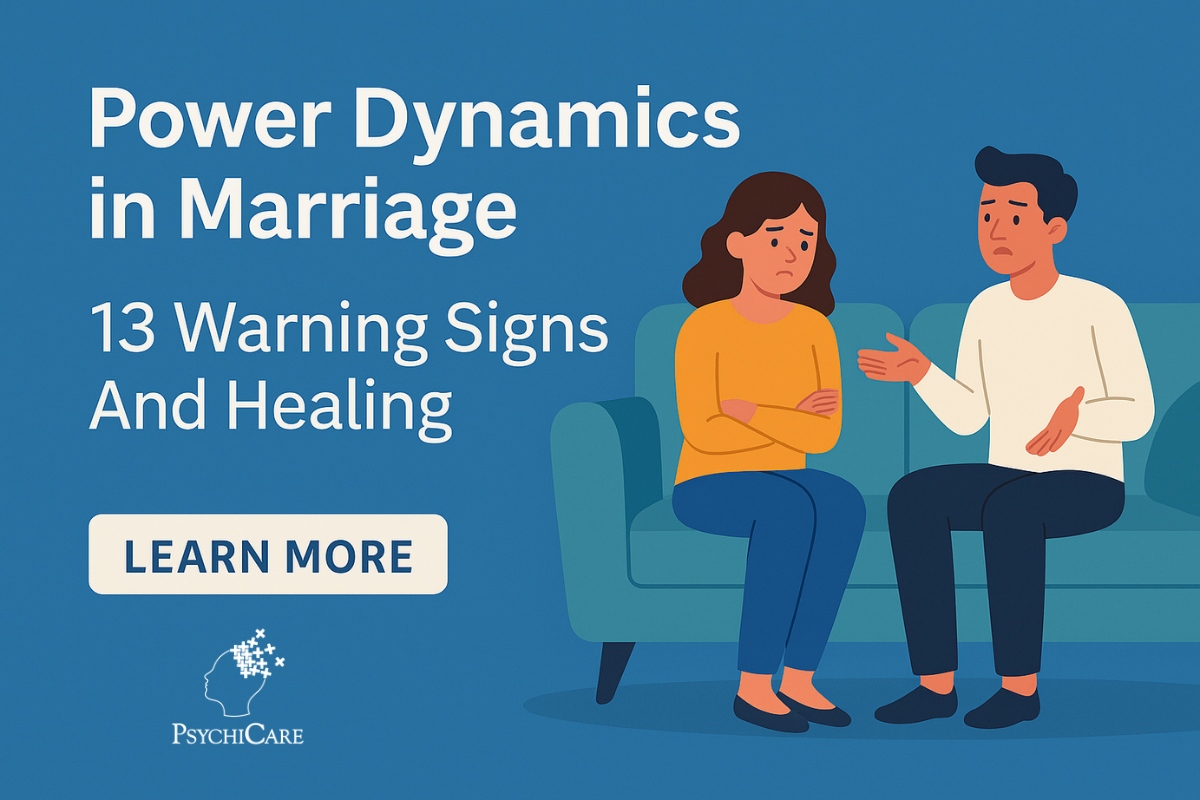
Facing Power Dynamics in Marriage?
Hmm… so you’re getting married or already married. We’ve all heard it: marriage is 50/50, with both partners equally involved.
But in reality, it’s not always that simple. Men may want control, but women often have a lot of power too, especially at home.
Think about it: 65% of women feel they do most of the work at home, bills, schedules, and even planning family events. One person often makes all the decisions without realising it.
Power struggles don’t always manifest loudly and clearly. Sometimes, they’re small things like feeling invisible or having your voice ignored.
These little things can add up and make you feel disconnected. But don’t worry, it’s fixable with the right steps.
Let’s talk about what’s going on, why it happens, and how to bring back the balance. You deserve a partnership where both voices are heard.
Power dynamics are the invisible forces that determine who makes the decisions in your relationship. It’s about who has control over the big and small things, from finances to daily chores.
Sometimes, it’s obvious, like one person controlling the money. Other times, it’s subtle, like one partner always picking the weekend plans or making choices without asking.
Understanding these dynamics is key. It’s not about who has the most power, but whether both partners feel heard and valued.
Power dynamics don’t just happen overnight. Let’s break down some of the most common reasons these imbalances creep into your relationship.
Without even realising it, one partner starts taking on more responsibility. At first, it feels like a small thing, but over time, it adds up and creates an imbalance.
You know the stereotype—men work, women manage the home. But these outdated roles can leave one person feeling sidelined. Time to challenge these assumptions.
If you saw one parent making all the decisions, it might feel like that’s just how things work. Old habits from childhood can sneak into your marriage without you even noticing.
If one partner controls the finances, they’re also controlling a lot of the decisions in the relationship. Financial power can be the unspoken force that keeps things unbalanced.
In many cultures, there are unspoken rules about who should do what in the household. These traditions can build power imbalances without us even realising it.
Sometimes, one partner just says, “Fine, I’ll do it,” to avoid an argument. But over time, this can result in one partner making all the decisions, leaving the other feeling unheard.
If one partner has been used to calling the shots in past relationships, it’s easy to fall into that pattern again. It’s not always intentional, but it can create an imbalance.
When one partner leans more emotionally on the other, it can shift the power dynamic. The person doing the leaning may unintentionally give up some of their control in the relationship.
Managing the finances means you’re controlling a lot. The partner who holds the purse strings often has a bigger say in the overall direction of the relationship.
If your partner always makes the big decisions without asking for your input, it’s a sure sign of a power imbalance. This can leave you feeling like a passenger in your own relationship.
In marriages, power dynamics can show up in different ways, and they can affect how well you connect with each other. Here are three common patterns that many couples face:
One partner asks for more—whether it’s attention, help, or affection—while the other pulls away, either physically or emotionally. Over time, this can lead to frustration and resentment, as one person feels like their needs aren’t being met.
In this pattern, one partner wants more closeness and intimacy, while the other pushes away. This often happens because of the different ways people handle emotions and attachment. It can feel like a constant push and pull, with one partner feeling abandoned and the other feeling overwhelmed.
In this dynamic, one partner feels fear or shame, often due to past experiences, and the other partner responds with anxiety or avoidance. This can create a cycle where both partners feel trapped, and emotional closeness gets harder to achieve.
One partner ends up doing most of the household chores, managing the finances, and taking care of the kids. The other partner may not be as involved, leading to feelings of resentment and exhaustion for the one who does most of the work.
One partner tends to take on a caregiving role, whether it’s looking after children, elderly parents, or managing the home. The other partner prefers to remain more independent, sometimes leading to a disconnect or feelings of being neglected.
In some marriages, one partner avoids confrontation and keeps quiet during disagreements, even when they feel strongly about an issue. This can lead to the other partner thinking they have more power and control in the relationship.
One partner loves to talk about everything—feelings, problems, plans—while the other shuts down or avoids conversations. This can create frustration and misunderstandings, as one person feels the need for constant communication, while the other feels overwhelmed.
In some marriages, one partner makes most of the important decisions, whether it’s about where to live, what to do on weekends, or how to spend money. This can lead to feelings of being ignored or controlled by the other partner.
Yes, you absolutely can! As a marriage therapist, I’ve seen many couples turn things around when they acknowledge and address power imbalances in their relationship. It takes effort, honesty, and a willingness to change, but the work is worth it. Here’s how you can start:
The first step is simply recognising the imbalance. Sometimes, it takes stepping back and looking at how decisions are being made in the relationship. Who’s always in charge? Who’s getting left out? This awareness is key to making a change.
It’s time to have a real, open conversation about what’s going on. Talk honestly about how the imbalance is making you feel. I always encourage couples to use “I feel” statements to avoid blaming or accusing each other, like “I feel unheard when decisions are made without me.”
Start sharing control. This means making decisions together, from finances to weekend plans. It’s not about one person giving in, it’s about finding ways to share responsibilities and decisions so both partners feel equally involved.
Setting clear boundaries can help restore balance. For example, how do you divide household chores or emotional labour? Agree on what’s fair and stick to it. Boundaries create respect and ensure no one partner feels overwhelmed or neglected.
You might be surprised at how often one partner feels their needs aren’t being met. It’s important to listen—listen—to each other’s feelings, desires, and concerns. Create an open space where both of you can be vulnerable and heard.
Sometimes, couples therapy is exactly what’s needed to work through power imbalances. As a therapist, I can help you identify the issues and offer tools to improve communication, build trust, and restore balance in your relationship.
Fixing power dynamics takes time. It’s not a quick fix but a process of consistent effort. Stay patient, keep communicating, and understand that real change takes time.
When both partners feel equally valued and respected, it strengthens their emotional connection. Equal partnership means both people have an active role in shaping the relationship, making it healthier and more fulfilling. It promotes trust, understanding, and a sense of shared purpose.
An equal partnership doesn’t just benefit women—it’s also great for men. Men in balanced relationships often report feeling more emotionally connected, supported, and less stressed. They are more likely to experience better communication with their partner, leading to stronger intimacy and satisfaction. In relationships where responsibilities are shared, men also feel less burdened by traditional gender roles and more empowered to express their needs.
Women in equal partnerships feel heard and valued. When men share the load, whether it’s with household chores, emotional labour, or decision-making, women experience less burnout and resentment. A balanced partnership allows women to have more space to pursue their own goals while still fostering a loving and supportive relationship.
Power dynamics can affect any marriage, but the good news is that they can be changed. You can rebuild a healthier, happier relationship by recognising the imbalance and working together with respect. It’s about shared responsibility and mutual respect—when both partners feel valued, your connection grows stronger.
If you’re ready to bring balance back to your marriage, we’re here to help. Book a session with our experienced marriage therapists and start creating a healthier, more fulfilling relationship today.
Imagine suddenly feeling a tight, twisting sensation in your stomach that makes it hard to…
Constipation is a common digestive problem that affects millions of people worldwide. Many wonder if…
Broken bones, or fractures, are common injuries that can range from minor hairline cracks to…
A blood clot in the leg, also known as deep vein thrombosis (DVT), can be…
A fever is your body’s natural response to infection, signaling that your immune system is…
The respiratory system is one of the most essential systems in the human body, responsible…


