
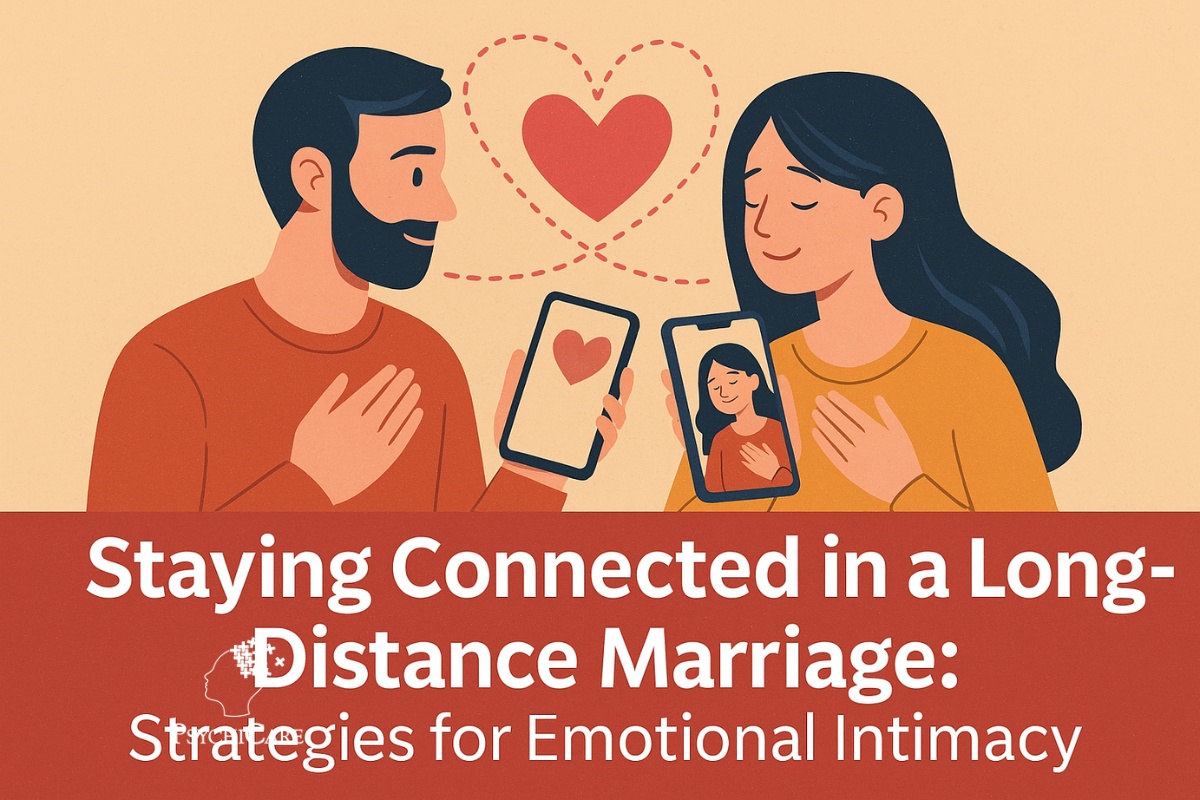
As a marriage therapist who’s worked with couples for over 7 years, I’ve seen one thing clearly:
Long-distance doesn’t just test your schedule, it tests your connection.
You might love your partner deeply, but still feel emotionally far. Maybe you talk every day, yet the conversations feel…empty. Maybe small misunderstandings now lead to bigger arguments. Or maybe you’re simply tired of saying “I miss you” and pretending that’s enough.
Couples often ask me:
If you’ve ever felt this way, you’re not alone. Long-distance marriages are hard, but they’re not impossible.
With the right tools, you can rebuild emotional intimacy, improve communication, and feel close again even if you’re living miles apart.
In this article, I’ll explain what works, what matters, and how real couples like you are staying connected no matter the distance.
You’re married but not in the same room. That changes everything.
In long-distance marriages, there’s no shared kitchen talk, no shoulder squeeze after an argument, no falling asleep side by side.
You rely on words. Screens. Schedules.
And that’s exactly why emotional intimacy matters more than ever.
It’s not just deep conversations or saying “I love you.”
It’s about:
Without that connection, distance creates more than space.
It creates doubt. Misunderstandings. Emotional shutdowns.
But here’s the good news:
Emotional intimacy can be rebuilt. Even from different cities or different continents.
And in the next section, I’ll show you how.
When you’re in a long-distance marriage, big romantic gestures are great, but it’s the small, consistent rituals that keep love alive.
Here’s what I recommend to couples I work with:
Even if it’s just 10 minutes, pick a fixed time to connect daily.
Not to talk about problems. Just to talk.
Ask:
Skip the filtered selfies. Send a quick photo of:
These everyday things build emotional closeness.
Just because you’re not in the same place doesn’t mean you can’t share an experience.
Try:
There’s something comforting about hearing your partner’s voice.
Leave a short voice message saying what you appreciate about them, even if it’s just, “I know things are hard, but I’m here.”
These tiny efforts say: “You still matter in my everyday life.”
Let’s be real, gifts won’t fix emotional distance, but the right one can remind your partner:
“I see you. I know you. I’m thinking of you.”
Here are some thoughtful ideas I often suggest to couples in long-distance relationships:
Skip generic. Choose something that tells a story.
These make better memories than big price tags.
Little things like this bring real comfort.
Don’t wait for birthdays or anniversaries.
Celebrate:
This keeps the relationship joyful, not just routine.
Even strong couples can reach a breaking point, especially when distance adds pressure.
And sometimes, the problem isn’t the miles.
It’s the resentment, silence, or unhealthy patterns growing between them.
You don’t have to label your partner as “toxic.” But you do have to name the pattern.
Because love isn’t supposed to drain you.
If you’re constantly saying:
Remember: love is not just staying.
Love is staying in a way that feels safe, honest, and mutual.
In long-distance marriages, communication isn’t just important, it’s everything.
But texting all day or doing 2-hour calls doesn’t always mean you’re really connecting.
Here’s what I teach couples in therapy:
Try:
It’s about depth, not duration.
Do this once a week, it helps couples get back in sync.
Ask each other:
Many arguments in LDRs come from guessing games.
Instead of “You never make time for me,” try:
➡ “I feel disconnected lately. Can we schedule a proper 30-minute talk tomorrow?”
Clarity reduces conflict. Assumptions grow with distance.
Try:
Sometimes your partner replies late. Sometimes they’re tired.
It’s okay.
But when they do respond, how they respond matters more than when.
If you both bring warmth, empathy, and intention, even short talks can feel fulfilling.
Emotional connection in a long-distance marriage thrives on one simple truth:
You both need something to look forward to.
Whether it’s your next visit, a shared project, or future plans, having clear goals gives your love a sense of direction.
Even just knowing when you’ll see each other next can ease the emotional strain.
Ask each other:
It’s not about pressuring each other. It’s about staying aligned.
It could be:
Shared goals = shared growth.
Love matters.
But love without structure? That leads to confusion, overthinking, and burnout.
So, talk timelines. Revisit your routines.
And remind each other: This is hard, but we’re in it together.
Long-distance marriage isn’t a flaw in your relationship.
It’s a test of your connection, your communication, and your commitment and it’s one many couples quietly face.
You may feel exhausted, disconnected, or unsure of how to keep the love alive. But if you’re both willing to show up even imperfectly, intimacy can grow again. Not through grand gestures, but through small daily choices:
A kind message. An honest check-in. A shared plan. A little grace when things get hard.
As a therapist, I’ve seen couples come back from emotional distance, resentment, and even silence. Not because the distance disappeared but because they chose to rebuild the connection, one moment at a time.
You can too.
Here are 8 small but powerful things you and your partner can start today:
You don’t have to do all of them. Start with one. Build from there.
Connection comes from small, intentional effort.
Yes, totally. Even if you love each other, the distance can make things feel off. It doesn’t mean something is wrong; it just means you’re human.
There’s no perfect number. What matters is how connected you feel. Some couples talk every day, others a few times a week. Find a rhythm that feels good for both of you.
That’s more common than you think. Long-distance relationships can build up tension. Sometimes it’s about missing each other, not about the actual fight. It helps to talk about what’s underneath.
Little things go a long way: voice notes, photos, asking thoughtful questions, and sharing something about your day. Emotional intimacy comes from small, real moments.
If you’re feeling stuck, disconnected, or constantly stressed about the relationship, it’s okay to talk to someone. A therapist can help you both feel heard and find a way forward.
Imagine suddenly feeling a tight, twisting sensation in your stomach that makes it hard to…
Constipation is a common digestive problem that affects millions of people worldwide. Many wonder if…
Broken bones, or fractures, are common injuries that can range from minor hairline cracks to…
A blood clot in the leg, also known as deep vein thrombosis (DVT), can be…
A fever is your body’s natural response to infection, signaling that your immune system is…
The respiratory system is one of the most essential systems in the human body, responsible…


