
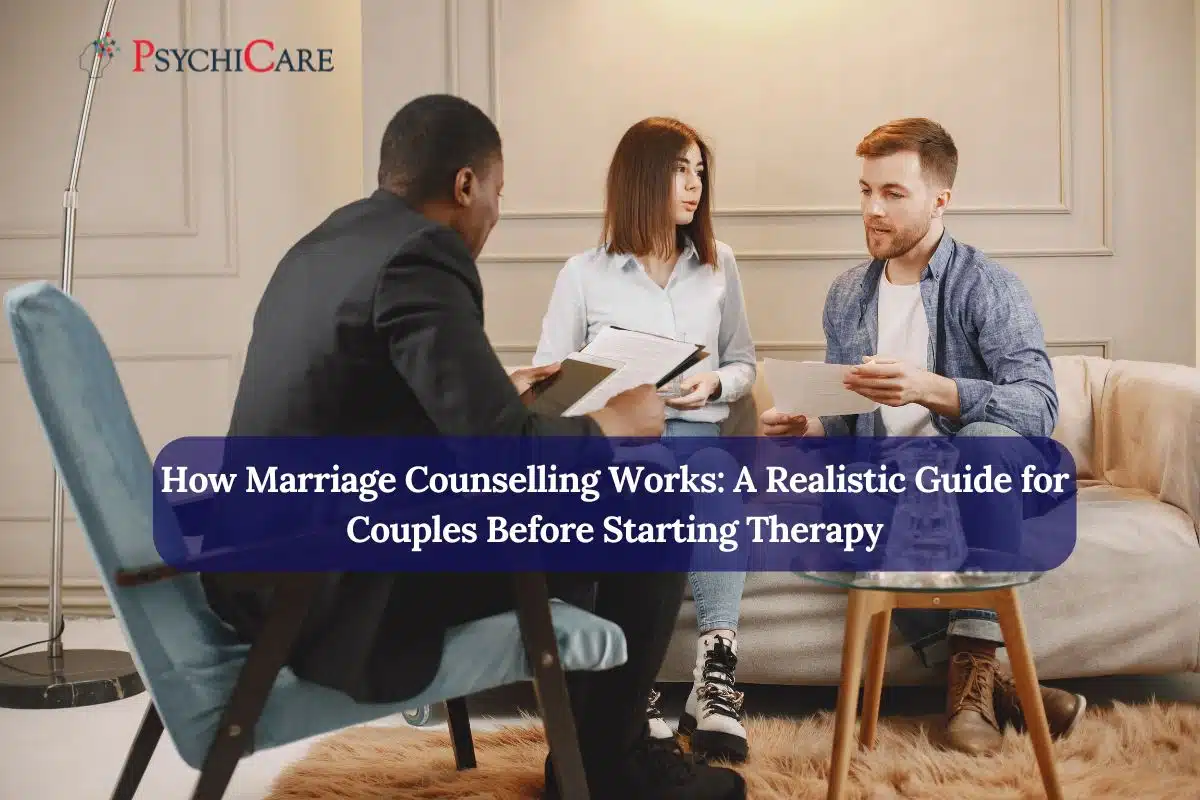
Most couples search for marriage counselling because something in the relationship feels stuck. Maybe the fights repeat. Maybe the silence feels heavier. Maybe one partner has pulled away, or trust feels fragile, or both of you have stopped understanding each other the way you once did.
And before reaching out, almost every couple has the same questions:
“What actually happens in counselling?”
“Will it be awkward?”
“Will the therapist take sides?”
“What if our problems are too small… or too big?”
This guide is written to answer those exact questions.
No textbook theory, no complicated psychology, just a clear picture of what marriage counselling really looks like, what couples actually experience inside the sessions, and how the process helps you feel more connected and supported again.
This is the guide you read before deciding whether counselling is the right step for your marriage.
Most couples imagine counselling as sitting in a room talking about problems, but that’s not what really happens. Marriage counselling is a structured conversation where both partners finally get the space to express themselves without things turning into a fight. The therapist slows down the pace so you don’t slip into old patterns, helps you understand what’s actually happening beneath the arguments, and guides you both toward clarity instead of blame.
A session feels less like a lecture and more like a calm, honest check-in, where someone neutral makes sure both people feel heard. You don’t have to prepare perfect answers or defend yourself. You don’t have to be “the one who fixes everything” or “the one who stays silent to keep peace.”
It’s a space where you learn why you react the way you do, why small issues become big, and what each of you needs to feel safe and connected again. It’s simple, human, and surprisingly relieving for most couples who finally experience it.
Couples rarely wake up one day and suddenly decide, “Let’s go to counselling.” It usually comes after a long stretch of feeling disconnected, misunderstood or exhausted. What pushes couples toward therapy isn’t one big event but lots of small moments that slowly build up.
You might be here because:
These aren’t signs of failure.
They’re signs your relationship is under pressure and counselling helps reduce that pressure before it becomes pain.
The first session is usually the part couples feel most nervous about, but it’s actually one of the gentlest steps in the entire process. You don’t walk in and start talking about your biggest problems. You don’t get judged. And the therapist doesn’t take sides, that’s not their role.
Here’s what the first session typically looks like:
Most couples say the first session feels like the first calm conversation they’ve had in months because someone is finally helping them slow the pace and understand each other without tension.
Most couples choose online counselling because it feels easier, more private and less overwhelming than visiting a clinic. And the progress you experience online isn’t any different, in many cases, it’s smoother because you’re talking from a space where you feel comfortable.
Here’s how online sessions usually unfold over the first couple of months:
Online counselling works because it removes the “clinic pressure.”
You’re talking from the comfort of your own environment and that helps both partners show up more honestly, more consistently and more emotionally open.
One of the biggest fears couples have is, “Will online counselling really help us talk better?” The answer is yes, often even more than in-person. Online sessions naturally slow the pace of conversations, reduce emotional tension and give both partners space to express themselves without feeling overwhelmed.
Here’s how therapists make communication easier during online counselling:
Online counselling isn’t about learning “scripts.”
It’s about learning how to talk to each other without fear, pressure or emotional overload even during difficult topics.
Online marriage counselling is powerful, but it works best when couples understand what it’s designed for and what falls outside its scope. Being honest about this helps couples come in with the right expectations, which leads to better results.
Online mode works especially well because couples feel safer opening up from home.
Therapy isn’t magic, it’s teamwork.
It works beautifully when both partners participate, even if they start with hesitation.
Online counselling helps when you’re ready to understand each other, break old patterns and build a kinder, healthier relationship, not when you’re trying to “win” or prove the other person wrong.
Before booking their first online session, most couples have quiet worries they don’t say out loud. These fears are normal, and almost every couple shares them. Understanding them makes the process feel easier and less intimidating.
Here are the thoughts couples often have:
Once couples realise these fears are normal, the first session feels lighter, clearer and far less intimidating.
Preparing for online counselling doesn’t need effort, just a little intention. A few simple steps can make the session smoother, calmer and far more productive for both partners.
Here’s what actually helps:
Somewhere you won’t be interrupted. Bedrooms, a study corner, or even sitting in the car (many couples do!) works perfectly.
Many couples prefer sitting side-by-side. Others feel safer opening up from separate screens. Both are completely fine.
It keeps the session more private and helps you stay focused on each other.
Come with a calm mind. No heated talks in the hour leading up to therapy.
Not everything, just one feeling or one incident that mattered to you.
The first session isn’t about solving everything. It’s about understanding the pattern and creating safety.
Sit quietly, go for a walk, or just breathe. This helps the insights settle in instead of jumping back into daily tasks.
Online counselling works best when you’re comfortable, not perfect. These small steps simply help you feel grounded and ready to open up.
Couples often expect huge breakthroughs in therapy, but the real progress shows up in small, subtle shifts. These small changes are actually big indicators that your relationship is healing especially in online sessions where consistency is easier.
Here’s what improvement usually looks like:
You still disagree, but arguments don’t escalate in seconds. There’s more pause, less panic.
The way you speak starts feeling more respectful, even during tough conversations.
You begin noticing why your partner reacts the way they do — and respond with more empathy.
Neither of you is preparing “comebacks” in your head. You’re actually listening.
Small moments feel warm again, a shared cup of tea, a message, a gentle check-in.
Even when you disagree, you stay on the same conversation instead of jumping to old hurts.
There’s a sense of “us” – not two people surviving side by side.
These are the signs that online counselling is doing its job.
It’s not about perfection, it’s about emotional ease, understanding and consistent progress.
Most couples think about counselling long before they finally take the step. Not because they don’t care, but because the process feels unfamiliar and a little intimidating. Online marriage counselling makes that first step easier, it meets you where you are, in your own space, at your own pace.
You don’t need to have everything figured out before starting. You don’t need the “right words” or perfect timing. You just need a willingness to understand each other a little better than yesterday.
At PsychiCare, our RCI-licensed marriage therapists have 7 to 20+ years of experience supporting couples online. The goal is simple: to help both partners feel seen, heard, and supported without pressure or judgment.
If your relationship feels distant, confusing or emotionally heavy, even in small ways, online counselling can bring clarity and comfort sooner than you think. Sometimes, one honest conversation in a safe space is enough to help you find your way back to each other.
Imagine suddenly feeling a tight, twisting sensation in your stomach that makes it hard to…
Constipation is a common digestive problem that affects millions of people worldwide. Many wonder if…
Broken bones, or fractures, are common injuries that can range from minor hairline cracks to…
A blood clot in the leg, also known as deep vein thrombosis (DVT), can be…
A fever is your body’s natural response to infection, signaling that your immune system is…
The respiratory system is one of the most essential systems in the human body, responsible…

