
Updated: November 2025 · Refreshed content to improve clarity and supportive relevance.
In India, it’s not uncommon for couples to argue about in-laws, money, or even whether to go for an arranged marriage or a love marriage. Breakups, extra-marital affairs, and divorce are becoming more common too. In such moments, many people turn to a relationship counsellor for professional support.
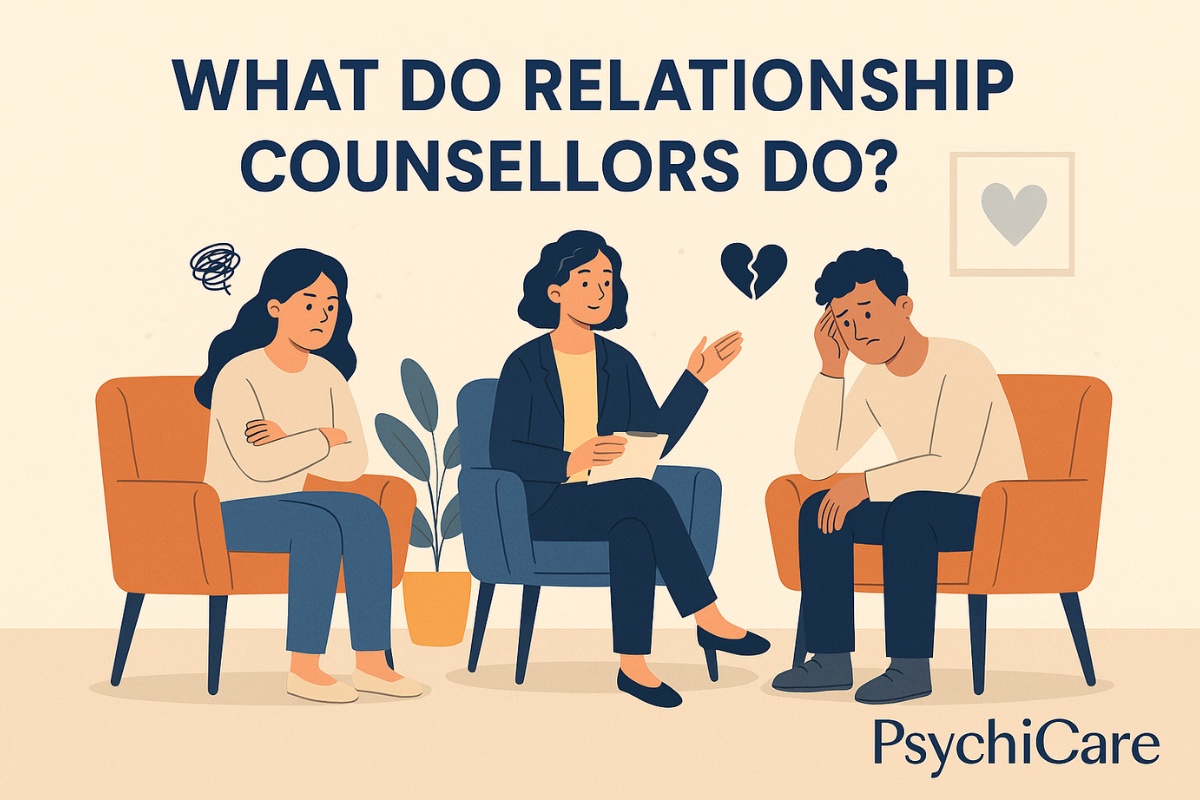
A relationship counsellor is not there to judge you or take sides. Their role is to listen carefully, guide both partners to talk openly, and teach practical ways to rebuild trust and understanding. For example, if one partner keeps re-checking the other’s phone due to jealousy, a counsellor helps the couple work through the insecurity instead of letting it turn into daily fights.
Unlike advice from relatives or friends, a counsellor gives neutral, confidential guidance and uses methods tested in psychology. Today, many people choose a relationship counsellor online, since sessions can be done from home in cities as well as smaller towns.
In this article, you’ll learn who relationship counsellors are, how they can help with Indian relationship issues, what qualifications they have, the typical counselling fees in India, and how to find the right counsellor for your needs.
A relationship counsellor is a trained professional who helps individuals, couples, and sometimes even families to handle problems in their personal relationships. Their main aim is to improve communication, trust, and understanding between people.
In India, many people confuse counsellors with psychologists or psychiatrists. The difference is simple:
Relationship counsellors in India often deal with everyday challenges that couples face:
Whether you are single, dating, married, or separated, a counsellor provides a safe and private space to talk openly without fear of judgment.
In India, couples often don’t fight only about “big” things; it’s the daily stress, family pressures, and unspoken expectations that slowly damage the bond. A relationship counsellor steps in to make sense of these situations, calm down the heated emotions, and show a way forward.
Here’s how counsellors actually help in real life:
Every relationship has its ups and downs, but in India, certain challenges come up again and again because of our culture, families, and expectations. A relationship counsellor understands these local realities and helps people handle them in a practical way.
Many couples fight because of interference from parents or relatives. A wife may feel her husband always sides with his mother, or a husband may feel caught between his parents and his partner. A counsellor helps set healthy boundaries while still respecting family ties.
It’s normal to feel nervous before an arranged marriage: “Will we match?” “Do I really know this person?” A counsellor provides a safe space to clear doubts, talk about expectations, and reduce the pressure before the wedding.
Cheating can break trust completely. Many couples don’t even know how to talk about it without a huge fight. Counsellors guide partners through this painful process, whether the goal is to rebuild trust or to separate peacefully.
Some couples live more like roommates than partners. Busy schedules, parenting, or long-standing fights kill closeness. Counsellors help couples reconnect emotionally first, so physical intimacy can improve naturally.
Divorce is becoming more common in Indian cities, but it’s still very painful especially when children are involved. Counsellors support partners in handling emotions, planning co-parenting, and starting fresh without bitterness.
Arguments about “who earns more” or “where the money is spent” are very common. Counsellors help couples make fair agreements on finances, so money doesn’t become a constant source of stress.
Checking phones, asking too many questions, or feeling insecure about a partner’s friends these are common problems in modern relationships. Counsellors help reduce these insecurities and build trust.
In India, many people are confused about who can call themselves a counsellor. Some think only doctors can do counselling, while others believe any good listener can be a counsellor. The truth lies in the middle.
A relationship counsellor is usually someone with a background in psychology or counselling. Common qualifications include:
In India, you may also find counsellors who are clinical psychologists or psychiatrists offering relationship counselling. But many professional counsellors are trained specifically in handling communication, trust, and family conflicts, without focusing only on mental illness.
👉 Important to remember: A counsellor is not the same as a psychiatrist. Psychiatrists are medical doctors who prescribe medicines. Counsellors mainly give guidance, use talk therapy, and help partners solve conflicts.
One of the first questions people ask is: “How much does a relationship counsellor charge in India?” The cost depends on the city, the counsellor’s experience, and whether you are taking sessions online or in person.
👉 Most sessions last 45 minutes to 1 hour. Some couples need only a few sessions to solve one problem, while others may continue for weeks or months if the issues are deeper.
For many couples, the cost may feel high at first, but compared to the long-term stress, fights, and misunderstandings it can prevent, counselling is often seen as a valuable investment in the relationship.
In India, many people get confused about who to meet: a counsellor, a psychologist, or a psychiatrist. The titles sound similar, but their roles are different.
👉 In simple words:
Finding the right counsellor can feel confusing, especially if you’re searching for the first time. The good news is, it’s easier than ever to get started.
The quickest way is to type “relationship counsellor near me” or “relationship counselling online” on Google. You’ll see counsellors, clinics, and platforms listed in your area. Check their websites, reviews, and Google ratings before booking.
Many people now prefer online counselling because it’s private, convenient, and flexible. With online sessions, you don’t need to travel or worry about being seen at a clinic. You can attend from your own home at a time that suits you.
At PsychiCare, we provide online relationship counselling with licensed counsellors who understand both modern and traditional Indian relationship challenges, whether it’s in-laws, trust issues, intimacy, or parenting conflicts.
Always check if the counsellor has a degree in psychology, counselling, or related training. More experienced counsellors usually have handled cases similar to yours, which can make you feel more confident.
The most important factor is whether you feel comfortable with the counsellor. Sessions should be confidential, judgment-free, and safe, so you can share openly.
👉 If you’re not sure where to begin, you can start with an online session at PsychiCare. Our team makes it simple to book, easy to access, and completely private.
In India, many couples and families face relationship challenges from daily fights about money or in-laws to bigger issues like cheating, separation, or loss of intimacy. A relationship counsellor provides a safe space to talk, rebuild trust, and find practical solutions without judgment.
Whether you are single, engaged, married, or going through a breakup, counselling can help you understand yourself and your partner better. Online sessions have now made it easier to connect with professional counsellors from anywhere in India, privately and conveniently.
👉 If you feel stuck in your relationship, remember, you don’t have to manage everything alone. Explore our online relationship counselling services at PsychiCare and take the first step towards healing and healthier connections.
In India, counselling fees usually range from ₹800 to ₹2,500 per session online. In metros and big hospitals, it may go up to ₹3,000. Some NGOs and student clinics offer lower-cost or even free sessions.
Yes. Many people attend counselling alone when their partner is not ready. A counsellor can still help you learn better ways to handle conflicts, reduce stress, and improve communication.
Yes. Counsellors are trained to keep sessions private and judgment-free. What you share will not be disclosed to family, friends, or employers.
Yes. Research shows most couples who attend counselling report better communication, reduced fights, and stronger emotional connection. In India, counsellors often address culture-specific issues like in-law conflicts, arranged marriage pressures, and trust after infidelity.
Not exactly. Relationship counsellors mainly focus on guidance for relationship and family issues. Psychologists are trained for a wider range of mental health concerns. In India, some psychologists also work as counsellors, but not all counsellors are clinical psychologists.
It depends on the issue. Some couples see improvement in 3–5 sessions, while deeper problems like long-term trust issues or divorce adjustment may take 10 or more sessions.
Imagine suddenly feeling a tight, twisting sensation in your stomach that makes it hard to…
Constipation is a common digestive problem that affects millions of people worldwide. Many wonder if…
Broken bones, or fractures, are common injuries that can range from minor hairline cracks to…
A blood clot in the leg, also known as deep vein thrombosis (DVT), can be…
A fever is your body’s natural response to infection, signaling that your immune system is…
The respiratory system is one of the most essential systems in the human body, responsible…

