Last Updated on April 8, 2025
“You’re giving your all cooking, helping, showing up, but your partner still says they don’t feel loved. Sound familiar?”
If that hits home, you’re not alone. As a marriage counselor at PsychiCare, I’ve seen couples who deeply care about each other but still feel totally disconnected.
It’s not that your partner doesn’t love you. It’s that they might not be speaking your love language.
Love languages are the different ways people give and feel love, like words, touch, time, gifts, or acts of service. And when yours don’t match your partner’s? It can feel like you’re in two completely different relationships.
👉 Fun fact: Only 27% of couples naturally share the same love language. That means most people have to learn how to love their partner in a way that truly lands.
But here’s the good news, it’s fixable. And in this article, we’ll talk about how to make it better (without changing who you are).
What Are Love Languages in a Relationship?
Think of love languages as emotional “languages” we all speak. Just like we use words to talk, we use love languages to show someone we care.
Relationship expert Dr. Gary Chapman introduced the 5 Love Languages:
- Words of Affirmation – saying “I love you,” giving compliments, or verbal encouragement
- Quality Time – focused time together without distractions
- Acts of Service – doing helpful things like cooking or running errands
- Physical Touch – hugs, kisses, hand-holding
- Receiving Gifts – thoughtful presents, big or small

The tricky part? Most couples don’t share the same top love language. So while you might feel loved when someone helps with chores, your partner might be craving quality time on the couch.
Understanding each other’s love language can be a game-changer, but first, you have to figure out what yours and your partner’s really are.
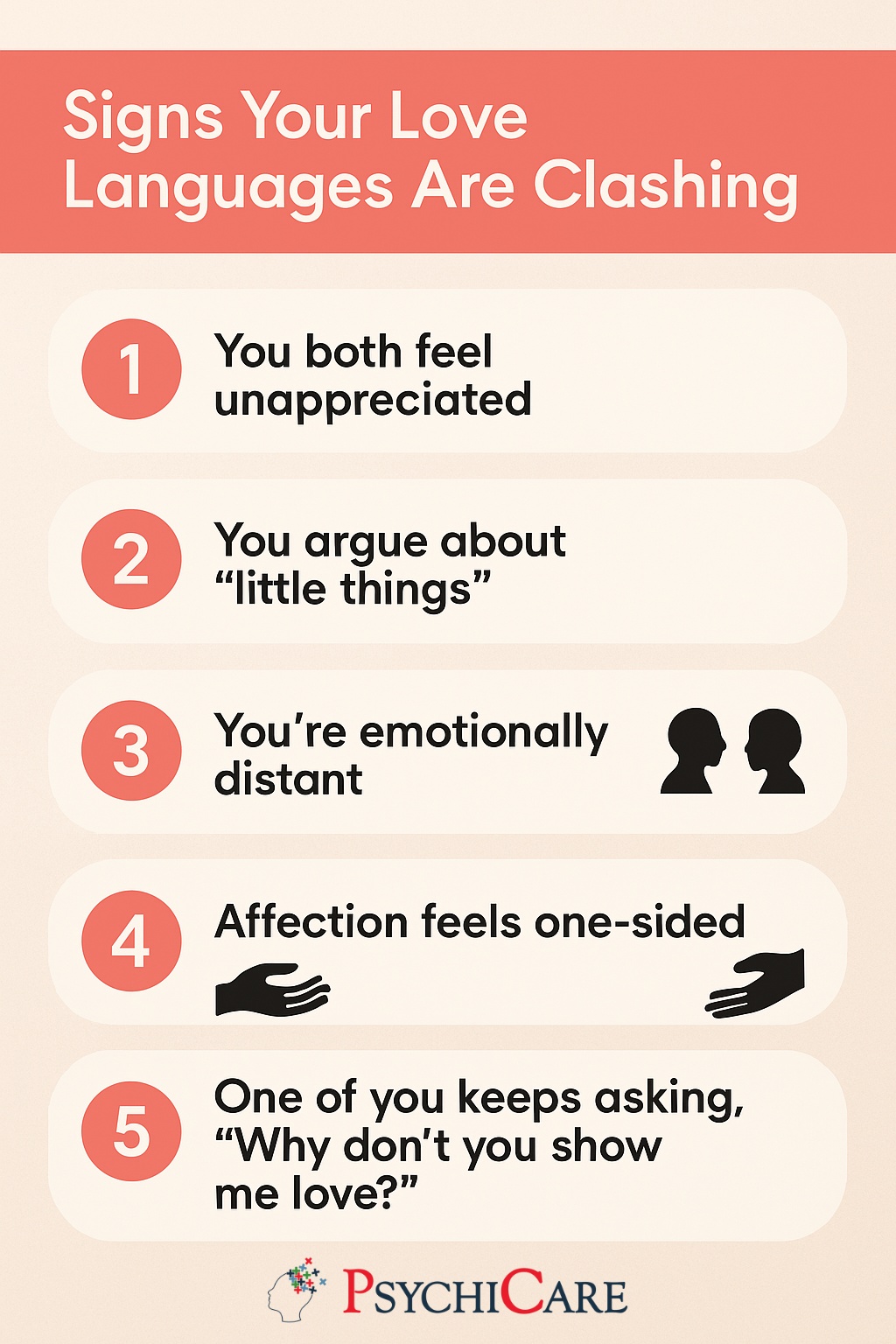
Signs Your Love Languages Are Clashing
Sometimes it’s not that love is missing—it’s just getting lost in translation. Here’s how couples often realize their love languages aren’t lining up:
1. You both feel unappreciated
You’re doing everything you can, but it still feels like it’s not enough. They don’t notice your efforts, and you feel invisible.
2. You argue about “little things”
Small issues blow up. One partner feels ignored, the other feels like they’re trying their best. It’s often a mismatch in how love is being shown and received.
3. You’re emotionally distant
It feels like something’s off. You live together and talk daily, but the emotional connection feels thin. This distance grows when love languages aren’t understood.
4. Affection feels one-sided
Maybe you’re always hugging and kissing, but your partner just wants time to talk. Or you’re constantly doing things for them, but they want to hear how you feel.
5. One of you keeps asking, “Why don’t you show me love?”
This is a big clue. When love isn’t coming in the way someone understands, it can feel like it’s not there at all.
How Love Language Mismatches Show Up in Real Life
Love language mismatches aren’t always obvious—but they feel heavy. They show up in the little moments, like this:
“I hug him all the time, but he says I never appreciate him.”
Your love language might be Physical Touch, but his could be Words of Affirmation. So even though you’re showing love your way, he doesn’t feel it.
“She keeps buying me expensive gifts, but all I want is a quiet night in.”
For her, Gifts show love. For you, it might be Quality Time. The result? You feel disconnected, even when effort is there.
These mismatches create:
- Constant confusion: “Why aren’t they happy?”
- Fights that feel deeper than the actual issue
- Emotional distance—even if both people care
- Feeling unloved, despite good intentions
It’s not about not loving each other. It’s about missing each other’s language. Once that’s clear, everything can shift.
Why Love Language Conflicts Hurt So Much
When your love language is ignored or misunderstood, it doesn’t just feel frustrating—it feels personal. It’s like saying “I love you” in a way your partner doesn’t hear. Over time, that silence can hurt more than words.
Love languages are tied to our core emotional needs. When those needs aren’t met, we start to feel unloved, unseen, or even rejected—even if our partner thinks they’re doing everything right.
Here’s what often happens in relationships with clashing love languages:
- Emotional disconnect: You feel like roommates, not partners
- Increased self-doubt: “Am I too needy? Am I asking for too much?”
- Built-up resentment: “I always try, but they don’t notice”
- Misjudging intent: You assume they don’t care, when they’re just expressing love differently
It’s not about more love. It’s about the right kind of love—spoken in the language your partner understands.
Common Mistakes Couples Make With Love Languages
Love languages can totally change how you connect with your partner—but only if you’re using them the right way. Here are some common mistakes that silently ruin the magic:
1. Scorekeeping
“I did your love language—now where’s mine?”
Love isn’t a transaction. Keeping score turns connection into a competition and makes both partners feel unseen.
2. Being rigid
“This is my love language—deal with it.”
Love languages aren’t about demands. They’re about understanding. Relationships thrive when both people stretch a little, not when one refuses to bend.
3. Ignoring change
“That was my love language 5 years ago, not anymore.”
Life changes us. What made you feel loved then might not hit the same now. Check in often—love languages can shift.
4. Avoiding deeper issues
“We just need to speak each other’s love language more.”
Sometimes, the problem isn’t just a mismatch in love languages—it’s resentment, burnout, or trust issues hiding underneath. Love languages can help, but they’re not a Band-Aid for bigger wounds.
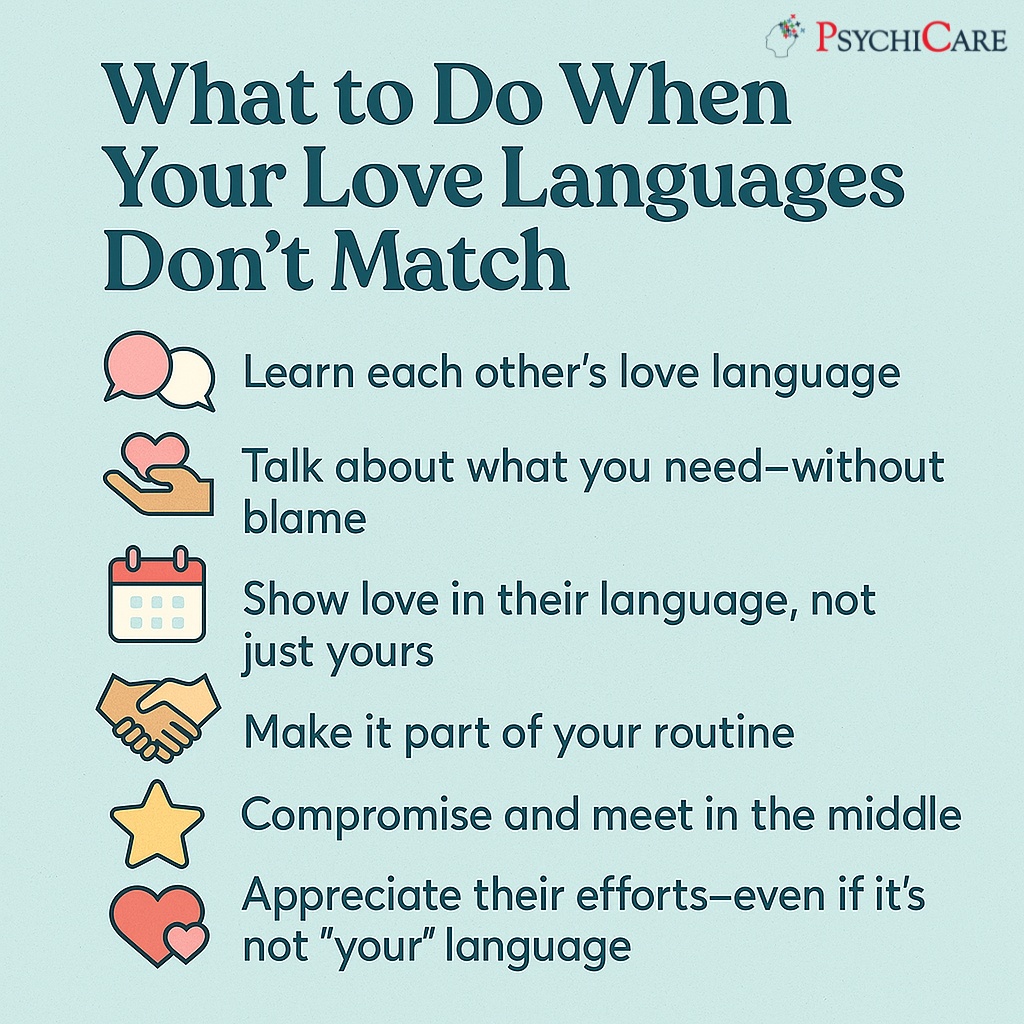
What to Do When Your Love Languages Don’t Match
Just because your love languages don’t match doesn’t mean your relationship is doomed. It just means you need a new game plan. Here’s what works:
1. Learn each other’s love language—deeply
Don’t just take a quiz and move on. Pay attention to what truly makes your partner light up. Ask: “What makes you feel most loved lately?”
2. Speak their language—even if it’s not natural for you
It might feel awkward at first, but small, consistent actions matter more than grand gestures. Love is a skill, and it can be learned.
3. Mix it up
Try giving love in multiple ways—not just your partner’s top language. Variety can help both of you feel seen and appreciated.
4. Set love check-ins
Every few weeks, ask each other: “How have you felt loved by me recently?” It keeps love intentional and avoids guessing games.
5. Get support if needed
Sometimes love language clashes are just the surface. If you’re stuck in patterns of feeling unloved or misunderstood, couples counseling can help you reconnect without blame or frustration.
Can Love Languages Change Over Time?
Yes, love languages can shift over time, and that’s completely normal. As individuals grow, so do their needs in a relationship. Here’s how:
1. Life stages matter
If you’re a new parent, your love language may lean more towards physical touch or acts of service, while before, it might have been words of affirmation.
2. Changes in emotional needs
Going through tough times like stress at work or health struggles can change how we feel loved. You might need more quality time or just someone to listen.
3. Reassessing with your partner
As your relationship matures, take time to revisit each other’s love languages. Have open discussions about how your needs might be evolving, and adjust accordingly.
4. Healing and self-discovery
If you’ve been through personal growth or therapy, you might discover new ways you want to give and receive love. Be open to exploring and discussing these shifts.
5. Adapt together
A love language change doesn’t have to be scary or divisive. Embrace it as a way to deepen your connection and keep the relationship fresh. The key is open communication and a willingness to evolve as a couple.
Tips From a Couples Therapist
As a therapist, I see couples navigate love language mismatches every day. Here are some key tips to make it work:
1. “Your partner doesn’t need to naturally speak your language—they just need to learn it.”
A successful relationship isn’t about finding someone who speaks your love language fluently—it’s about willingness. Your partner may not innately know how to express love in your preferred language, but with patience and communication, they can learn to meet you halfway.
2. “It’s not about being the same—it’s about showing up where it counts.”
While it’s tempting to expect your partner to share the same love language as you, it’s more important that they show up for you in the ways that matter. Even if you’re speaking different languages, making the effort to understand and meet each other’s needs is what truly builds connection.
3. “Even opposite languages can work with effort and emotional safety.”
Opposite love languages don’t have to be a relationship deal-breaker. With emotional safety and mutual respect, opposites can attract. It’s about creating a safe space where both partners feel heard and understood—your love languages can coexist when you approach them with empathy.
4. “Give grace and space to grow.”
Both partners will make mistakes, and that’s okay. Be patient with one another as you figure out how to express your love in ways that feel natural to each other. Love language learning is a journey, not a one-time task.
5. “Keep communication open and honest.”
Regularly check in with each other about how you’re both feeling loved. Don’t wait for an argument to talk about your needs. By keeping the lines of communication open, you ensure that love continues to flow in your relationship, even when life gets busy.
When to Seek Help
If mismatched love languages are causing ongoing hurt, miscommunication, or emotional distance in your relationship, it may be time to seek professional help. A couples therapist can help you:
- Uncover deeper emotional needs behind love language differences.
- Turn clashes into opportunities for growth and understanding.
- Develop healthier communication patterns and strategies for intimacy.
Expert support can make a significant difference, especially when navigating tough love language issues. Therapy isn’t about fixing your partner—it’s about building bridges and learning how to meet each other’s needs, even when they don’t align naturally.
Love Language FAQs
What if my partner doesn’t believe in love languages?
Some people may be skeptical about the concept of love languages. If this is the case, start by having a candid conversation about your needs and experiences. Share how learning about love languages has helped you understand your own feelings better. Sometimes, explaining the concept in simple terms helps your partner see its value.
Can your love language change over time?
Yes! Your love language can evolve as you go through different life stages. For example, someone may prefer physical touch in a relationship early on but later prefer acts of service as life gets busier. Stay open to discussing these changes and adjusting how you express love as time goes on.
Is having different love languages a dealbreaker?
No, having different love languages isn’t a dealbreaker. In fact, it’s very common! The key to making it work is understanding and adapting. With the right mindset and effort, couples with different love languages can thrive by learning how to meet each other’s needs.