
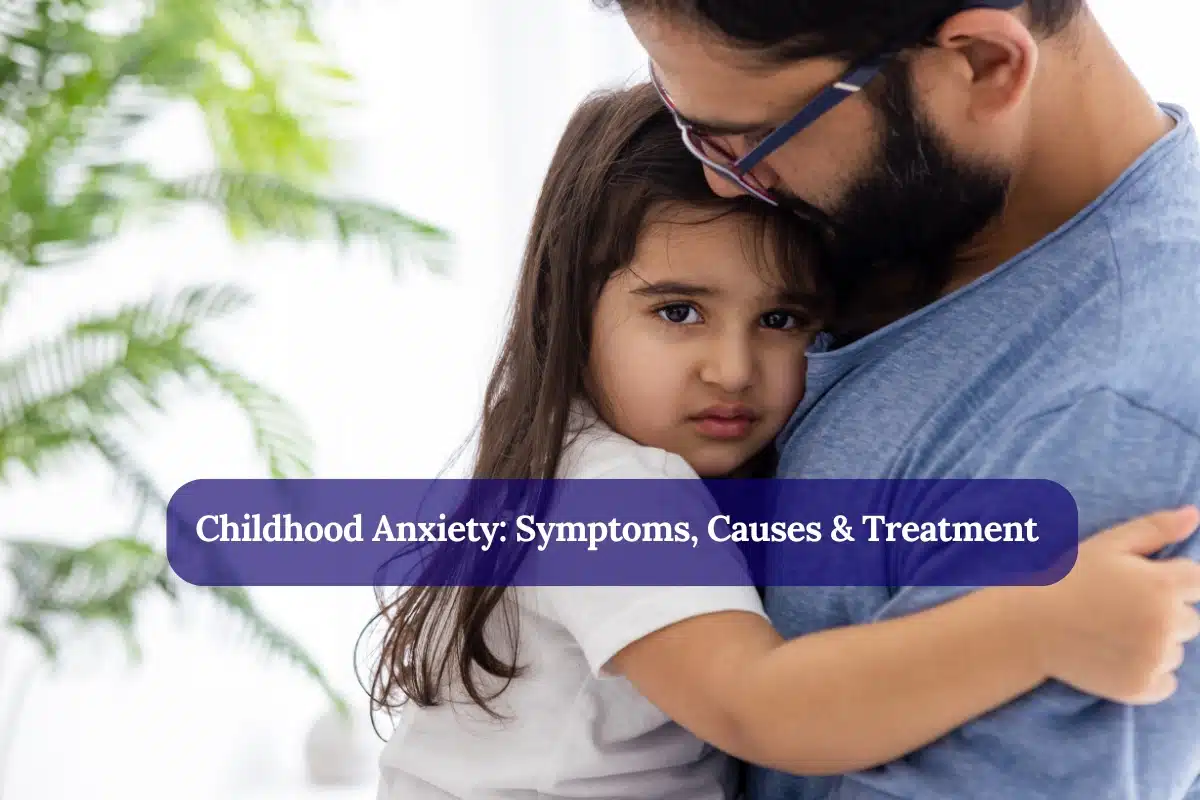
“Why is my 7-year-old scared to sleep alone?”
“Is it normal for my child to feel sick every morning before school?”
“Could this be anxiety or something else?”
If questions like these feel familiar, you’re not alone. Childhood anxiety affects 1 in 8 children globally, yet many parents don’t recognise the early signs until it starts disrupting daily life. What looks like clinginess, stomach aches, tantrums, or school refusal may actually be anxiety showing up in disguise.
As a licensed child psychologist with over 7 years of clinical experience, I’ve worked with families who feel helpless watching their child struggle, even though nothing appears “wrong” on the surface. Anxiety in children isn’t always loud. Sometimes it’s silent, slow, and mistaken for shyness or stubbornness.
In this guide, we’ll unpack:
What anxiety in kids really looks like (age-wise and symptom-wise)
What causes it, from childhood trauma to ADHD overlaps
When to worry and when to watch
How to support your child at home and when to seek help
If you’re concerned about your child’s behavior or emotional health, our team at PsychiCare offers expert online child counselling services from the comfort of your home.
Let’s help you make sense of what you’re seeing.
Anxiety in kids doesn’t always show up as panic or tears. Sometimes, it looks like a child refusing to go to school, asking endless “what if” questions, or saying their stomach hurts every morning. Other times, it’s quiet—a withdrawn child who avoids eye contact or won’t speak when visitors arrive.
Physical complaints like stomachaches, headaches, or nausea
Trouble falling asleep or staying asleep
Clinginess or separation anxiety, especially in new settings
Avoiding school, social events, or speaking in class
Tantrums or irritability over small changes or transitions
Constant worrying or perfectionism (“What if I mess up?”)
Trouble concentrating or sitting still (often mistaken for ADHD)
Did you know? Studies show that up to 80% of children with anxiety go untreated, often because signs are dismissed as typical behavior or temporary stress.
If your child regularly complains of feeling sick, shows fear over everyday tasks, or avoids social situations, it might be more than a phase. These are often early signs of anxiety in childhood and can start as young as age 3 or 4.
In the next section, we’ll break down how childhood anxiety shows up at different ages, because what’s normal at 4 might be a red flag at 9.
Anxiety doesn’t always look the same at every stage of childhood. A 4-year-old with anxiety may refuse to leave a parent’s side, while a 9-year-old might start faking stomach pain to avoid school.
Refuses to separate from parents at daycare or school
Becomes upset by loud sounds or crowded spaces
Has frequent tantrums when routines change
Clings tightly or hides behind you around new people
Complaints of belly aches, especially before outings
Searches we’re answering here:
“Can a 3 year old have anxiety?”
“Why does my 4 year old get anxious?”
“Anxiety symptoms in 5 year olds”
Worries excessively about school, friends, or being “good enough”
Avoids classroom activities like reading aloud or answering questions
Complains of physical issues before school (nausea, headaches)
Shows perfectionism or fear of failure in homework
Melts down at transitions (leaving the house, bedtime)
Related resource: When Your Child Fears Eye Contact: The Hidden Signs of Social Anxiety
Begins hiding anxiety, masking it with silence or withdrawal
Avoids social activities or gets nervous before talking to peers
Expresses fear of being judged or not liked
May develop fears around performance, appearance, or embarrassment
Shows sleep issues, irritability, or frequent “I don’t feel good”
Helpful link: Childhood Depression vs. Anxiety
Childhood anxiety doesn’t come from one place. It’s usually a mix of a child’s temperament, life experiences, brain wiring, and even the way we respond as caregivers. And no—it’s not caused by “bad parenting.”
Some kids are born more sensitive, cautious, or reactive.
Brain differences in areas that manage stress (like the amygdala) can increase anxiety.
Family history of anxiety or mental health conditions can raise risk.
This aligns with search terms like “is childhood anxiety genetic” and “childhood anxiety causes.”
Trauma (e.g. bullying, medical procedures, divorce, or accidents)
Overexposure to distressing news or adult problems
Parenting styles that involve criticism or overprotection (often unintentionally)
School pressure or social rejection
Related post: How to Deal With Child Misbehaving in School
Screen time and overstimulation: Too much digital input and too little rest
Academic overload: Too many expectations too early
Social comparison (even at young ages): “Why don’t I have what they have?”
See also: Mobile Phone Addiction in Children
Children rarely say “I feel anxious.” Instead, their body says it for them.
Anxiety in kids often shows up as physical symptoms, especially when they don’t yet have the words to express their feelings.
Stomach aches or nausea — often before school or social events
Headaches or muscle tension — even with no medical cause
Changes in appetite — eating too little or too much
Sleep issues — trouble falling asleep, nightmares, or early waking
Frequent urination or accidents, especially before transitions
Pale skin, sweaty palms, fast breathing, or a racing heart
Throwing up or feeling faint in social situations
Related resource: Sleep Disorders Counselling & Therapy
All children worry sometimes. It’s part of growing up. But when that worry becomes constant, overwhelming, or starts interfering with everyday life, it’s time to pause and look deeper.
Anxiety is impacting daily life (school, sleep, friendships, routines)
Physical complaints keep coming back with no medical cause
Your child avoids important activities or people
They rehearse worst-case scenarios constantly (“What if I throw up? What if I die?”)
You feel like you’re constantly tiptoeing to avoid triggering them
Their world feels like it’s shrinking less socialising, less trying, more hiding
Also see: Therapy for School Phobia
Phrases like “just calm down” or “you’re fine” don’t work for anxious kids. They often feel invalidated, or more alone. Try saying:
“I hear you. This is hard.”
“Let’s take one step at a time.”
“You’re safe, and I’m right here.”
“It’s okay to feel nervous. We’ll get through this together.”
When anxiety is persistent, physical, or isolating, it’s not something to wait out. Early support can prevent anxiety from becoming a lifelong struggle.
Anxious kids don’t need fixing—they need support, structure, and tools that meet them where they are. Here’s what really helps them feel safe and slowly stretch their comfort zone.
Name the feeling: “It sounds like you’re feeling worried” helps normalize anxiety
Use visual tools: Worry jars, calm-down charts, or emotion wheels
Create predictable routines: Especially around bedtime and school mornings
Practice coping ahead of time: Roleplay or gently prepare for triggers
Celebrate bravery: Even small acts like saying “hi” or entering a classroom
You might also like: Play Therapy for Kids
CBT (Cognitive Behavioral Therapy): Teaches kids how thoughts, feelings, and actions are connected. Kids learn how to reframe fears and build coping skills.
Exposure Therapy (Done Gradually): Helps kids gently face feared situations instead of avoiding them. This is always guided and never forced.
Family Support & Psychoeducation: Parents learn how to respond without reinforcing anxiety.
Online Child Therapy: Convenient and effective, especially for children who feel safe opening up at home.
Start with our Child & Adolescent Clinic or explore Counselling for Kids & Teenagers
Children with anxiety may show physical symptoms (like stomachaches), avoid social situations, struggle with sleep, or become overly clingy or perfectionistic. Their worry can be intense, persistent, and interfere with everyday life.
Mild anxiety may ease as a child matures. But persistent anxiety usually needs support. Without treatment, it can grow into school refusal, depression, or long-term emotional struggles.
Causes include genetics, brain differences, childhood trauma, parenting dynamics, school pressure, or overstimulation from screen time. Some children are simply more biologically sensitive than others.
Causes include genetics, brain differences, childhood trauma, parenting dynamics, school pressure, or overstimulation from screen time. Some children are simply more biologically sensitive than others.
If anxiety interferes with sleep, school, friendships, or self-confidence, or if physical symptoms are frequent, it may be time to seek help. Trust your gut if you feel something’s not right.
Yes. Toddlers or preschoolers may act clingy, mute, aggressive, or physically ill. They may not say “I’m scared” but show it through behavior.
Absolutely. In fact, around 30 to 50% of children with ADHD also have an anxiety disorder. The two often overlap, making diagnosis and treatment more complex.
Yes. Online therapy allows children to speak from the safety of home, which can reduce pressure and improve engagement, especially for kids with social or separation anxiety.
🔗 Start here: PsychiCare Online Therapy for Kids
Imagine suddenly feeling a tight, twisting sensation in your stomach that makes it hard to…
Constipation is a common digestive problem that affects millions of people worldwide. Many wonder if…
Broken bones, or fractures, are common injuries that can range from minor hairline cracks to…
A blood clot in the leg, also known as deep vein thrombosis (DVT), can be…
A fever is your body’s natural response to infection, signaling that your immune system is…
The respiratory system is one of the most essential systems in the human body, responsible…


