
Last Updated on December 19, 2025
Family conflict usually does not start with one clear incident. It builds through repeated tension around money, responsibilities, boundaries, health, or unresolved past issues. What keeps it going is rarely the topic itself, but the pattern where the same disagreements come back without being settled.
Family conflict and family issues describe ongoing disagreements between family members that affect day-to-day functioning and relationships. This can involve parents and children, siblings, partners, or extended family. This article looks at the most common causes of family conflict, using real-life examples to show how these problems develop and why they often repeat, even in families where people care about each other.
What Are Family Conflicts?
Family conflicts are ongoing disagreements between family members that do not get resolved and begin to affect how people live together or relate to one another. These conflicts are not about a single argument. They repeat, follow similar patterns, and often involve the same unresolved issues.
They can occur between parents and children, siblings, partners, or extended family members. In many cases, the conflict is less about the specific topic and more about how decisions are made, how responsibilities are shared, or how emotions are handled during disagreements.
Signs of Unhealthy Family Conflict
Family conflict becomes unhealthy when the same issues repeat without resolution and begin to affect trust, communication, or daily interactions.
Common signs include:
- Avoiding direct conversations about problems
- Using sarcasm, silence, or indirect remarks
- Repeated arguments about the same topics
- Fights starting over minor or unrelated issues
- Disagreements escalating into shouting or insults
- Family members withdrawing or limiting contact
- Long periods of not speaking to one another
- Loss of trust in intentions or decisions
- Bringing past conflicts into current arguments
- One person carrying most emotional responsibility
- Dependence that limits independence or choice
- Attempts to control behaviour or decisions
- Any form of intimidation or harm
10 Common Causes of Family Conflict
Most ongoing family conflict does not come from rare or extreme situations. It forms around a small number of repeating pressure points that affect how families make decisions, share responsibility, communicate, and respond to change. These causes are usually familiar to the people involved, even when they are not openly discussed.
The causes listed below reflect patterns that appear repeatedly in families dealing with long-term tension. They are not isolated incidents, but areas where expectations clash and remain unresolved. Each cause is explained separately to show how conflict develops and why it often repeats across time and situations.
Money, Spending, and Control
Money-related conflict in families is rarely about numbers alone. It usually forms when spending, saving, or financial support starts affecting control, dependence, or fairness within relationships. These conflicts repeat when expectations remain assumed rather than clearly addressed.
In many families, one person handling finances creates imbalance, especially when decisions feel monitored or restricted. Loans, shared expenses, or inheritance often blur boundaries, turning money into a source of pressure or resentment. Over time, financial disagreements resurface because they carry unresolved issues around trust, influence, and responsibility.
Common real-life scenarios include:
- A couple arguing over spending priorities because saving represents security for one person and limitation for the other
- Siblings disputing inheritance due to perceived favouritism rather than the actual value of assets
- Family loans creating ongoing tension when repayment is delayed or avoided
- Partners clashing over debt because they hold different views on risk and financial responsibility

Communication Patterns That Keep Conflict Going
Family conflict often continues not because of what is being discussed, but because conversations fail in the same ways each time. When people feel unheard or dismissed, discussions stop being about solving a problem and start becoming defensive exchanges or complete shutdowns.
Unresolved issues tend to resurface when families avoid direct conversations, rely on assumptions, or revisit past arguments instead of addressing the current one. Over time, communication becomes predictable, and conflict repeats even when the topic changes.
Common real-life scenarios include:
- Talking over each other instead of listening
- Dismissing concerns as unimportant or exaggerated
- Using tone, silence, or body language to signal disapproval
- Assuming intent rather than asking for clarification
- Avoiding conversations that feel uncomfortable
- Reopening old arguments during new disagreements
- Assigning blame instead of discussing responsibility
- Leaving expectations unspoken and then reacting to disappointment


Personal Differences and Clashing Values
Family conflict often forms when differences are treated as problems instead of realities that need adjustment. Tension grows when families expect agreement on beliefs, routines, or priorities, and interpret difference as rejection, disrespect, or lack of loyalty.
These conflicts repeat when people try to correct each other rather than negotiate boundaries. Over time, everyday differences turn into identity-based arguments, making compromise feel personal instead of practical.
Common real-life scenarios include:
- Partners disagreeing on religious or cultural values while making decisions about children
- Siblings avoiding each other due to opposing political views during family gatherings
- Couples clashing over daily routines, such as sleep schedules or work habits
- Family members feeling excluded or mocked because of food choices or lifestyle decisions
- Teenagers pushing back when interests or goals are dismissed by parents
Family Roles, Responsibilities, and Unequal Load
Conflict often develops when family roles are assumed rather than agreed upon. Tension builds when responsibilities are uneven, unclear, or silently shifted onto one person over time. What starts as cooperation can turn into resentment when effort is expected but not acknowledged.
These conflicts become sharper during caregiving, financial dependence, or parenting decisions. Disagreements usually surface when one family member feels overburdened while others feel criticised or controlled, even if no one names the imbalance directly.
Common real-life scenarios include:
- One person handling most childcare or household work without shared decision-making
- Arguments over financial support between adult siblings or extended family
- Disputes about caring for ageing parents, including medical choices or living arrangements
- Power struggles when one family member manages logistics and expects compliance
- Resentment forming when responsibilities change but expectations do not
Life Changes That Disrupt Family Balance
Family conflict often increases during periods of change because roles, expectations, and routines shift faster than families adjust. The disagreement is rarely about the change itself, but about how decisions are made and how others are expected to adapt.
Tension grows when changes feel sudden, unilateral, or poorly explained. Family members may respond with resistance, criticism, or withdrawal, especially when change threatens stability, shared plans, or long-held expectations.
Common real-life scenarios include:
- Moving to a new city or country without involving the wider family in the decision
- Choosing a career path that conflicts with family expectations or values
- Separation or divorce altering living arrangements, loyalties, or responsibilities
- Family members reacting differently to loss, creating distance or resentment
- Illness changing dependence, care roles, or financial responsibilities
Inheritance, Wills, and Perceived Fairness
Inheritance conflicts rarely start after a death. They usually form earlier, when expectations about fairness, contribution, or entitlement are never clarified. Tension increases when asset distribution feels unequal, unexplained, or tied to past family dynamics rather than clear decisions.
These conflicts deepen when documents are vague or when family members interpret outcomes through old grievances. What looks like a legal issue on the surface often reflects long-standing feelings of favouritism, neglect, or unpaid sacrifice.
Common real-life scenarios include:
- Siblings reacting differently to unequal inheritance based on past caregiving roles
- Family members disputing verbal promises that were never documented
- Conflict arising from unclear wills or last-minute changes
- Step-families disagreeing over asset division after remarriage
- Resentment resurfacing when inheritance decisions echo earlier family tensions
Chronic Health and Mental Health Strain
Health-related conflict in families usually develops when illness changes roles, dependence, or expectations. The tension is rarely about the condition itself. It forms around who carries responsibility, who decides care, and how limits are handled over time.
These conflicts repeat when needs increase but boundaries remain unclear. Mental health concerns often add another layer, especially when symptoms are misunderstood, minimised, or treated as behavioural problems rather than health issues.
Common real-life scenarios include:
- Family roles shifting after a long-term illness, creating imbalance or resentment
- Disagreements over medical expenses or long-term care costs
- Conflict caused by misunderstanding symptoms or treatment needs
- Care responsibilities falling on one person without shared agreement
- Mental health concerns being dismissed, questioned, or attributed to attitude

Parenting Styles and Authority Conflicts
Conflict often develops when caregivers disagree on discipline, boundaries, or decision-making authority. These disagreements are less about parenting theory and more about control, trust, and whose judgement carries weight.
Tension increases when one parent feels undermined or when extended family members interfere. Over time, children may be pulled into the conflict, worsening resentment between adults.
Common real-life scenarios include:
- Parents arguing over discipline methods or screen-time rules
- One parent enforcing boundaries while the other reverses decisions
- Grandparents overriding parenting choices
- Disagreements about schooling, routines, or independence
- Children aligning with one adult, increasing division
Boundaries With Extended Family
Family conflict frequently arises when boundaries with relatives are unclear or ignored. Problems develop when involvement turns into interference and expectations are assumed rather than agreed upon.
These conflicts repeat when families avoid addressing limits directly, often to preserve peace. The result is ongoing frustration instead of resolution.
Common real-life scenarios include:
- Relatives commenting on personal decisions without invitation
- In-laws influencing finances, parenting, or living arrangements
- Expectations around visits, holidays, or availability causing tension
- Privacy being breached and dismissed as concern
- Pressure to prioritise extended family over immediate needs
Addiction, Alcohol Use, and Unpredictable Behaviour
Family conflict linked to addiction usually develops around inconsistency rather than substance use alone. Trust breaks down when promises are repeatedly made and broken, roles shift to manage damage, and behaviour becomes unpredictable.
These conflicts intensify when denial replaces accountability. Family members may argue about responsibility, enable behaviour to avoid confrontation, or disagree on how much support is appropriate. Over time, communication narrows to crisis management instead of resolution.
Common real-life scenarios include:
- Arguments following repeated relapses or broken commitments
- Family members covering up behaviour to prevent embarrassment
- Disputes about money, safety, or childcare linked to substance use
- One person taking on control roles to compensate for instability
- Conflict over boundaries when behaviour affects others
Tips on Interacting With Difficult Family Members
Some family members remain difficult regardless of how often issues are discussed. In these situations, the goal is not agreement, but containment. Reducing friction matters more than changing the other person.
- Keep conversations focused on the present issue, not past behaviour
- Avoid explaining or defending yourself repeatedly
- State limits clearly, then stop negotiating them
- Do not match sarcasm, raised voices, or personal attacks
- Limit how much personal information you share
- Step away from conversations that turn circular or hostile
- Choose timing carefully rather than engaging in the moment
- Accept that some behaviour will not change, even with effort
These approaches reduce escalation. They do not fix the relationship, but they prevent ongoing damage when contact is unavoidable.
How to Resolve Family Conflicts
Family conflict does not resolve through one good conversation. It settles only when patterns change. Many attempts fail because families focus on fixing behaviour instead of addressing what keeps the conflict repeating.
The steps below reflect what usually makes a difference in ongoing family disputes.
Decide What You Can and Cannot Influence
Some family members will not change their behaviour, even when the impact is clear. Resolution begins when effort shifts away from control and toward managing your own responses, limits, and expectations.
Slow Down Escalation Before Addressing the Issue
Conversations held during anger or pressure rarely lead to resolution. Conflict repeats when discussions happen in reactive moments instead of after emotions have settled.
Focus on One Issue at a Time
Bringing multiple complaints into one conversation overwhelms the discussion and invites defensiveness. Resolution becomes possible only when a single issue is addressed without reopening past conflicts.
Speak From Impact, Not Accusation
Conflicts harden when conversations turn into blame. Describing how a situation affects you keeps the focus on the issue instead of triggering counterattacks.
Recognise When Compromise Is Not the Solution
Some conflicts are not about middle ground. Repeated compromise in situations involving disrespect, control, or boundary violations often reinforces the problem rather than resolving it.
Use Distance When Interaction Fuels Conflict
Stepping back is sometimes necessary when repeated interaction escalates tension. Distance is not avoidance when it prevents harm and creates space for clearer decisions.
Seek Structured Help When Patterns Do Not Shift
When families remain stuck despite repeated attempts, outside structure can interrupt the cycle. This is most useful when conflict has become habitual rather than situational.
Accept When Resolution Is Limited
Not all family conflicts reach closure. In some cases, resolution means setting limits, redefining contact, or accepting that change will be partial rather than complete.
How Therapy Can Help
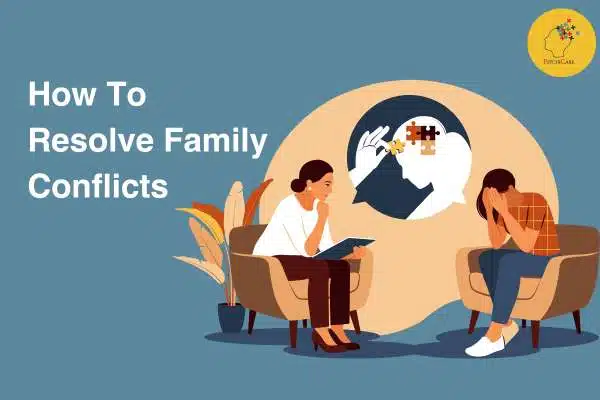
Family Therapy helps with family conflict when the problem is no longer a single disagreement, but a repeating pattern that the family cannot interrupt on its own. It is most useful when conversations loop, roles are fixed, and past issues keep resurfacing despite repeated attempts to resolve them.
In family or relationship-focused therapy, the work is not about deciding who is right. It focuses on identifying patterns that keep conflict active, such as avoidance, escalation, uneven responsibility, or unspoken rules. Once these patterns are visible, families can test different ways of responding instead of repeating the same reactions.
Therapy does not work when one person attends only to change someone else. It also has limits when there is ongoing harm, denial of responsibility, or refusal to respect boundaries. In those situations, therapy may help clarify decisions rather than repair relationships.
When used appropriately, therapy provides structure, accountability, and a neutral setting where difficult topics can be addressed without collapsing into familiar arguments.
Frequently Asked Questions About Family Conflict
What are the most common causes of family conflict?
The most common causes of family conflict include money decisions, communication breakdowns, unequal responsibilities, parenting disagreements, health-related strain, inheritance issues, addiction-related behaviour, and unresolved value differences that repeat over time.
How do you know when family conflict has become unhealthy?
Family conflict becomes unhealthy when the same issues repeat without resolution, trust declines, conversations escalate quickly, or family members withdraw or avoid contact rather than addressing problems directly.
Can family conflict affect mental health?
Ongoing family conflict can increase stress, anxiety, low mood, and emotional exhaustion. The impact is stronger when conflict involves unpredictability, control, or long-term breakdown of trust rather than occasional disagreements.
How does family conflict affect children?
Children exposed to ongoing family conflict may show changes in behaviour, emotional regulation, or academic focus. The effect is usually linked to instability, unresolved tension, or being drawn into adult disagreements.
What is the difference between a family conflict and a family crisis?
A family conflict involves repeated disagreements that persist over time. A family crisis is a sudden event, such as illness or loss, that disrupts stability. Crises can trigger conflict, but they are not the same.
How can families stop repeating the same arguments?
Repeated arguments stop only when the underlying pattern changes. This usually requires addressing boundaries, roles, and decision-making processes rather than revisiting the same topics or trying to convince others to change.
When should you consider family or relationship therapy?
Therapy is most useful when conflicts repeat despite multiple attempts to resolve them, communication breaks down quickly, or family roles become rigid. It helps identify patterns rather than assign blame.
Does therapy work if only one family member attends?
Therapy can still be useful for one person when it focuses on boundaries, responses, and decision-making. It is less effective if the goal is to change another family member who is unwilling to participate.
Can family conflict be resolved without reconciliation?
Yes. Resolution does not always mean closeness. In some cases, resolution involves setting limits, redefining contact, or maintaining distance to prevent ongoing harm rather than restoring previous relationships.
How long does it take to resolve long-standing family conflict?
There is no fixed timeline. Conflicts that have developed over years usually take time to shift. Progress depends on willingness to change patterns, not on how often conversations happen.