Last Updated on April 4, 2025
“We love each other, but something feels off.”
“The passion is there, but we don’t talk like we used to.”
“We get along, but there’s no spark anymore.”
If you’ve ever felt this way in a relationship, you’re not alone. Many couples struggle to balance emotional intimacy and physical intimacy, often wondering which one truly matters more.
Some believe emotional connection is the foundation of love. Others argue that physical closeness keeps the passion alive. But the truth? Both are equally important—and deeply connected.
As a licensed sexologist, I’ve worked with countless couples who felt disconnected, even though they loved each other. The key isn’t choosing one over the other, but understanding how both forms of intimacy work together to create a fulfilling relationship.
So, let’s break it down:
- What’s the difference between emotional and physical intimacy?
- Why do some people crave emotional closeness first, while others prioritize physical touch?
- Can a relationship survive without one of them?
- How can you build both for a stronger, more passionate love life?
Let’s dive in.
What Is Emotional Intimacy?
Emotional intimacy is the deep connection you feel when you can share your thoughts, fears, and desires without fear of judgment. It’s when you truly understand each other beyond just words.
It’s that moment when your partner senses something is wrong, even before you say a word. It’s feeling safe enough to be your real self, knowing you won’t be ignored, mocked, or pushed away.
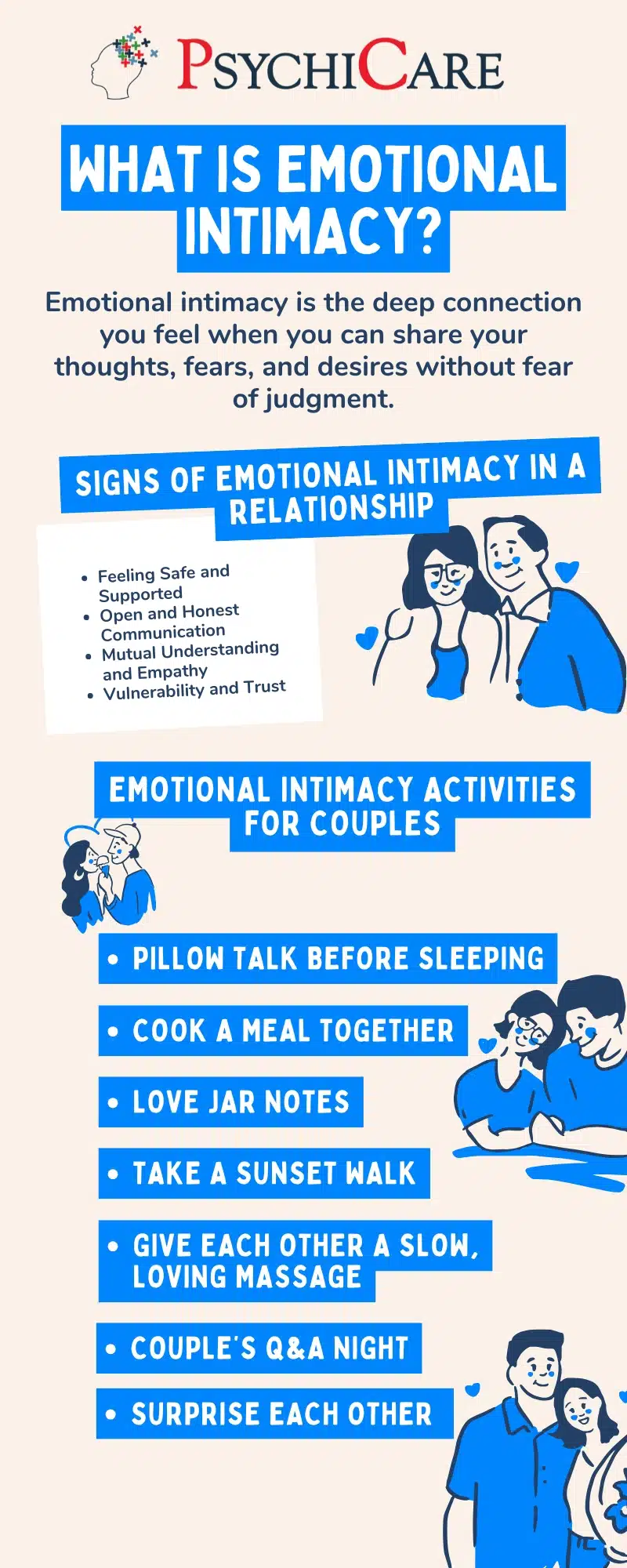
Signs of Emotional Intimacy in a Relationship
- You talk openly about your emotions, dreams, and fears.
- You feel heard, understood, and valued by your partner.
- You can sit in silence together and still feel connected.
- You trust that your partner will support you through tough times.
- You share inside jokes, memories, and deep conversations.
Emotional intimacy isn’t built overnight. It takes time, effort, and trust—but it’s the foundation of a strong relationship.
What Is Emotional Intimacy to a Man?
For men, emotional intimacy means feeling safe, respected, and understood. Many don’t always share feelings with words but show love in other ways.
How Men Show Emotional Intimacy:
- Talking about personal thoughts and struggles.
- Being protective and caring.
- Making their partner feel important.
- Spending time together and doing things they enjoy.
- Showing love through small actions, like helping or holding hands.
Some men find it hard to open up because of how they were raised, but when they feel truly accepted, they connect deeply.
What Is Emotional Intimacy to a Woman?
For women, emotional intimacy is about feeling deeply connected, valued, and emotionally secure in a relationship. It’s more than just love—it’s about trust, open communication, and feeling heard.
How Women Experience Emotional Intimacy:
- Sharing thoughts, feelings, and dreams without judgment.
- Feeling prioritized and emotionally supported.
- Deep conversations about life, relationships, and emotions.
- Physical closeness that isn’t always sexual, like cuddling or holding hands.
- A partner who listens, understands, and responds with care.
Emotional Intimacy Activities for Couples
Building emotional closeness isn’t about big gestures—it’s about the little moments that make love feel real. Try these romantic activities to deepen your bond:
- Pillow Talk Before Sleeping: Lie in bed, hold each other, and share something about your day, your dreams, or your childhood. Make this a nightly habit.
- Cook a Meal Together: Turn on some soft music, sip on your favorite drinks, and make cooking a fun, sensual experience.
- Love Jar Notes: Write little love notes or compliments and leave them in a jar. Read one whenever you need a reminder of how much you’re loved.
- Take a Sunset Walk: Hold hands, breathe in the fresh air, and talk about anything—no stress, no distractions, just the two of you.
- Give Each Other a Slow, Loving Massage: No rush, no agenda—just soft hands and warm touches to relax and reconnect.
- Reminisce About Your Love Story: Look at old pictures, talk about your first date, or revisit the place where you first met.
- Couple’s Q&A Night: Take turns asking deep, fun, or flirty questions. It’s amazing how much you can still learn about each other.
- Surprise Each Other With Thoughtful Gestures: A handwritten note in their bag, their favorite snack waiting at home, or an unexpected hug from behind—small things make a big difference.
Can a Marriage Survive Without Emotional Intimacy?
As a professional sexologist, I’ve counseled many couples struggling with emotional distance. Some stay together out of habit, but their relationship feels empty. Others try to ignore the lack of connection, but over time, resentment and loneliness take over.
A marriage without emotional intimacy often turns into two people living separate lives under the same roof. Even if the physical side is still there, without trust, deep conversations, and shared vulnerability, it won’t feel fulfilling.
The good news? Emotional intimacy can be rebuilt. I’ve seen couples rediscover their connection through small but powerful changes—listening more, expressing appreciation, and being present with each other. In therapy, I help couples bridge this gap so they can feel truly seen and loved again.
What Is Physical Intimacy?
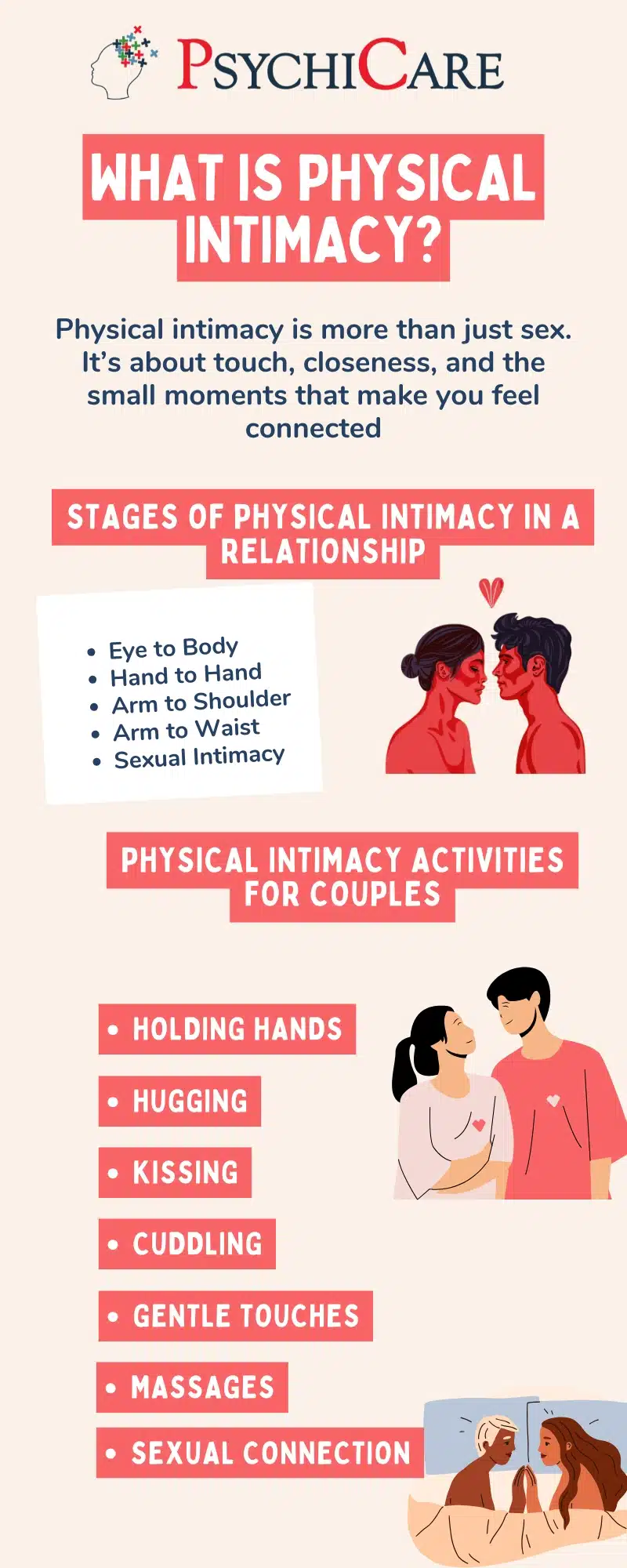
Physical intimacy is more than just sex. It’s about touch, closeness, and the small moments that make you feel connected—holding hands, hugging, cuddling, or even a gentle touch on the arm. These little gestures build trust and security in a relationship.
Why Is Physical Intimacy Important for a Man?
For many men, physical affection is how they express and receive love. While words might not always come easily, a hug, a kiss, or a playful touch can say everything. When a relationship lacks physical closeness, some men may feel disconnected or unappreciated.
Stages of Physical Intimacy in a Relationship
At first, everything feels exciting, and physical attraction is strong. Over time, intimacy shifts from passion to deep comfort. Couples who make an effort to stay physically close—through small touches and affection—keep their bond strong even as life gets busier.
Physical Intimacy Activities for Couples
Here’s how couples experience physical intimacy in everyday life:
- Holding hands – A silent way to say, “I’m here with you.”
- Hugging – Brings warmth, comfort, and reassurance.
- Kissing – Can be soft and sweet or passionate and intense.
- Cuddling – Builds a sense of security and emotional closeness.
- Gentle touches – A simple hand on the back or cheek can say more than words.
- Massages – A relaxing way to relieve stress while showing love.
- Sexual connection – A powerful mix of passion and emotional bonding.
Can a Relationship Survive Without One of Them?
A relationship without emotional intimacy can feel empty. You might still kiss, cuddle, or have sex, but if there’s no deep emotional connection, it can feel routine or meaningless. Couples who lack emotional closeness often struggle with trust, communication, and long-term happiness.
On the other hand, a relationship without physical intimacy can feel distant. While emotional connection keeps love strong, physical touch builds desire and deepens affection. Without it, partners may feel more like friends than lovers.
For a relationship to truly thrive, you need both. Emotional intimacy makes you feel seen and understood, while physical intimacy makes you feel wanted and connected. One without the other can lead to frustration, loneliness, or even the slow fading of love.
So What’s More Important: Physical Intimacy or Emotional Intimacy?
So finally, here we are—Emotional Intimacy vs. Physical Intimacy.
Believe me, as a sexologist and marriage counselor working for so long, you need both for a fulfilling married life.
Emotional intimacy keeps your bond deep and unbreakable. Physical intimacy keeps the passion alive. Without one, the other feels incomplete. When couples struggle, it’s often because they’re missing one of these connections. But the good news? You can always work on it.
A truly happy relationship thrives on love, trust, deep conversations, playful touches, and passionate moments. Keep both alive, and your marriage will not just survive—it will flourish.
Reasons Why Both Emotional and Physical Intimacy Matter in Marriage
As a sexologist and marriage counselor, I can tell you this—marriage isn’t just about love; it’s about connection. And that connection needs both emotional and physical intimacy to thrive. Without emotional closeness, a relationship feels empty. Without physical touch, it lacks passion. Let’s break it down:
Emotional Intimacy: The Heart of Your Marriage
It Creates Deep Trust and Security
Emotional intimacy is about feeling safe with your partner—knowing you can share your thoughts, fears, and dreams without judgment. When you have this level of trust, you feel more connected and understood, strengthening the foundation of your marriage.
It Keeps the Relationship Strong During Hard Times
Every couple faces challenges, but emotional intimacy helps you navigate them together. When you openly communicate and support each other, problems feel lighter. It’s not just about solving issues—it’s about knowing you’re not alone.
It Prevents Loneliness in Marriage
Many people assume loneliness only happens when you’re single, but emotional disconnection in marriage can feel just as isolating. When you don’t talk, share, or emotionally engage, you become distant roommates rather than loving partners. Keeping emotional intimacy alive ensures you always have a teammate in life.
It Makes Physical Intimacy More Meaningful
A strong emotional bond naturally enhances physical intimacy. When you feel emotionally close, physical touch becomes more than just a habit—it’s an expression of love and connection.
It Lasts a Lifetime
Looks fade, bodies change, but emotional intimacy keeps a marriage strong even as years go by. Being able to laugh together, support each other, and share life’s moments is what sustains love over time.
Physical Intimacy: The Passion That Keeps Love Alive
It Strengthens Emotional Bonds
Physical touch—whether it’s holding hands, hugging, or making love—releases oxytocin, the “love hormone,” which deepens your connection and helps you feel closer as a couple.
It Reduces Stress and Increases Happiness
Physical intimacy isn’t just about pleasure—it’s also about relaxation. Kissing, cuddling, and sex all release endorphins that reduce stress, improve mood, and create a sense of comfort in your relationship.
It Keeps the Romance Alive
Without physical intimacy, a marriage can start to feel like just a friendship. Passionate touch reminds both partners that they are desired and keeps attraction strong, no matter how many years pass.
It Helps Resolve Conflict
Ever noticed how much easier it is to forgive after a warm hug or intimate moment? Physical closeness acts as a natural relationship reset, helping couples reconnect even after disagreements.
It’s a Unique Connection Only You Share
In life, you can have deep emotional connections with many people—friends, family, even coworkers. But physical intimacy? That’s something unique to your marriage. It’s a special bond that sets your relationship apart.
Final Thoughts
Marriage is a journey of love, trust, and connection. Both emotional and physical intimacy are essential to feeling deeply loved and truly seen by your partner. When one is lacking, it can leave you feeling distant or unfulfilled. But the good news is, intimacy can always be rebuilt with care, patience, and the right support.
At PsychiCare, we understand how challenging it can be to navigate intimacy struggles. Whether you’re longing for deeper emotional closeness or struggling with physical connection, our expert sexologists and marriage counselors are here to help. Through private online counseling, we provide a safe space to reconnect, heal, and rediscover the joy in your relationship.
FAQs
1. What are the signs of emotional intimacy?
Signs of emotional intimacy include open communication, mutual trust, vulnerability, and feeling understood and valued by your partner. These elements create a deep emotional connection that strengthens the relationship.
2. What activities can improve emotional intimacy?
Activities to improve emotional intimacy include deep conversations, sharing personal experiences, practicing active listening, and spending quality time together. Engaging in new experiences as a couple can also strengthen emotional bonds.
3. Does emotional intimacy always lead to physical intimacy?
Emotional intimacy does not always lead to physical intimacy as they are separate yet interconnected aspects of a relationship. Some individuals may prioritize emotional closeness without needing physical connection.
4. How can couples rebuild emotional intimacy after a rough patch?
Couples can rebuild emotional intimacy after a rough patch by prioritizing open dialogue, seeking mutual understanding, showing empathy, and considering professional counseling to navigate challenges and reconnect emotionally.
5. What are the stages of physical intimacy in a relationship?
Stages of physical intimacy in a relationship include eye contact, verbal communication, affectionate touch such as holding hands and hugging, increased proximity, and eventually sexual intimacy. Progression varies based on comfort and emotional connection.
6. Why is physical intimacy important for men?
Physical intimacy is important for men because it fulfills emotional needs, enhances bonding, provides stress relief, and reinforces feelings of love and connection in a relationship.
7. Can physical intimacy help fix relationship problems?
Physical intimacy can help fix relationship problems, but it should be combined with open communication and emotional connection. Without addressing underlying issues, physical closeness alone may not resolve conflicts.
8. What are some non-sexual ways to be physically intimate?
Non-sexual ways to be physically intimate include holding hands, hugging, cuddling, giving massages, and playful touches. These actions foster closeness and strengthen the emotional bond between partners.
9. How does physical intimacy affect emotional bonding?
Physical intimacy affects emotional bonding by triggering the release of oxytocin, the love hormone, which enhances trust, deepens emotional connections, and reinforces a sense of security in the relationship.
10. What happens if one partner values emotional intimacy more while the other values physical intimacy?
If one partner values emotional intimacy more while the other values physical intimacy, open communication and compromise are essential. Understanding each other’s needs and finding a balance helps maintain relationship harmony.
11. How can you communicate with a partner who struggles with intimacy?
Communicating with a partner who struggles with intimacy requires patience, empathy, and a safe, non-judgmental space for discussion. Encouraging small steps toward closeness and seeking professional support can also help.
12. How does intimacy change over time in long-term relationships?
Intimacy changes over time in long-term relationships as emotional bonds deepen, and physical expressions of love evolve. Keeping intimacy alive requires effort, adaptability, and consistent connection.
13. How do stress and mental health affect intimacy in a relationship?
Stress and mental health affect intimacy in a relationship by reducing emotional availability and physical desire. Managing stress together through support, self-care, and open communication helps maintain intimacy.