Last Updated on December 23, 2025
So, do married people ever think about someone else during sex or even randomly during the day?
Yes. And for most people, it’s far more common than they expect.
Many married individuals experience sexual fantasies from time to time. Sometimes it happens during intimacy, sometimes during ordinary moments like commuting, working, or daydreaming. These thoughts don’t automatically mean dissatisfaction, disloyalty, or a problem in the marriage.
Studies suggest that a large majority of people in committed relationships experience sexual fantasies at some point. Research by Justin Lehmiller, published through the Kinsey Institute, indicates that over 80% of people in relationships report fantasising about someone other than their partner at least occasionally.
What matters isn’t that these thoughts happen, but what they mean, when they’re harmless, and when they may signal something deeper.
This article explores why married people fantasise about others, whether it counts as cheating, and how to understand these thoughts without guilt or fear.
What Is Sexual Fantasizing?
Sexual fantasizing simply means imagining romantic or sexual scenarios in your mind. These thoughts can involve your partner, someone else, or even situations that would never happen in real life.
Fantasies are a normal part of human sexuality. They reflect curiosity, imagination, and desire, not intention or behaviour.
For many people, sexual fantasies appear as brief daydreams. For others, they are more detailed. Either way, they remain private thoughts, a mental space where the mind explores attraction without any real-world action or risk.
Yes, this happens even in committed and happy marriages, and far more often than most people admit.
Why Do Married People Fantasize About Others?
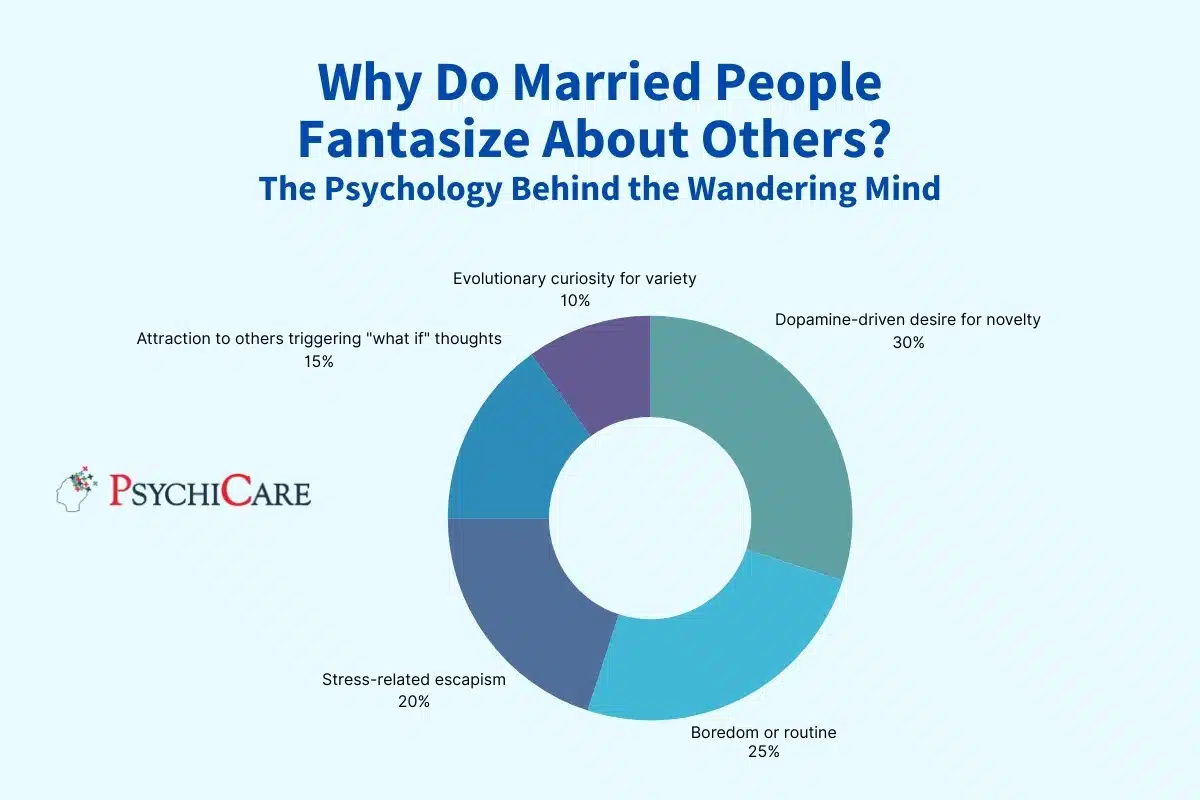
Fantasizing about someone other than your spouse doesn’t happen because something is “wrong” with your marriage. It happens because of how the human brain works.
Several factors commonly play a role:
Natural imagination: The brain is wired to notice novelty. An attractive stranger, a familiar face, or a fleeting interaction can trigger a brief “what if” thought without emotional attachment.
Brain chemistry: Neuroscience research shows that fantasies activate dopamine, the brain’s reward chemical. According to Nan Wise, this dopamine response creates momentary excitement without real-world consequences.
Curiosity, not dissatisfaction: Fantasies often reflect curiosity rather than a desire to replace a partner. They are mental exploration, not relationship evaluation.
Stress and routine: When daily life feels repetitive or emotionally draining, the mind may drift as a form of escape, similar to daydreaming about travel or a different career.
Many people worry, “Why do I fantasize about others if I love my partner?” In most cases, it isn’t betrayal or intent. It’s simply the mind responding to stimulation, stress, or imagination, not a reflection of commitment or loyalty.
Is Fantasizing About Someone Else Cheating?
Many people wonder whether thinking about someone else while in a relationship means they are being unfaithful. The short answer is no, not necessarily.
Fantasizing about others is common in committed relationships. Research consistently shows that a majority of married people experience occasional sexual or romantic fantasies without acting on them. Thoughts alone are not the same as betrayal.
The Difference Between Thoughts and Actions
The mind wanders. That’s human.
Cheating is defined by actions, not thoughts. It involves secrecy, deception, emotional withdrawal, or behaviour that breaks trust. A fantasy, on its own, does none of those things.
However, fantasies deserve attention if they begin to:
- Create emotional distance from your partner
- Lead to constant comparison
- Reduce your interest in real intimacy
- Feel compulsive or guilt-driven
A helpful self-check is this:
Are these thoughts helping you feel more connected to your partner, or slowly pulling you away?
Fantasies can be harmless. But when they start shaping how you view your relationship, it’s worth reflecting on what your emotional needs might be.
How Fantasizing Can Help Your Sex Life
Fantasizing isn’t a sign of dissatisfaction. It’s your brain exploring desire, curiosity, and pleasure. When used in a healthy way, it can actually support intimacy rather than harm it.
How Fantasizing Can Benefit Your Relationship
It can refresh attraction
Routine can dull excitement over time. Fantasies often reawaken desire and help you see your partner with renewed interest.
It can deepen emotional closeness
Feeling safe with your own desires reduces shame. When couples feel emotionally secure, physical intimacy often improves as a result.
It helps you understand your needs
Fantasies can clarify what excites you, making communication easier if and when you choose to share.
It reduces performance pressure
Imagination allows pleasure without self-judgment. This can make real-life intimacy feel more relaxed and enjoyable.
It builds confidence
Understanding your desires helps you feel more comfortable in your body and less anxious during intimacy.
It supports long-term connection
A fulfilling sex life is less about frequency and more about emotional and psychological connection. Healthy fantasy can keep desire alive without threatening trust.
How to Introduce Fantasizing Into Your Relationship
Fantasies can add curiosity and excitement to a relationship, but talking about them can feel uncomfortable at first. The goal is not to shock, impress, or pressure your partner. It’s to create a conversation that feels safe, respectful, and optional.
Start by Understanding Your Own Desires
Before bringing the topic up, take a moment to understand what your fantasies mean to you. Ask yourself what excites you and why. This self-awareness makes it easier to communicate without confusion or mixed signals.
You don’t need to have everything figured out. Clarity simply helps you speak from curiosity rather than insecurity.
Create Emotional Safety First
Fantasies should never be introduced in a way that feels like comparison or replacement. Choose a relaxed moment, not during conflict or tension. Reassure your partner that this conversation is about connection, not dissatisfaction.
A calm tone and clear reassurance help prevent defensiveness.
Share Without Blame or Pressure
Avoid language that sounds like criticism or unmet demands. Instead of framing fantasies as something missing, frame them as something that could be explored together if both partners are comfortable.
The intention should be openness, not expectation.
Keep the Conversation Light and Flexible
Not every fantasy needs to be deep, serious, or acted upon. Sometimes simply talking about curiosity or imagination can increase closeness. Humour and warmth can reduce anxiety and make the conversation feel less intense.
There is no “right” outcome. The goal is understanding, not agreement.
Respect Boundaries and Comfort Levels
Partners often have different comfort zones, and that’s normal. If something feels uncomfortable to either of you, it deserves respect. Healthy conversations about intimacy always allow room for boundaries.
Fantasies should strengthen trust, not test it.
Common Misconceptions About Fantasizing
Fantasizing is a normal part of human sexuality, yet it’s often misunderstood. These misconceptions can create unnecessary guilt, fear, or confusion in relationships. Let’s clear a few of them up.
“Fantasizing Means Something Is Missing in My Relationship”
Having fantasies does not automatically mean you’re unhappy or unfulfilled. The human brain is naturally curious and imaginative. Even people in deeply loving, satisfying relationships experience fantasies. They reflect how the mind works, not the quality of your marriage.
Fantasies are common even when emotional connection, love, and commitment are strong.
“Fantasizing Is the Same as Cheating”
This is one of the most common fears, and it’s usually unfounded. Cheating involves actions, secrecy, and a breach of trust. Fantasies are private thoughts. On their own, they don’t equal betrayal or disloyalty.
For many people, fantasies remain entirely internal and never interfere with real-life commitment or intimacy.
“Fantasies Must Be Realistic or Desired in Real Life”
Fantasies are not plans or intentions. Many people imagine scenarios they would never want to act on in reality. Imagination allows exploration without consequences, and that freedom is part of what makes fantasies safe.
What matters is not the content of a fantasy, but how it affects your relationship and emotional wellbeing.
What If Fantasies Start Feeling Uncomfortable or Risky?
Fantasies are usually harmless, but they can become concerning if they start creating emotional distance, secrecy, or distress.
If you notice that:
- You’re thinking about someone else constantly
- You feel emotionally disconnected from your partner
- You’re tempted to cross boundaries
- You feel persistent guilt or anxiety
It’s worth pausing and asking what those thoughts might be signalling. Often, they reflect unmet emotional needs, stress, boredom, or disconnection rather than a desire to cheat.
The Difference Between Fantasy and Action
Thinking about someone is not the same as acting on it. A helpful self-check is simple:
Would I feel okay if my partner knew about this?
If fantasies begin to involve secrecy, emotional attachment, or behaviour you feel you need to hide, that’s usually where boundaries start to blur, and it may be time for reflection or support.

How to Stop Fantasizing About Someone Else When It Feels Wrong
Not all fantasies need to be stopped. But when they start causing guilt, anxiety, emotional distance, or confusion about your relationship, it’s worth paying attention, not with shame, but with curiosity.
The goal isn’t to police your thoughts. It’s to understand why your mind keeps going there and what it’s trying to regulate.
1. Look Beneath the Fantasy, Not at the Person
When a fantasy feels intrusive or uncomfortable, it’s rarely about the person you’re imagining. More often, it’s about a feeling your mind is seeking.
Ask yourself gently:
- Does this fantasy show up when I’m stressed, lonely, or emotionally tired?
- Am I craving novelty, validation, comfort, or escape?
- Do I feel unseen, pressured, or disconnected in my relationship right now?
Fantasies often act as emotional shortcuts, the brain’s way of self-soothing or compensating when something feels missing internally, not necessarily sexually.
2. Notice When Fantasizing Becomes Avoidance
Occasional fantasies are normal. But if you’re fantasizing to avoid intimacy, conflict, boredom, or emotional vulnerability with your partner, that’s an important signal.
Signs it may be avoidance:
- Fantasizing instead of addressing unresolved issues
- Using fantasies to tolerate intimacy rather than feel present in it
- Feeling emotionally distant before or after sex
- Preferring fantasy to real connection because it feels easier or safer
This doesn’t mean something is broken; it means your nervous system may be protecting you from discomfort.
3. Shift From Mental Escape to Emotional Presence
Trying to “force” yourself to stop fantasizing usually backfires. Instead, work on strengthening emotional presence in your real relationship.
That might look like:
- Creating moments of connection without sexual pressure
- Talking honestly about stress, fatigue, or emotional distance
- Rebuilding closeness through touch, conversation, or shared time
- Slowing intimacy down so it feels safe and grounding again
When emotional safety increases, intrusive fantasies often lose their grip naturally.
4. Set Psychological Boundaries (Not Just Physical Ones)
If your fantasies involve a real person, a coworker, ex, or someone you interact with regularly, boundaries matter, even internally.
That doesn’t mean suppressing thoughts, but it does mean:
- Reducing unnecessary contact or emotional reliance
- Avoiding situations that fuel comparison or longing
- Being honest with yourself about emotional attachment
- Redirecting attention when fantasies turn repetitive or consuming
Boundaries protect clarity, not just loyalty.
5. Understand That Guilt Is a Signal, Not a Verdict
Feeling guilty doesn’t mean you’re doing something wrong; it often means your values and behaviour feel out of sync.
Instead of judging yourself, ask:
- What is this guilt asking me to care for?
- What part of me feels conflicted or unheard?
- What do I need more of: rest, reassurance, connection, novelty, honesty?
Self-compassion reduces the intensity of unwanted thoughts far more effectively than self-control.
6. When Talking to a Therapist Helps
If fantasies feel obsessive, emotionally charged, or tied to shame or fear, therapy can help you understand them without judgment.
A sex therapist helps you:
- Separate desire from action
- Explore unmet emotional or relational needs
- Reduce anxiety around sexual thoughts
- Rebuild intimacy without pressure or guilt
- Clarify boundaries that feel aligned, not forced
You don’t need to wait until something “goes wrong” to seek support. Sometimes clarity alone brings relief.


How Society and Media Shape Sexual Fantasies (Without You Realising)
Most fantasies don’t start in the bedroom. They’re shaped quietly by what we consume every day, films, social media, advertising, and online content, long before we question them.
These influences don’t create desire from scratch. They amplify comparison, novelty, and unrealistic expectations, which the brain then processes as fantasy.
Movies, Porn, and the Myth of “Constant Passion”
Movies often show love as intense, effortless, and endlessly passionate. Porn portrays bodies, reactions, and scenarios that are edited, exaggerated, and disconnected from real emotional intimacy.
Over time, this trains the brain to associate excitement with:
- novelty over familiarity
- intensity over safety
- performance over presence
So when real relationships feel quieter, slower, or more routine, the mind looks elsewhere for stimulation, not because something is wrong, but because expectations have been distorted.
Social Media and Emotional Fantasy Loops
Social media adds another layer. It allows constant access to:
- old crushes
- new admirers
- curated versions of people’s lives
A few casual messages or likes can create emotional micro-connections. The brain fills in the gaps, often idealising the person and projecting unmet needs onto them.
This is how emotional fantasies form, not through desire alone, but through perceived attention, validation, or escape.
Comparison Quietly Fuels Fantasy
Seeing couples share highlights of romance, trips, and affection can trigger subconscious comparison:
- “Why doesn’t my relationship feel like that?”
- “Am I missing something?”
- “Is this what love should look like?”
Fantasies often grow in this gap, not because your relationship is failing, but because comparison makes real life feel inadequate.
What’s important to remember: fantasies thrive on imagination, not reality. The lives and relationships we compare ourselves to are rarely as perfect as they appear.
When Fantasies Stop Feeling Harmless
Fantasies are normal, but they deserve attention when they start creating emotional distance instead of curiosity.
You may want support if:
- You feel increasingly disconnected from your partner
- Fantasies feel more satisfying than real intimacy
- You hide thoughts, messages, or emotional connections
- Sex feels difficult without mental escape
- Guilt, anxiety, or shame follows your thoughts
These are not signs of moral failure. They’re signs of emotional overload, unmet needs, or nervous system stress.
How Therapy Helps (Without Judgement or Shame)
A qualified sex therapist doesn’t tell you what’s “right” or “wrong.” Instead, therapy helps you understand:
- why certain fantasies repeat
- what emotional needs they regulate
- whether they’re protective, escapist, or exploratory
- how to rebuild intimacy without pressure
Many people find relief simply by understanding their patterns instead of fearing them.
Get Support From PsychiCare’s Expert Sexologists
If fantasies are creating confusion, guilt, or distance in your marriage, you don’t have to figure it out alone.
At PsychiCare, our experienced online sexologists work with individuals and couples to:
- normalise desire without minimising impact
- restore emotional and physical closeness
- address anxiety, guilt, or avoidance around intimacy
Online consultations are available privately, securely, and judgement-free.
Final Thoughts: Fantasies Are Human, Awareness Is the Key
Everyone has fantasies. What matters isn’t their presence, but how they interact with your values, your relationship, and your emotional wellbeing.
Used consciously, fantasies can deepen understanding and connection. Used unconsciously, they can become a quiet escape.
Honest reflection, communication, and emotional safety – not control – are what keep desire healthy over time.
FAQs
Why do people fantasize about others?
People fantasize about others because the brain is naturally curious and responsive to novelty. Fantasies often reflect imagination, attraction, stress relief, or emotional needs, not dissatisfaction with a relationship.
Is it normal to fantasize about others while married?
Yes. Research consistently shows that most married people experience occasional fantasies about someone other than their partner. Marriage does not turn off imagination, and fantasizing alone is considered a normal part of human sexuality.
Does fantasizing about someone else mean something is wrong in my relationship?
Not necessarily. Fantasies do not automatically indicate relationship problems. They may become a concern only if they create emotional distance, secrecy, guilt, or comparison that affects intimacy with your partner.
Is fantasizing about someone else the same as cheating?
No. Fantasizing is a private mental experience, while cheating involves actions, secrecy, and broken trust. Thoughts alone are not betrayal, but crossing emotional or physical boundaries can be.
Why do I keep fantasizing about the same person?
Repeated fantasies often point to unmet emotional needs, stress, novelty-seeking, or unresolved curiosity. If the person is real and the fantasies feel intrusive or distressing, it may help to explore the underlying emotional trigger.
When should I be concerned about my fantasies?
You may want to seek support if fantasies cause guilt, emotional withdrawal, difficulty enjoying intimacy, or lead to secretive behaviour. These signs suggest something deeper may need attention rather than suppression.