Last Updated on July 17, 2025
Do you feel your chest tighten when it’s your turn to speak?
Does your body shake a little in silence even when nothing’s wrong?
Do you avoid eye contact, not because you’re rude, but because it feels physically painful?
That’s what social anxiety feels like for millions of people around the world, not just a fear of crowds, but a fear of being noticed, judged, or not “doing it right.”
Social anxiety disorder affects over 264 million people globally, according to the World Health Organization. It’s one of the most common anxiety disorders and also one of the most misunderstood.
- In the United States, around 15 million adults suffer from social anxiety, nearly 7% of the population.
- In the United Kingdom, about 10% of people experience it at some point in their lives.
- In India, exact numbers vary, but mental health surveys estimate 1 in 4 adults face some form of social or generalized anxiety, most without ever seeking help.
- In countries like Canada, Australia, and Germany, similar patterns show up: people feeling anxious in public spaces, at work, or even during everyday conversations.
But it’s not always visible.
Social anxiety can look like:
- Turning down invites because your heart races just thinking about going
- Rehearsing what to say then saying nothing
- Feeling exhausted after group settings
- Obsessing for days over a moment no one else even noticed
- Avoiding eye contact in elevators, waiting rooms, or Zoom calls
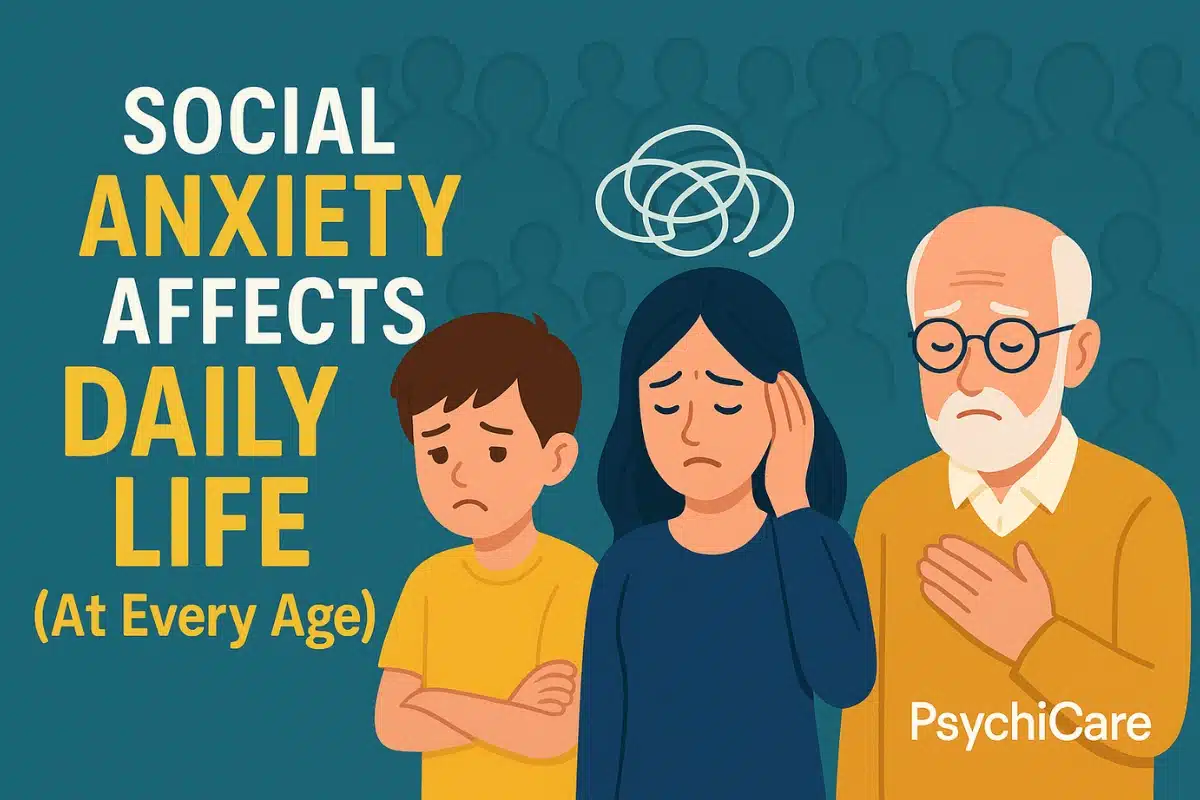
And it doesn’t matter whether you’re 19 or 59, the fear of social judgment can follow you into every stage of life.
This article is here to help you understand what’s going on and what you can do about it.
What Social Anxiety Feels Like: Emotional, Physical, and Daily Impact
Social anxiety disorder is more than just being shy. It feels like your body and brain are on edge the moment you’re around people, even in everyday situations like ordering food, joining a conversation, or answering a question in class.
It often starts with a fear of being judged or embarrassed and can quickly turn into overwhelming discomfort that affects your thoughts, body, and daily routines.
Emotional Symptoms of Social Anxiety
- Fear of Judgment and Criticism
A core symptom of social anxiety is the constant worry of being judged, rejected, or humiliated. Even simple conversations can feel high-stakes, as if one wrong word will make people think less of you. - Intense Self-Consciousness
You might feel overly aware of how you look, sound, or act. This can lead to overthinking small details, like whether you said something “stupid” or if you laughed at the wrong time. - Avoidance of Social Situations
To cope with the anxiety, many people begin avoiding social interactions entirely from classroom discussions and video calls to birthday parties and public speaking. Avoidance offers short-term relief but reinforces the fear long-term. - Pre- and Post-Event Anxiety
Social anxiety often starts before the event with hours or days of dread and continues after, with replaying and analyzing what you said or did. - Loneliness Despite Wanting Connection
Even though you may want friends or relationships, anxiety keeps you stuck in isolation, creating a painful cycle of social withdrawal and loneliness.

Physical Symptoms of Social Anxiety
- Fast Heartbeat and Breathing
Social situations can trigger a racing heart, shallow breathing, and body tension even during casual interactions. - Blushing, Sweating, and Nausea
These visible symptoms can be especially distressing, as people with social anxiety often worry that others will notice and judge them. - Shaky Voice and Trouble Speaking
You might struggle to speak clearly or lose your words altogether, especially in group settings or when all eyes are on you. - Panic Attacks in Social Settings
In more intense cases, social anxiety disorder can lead to panic attacks, which may involve dizziness, chest tightness, shortness of breath, or feeling like you need to escape.
Daily Life Challenges with Social Anxiety
- Difficulty Doing Normal Tasks in Public
Everyday activities like eating in a café, using public restrooms, or making phone calls can become overwhelming with social anxiety. - Struggles in School and Work
Avoiding presentations, skipping group work, or dreading job interviews can affect both academic and career opportunities. - Missed Opportunities and Social Isolation
Many people with social anxiety turn down invitations, avoid joining clubs, or pass on chances to meet new people, not because they don’t want to, but because the fear is too loud.
Social anxiety symptoms are both emotional and physical, and they often go unnoticed by others. But for the person experiencing them, the impact can be life-altering.
How Social Anxiety Shows Up at Different Ages
Social anxiety can affect anyone at any age. But the way it shows up often changes depending on where you are in life. What feels terrifying in college might look different in your 30s or 60s, but the core fear of being judged, rejected, or exposed stays the same.
Here’s how social anxiety symptoms often show up at different life stages:
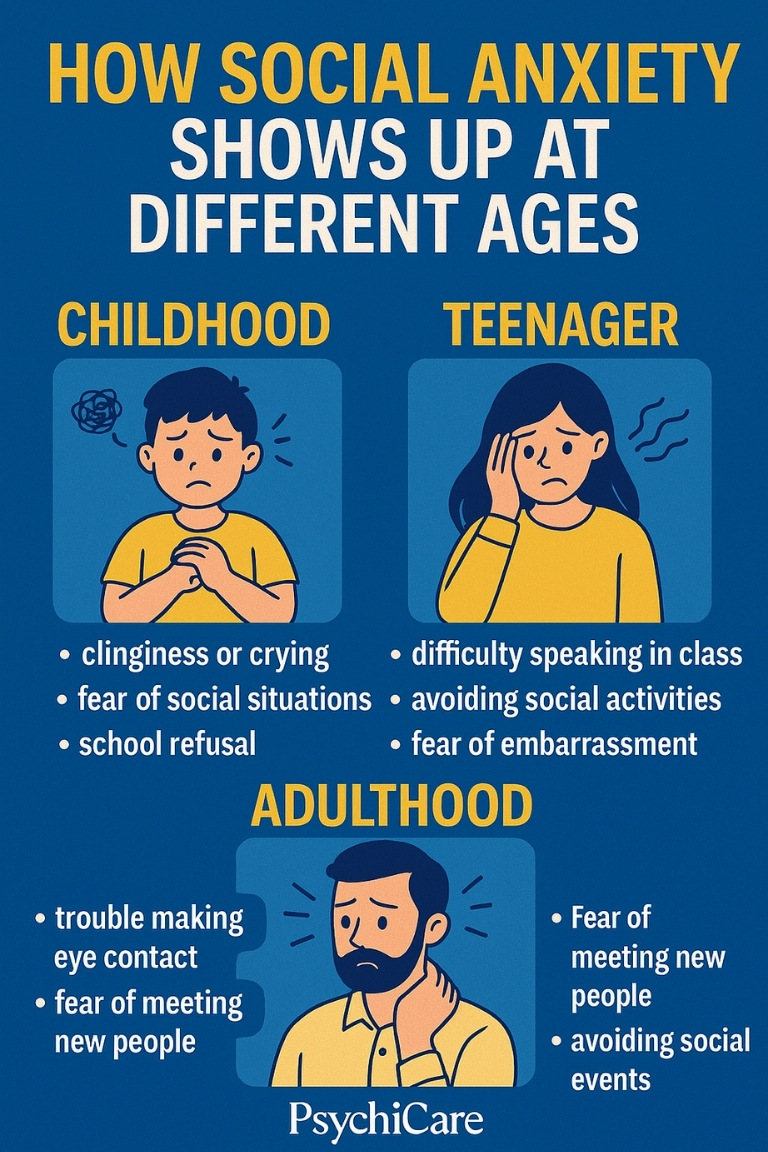
In Teen and College Years
- Avoiding class participation, skipping group projects, or staying quiet even when you know the answer
- Eating lunch alone not by choice, but because joining a table feels like a risk
- Not joining clubs, teams, or dorm events out of fear of being awkward or out of place
- Constant self-doubt: “Do they think I’m weird?” “Was that joke too much?”
In Your 20s and 30s (Young Adulthood)
- Dreading job interviews, even if you’re qualified
- Saying “yes” to things at work, then panicking over how to follow through
- Avoiding networking, small talk, or even Zoom meetings
- Overthinking texts or silences in friendships or dating
- Not pursuing opportunities (like traveling, dating, or social hobbies) due to fear of judgment
In Your 40s to 60s (Midlife)
- Turning down promotions or leadership roles due to fear of public speaking
- Avoiding parent-teacher meetings, social gatherings, or volunteering
- Struggling to connect with peers, neighbors, or other parents
- Feeling misunderstood or “left out” in friend groups, but unsure how to change it
In Older Adulthood (60+)
- Skipping community events, reunions, or group classes
- Avoiding doctors’ appointments or speaking up about health concerns
- Feeling invisible but afraid of being seen worried about judgment due to appearance, memory, or speech
- Increased isolation, which can worsen both social anxiety and depression
What’s Common Across All Ages
- Wanting connection, but fearing it
- Avoiding situations you might enjoy because the risk feels too big
- Feeling like people are watching, even when they’re not
- Missing out on life not because you don’t care, but because your mind convinces you it’s safer to stay small
Everyday Moments That Hit Hard with Social Anxiety
Social anxiety shows up in subtle but deeply impactful moments, the kind of situations that seem small from the outside, but feel like high-pressure tests inside your mind.
Here are some often-overlooked real-life triggers that many people with social anxiety quietly live with:
Approaching Someone You’re Attracted To
Whether you’re on a dating app or just walking past someone you find attractive, your brain often reacts before you can.
You freeze, overthink, or walk away not because you’re not interested, but because you’re already imagining:
- “What if I say something awkward?”
- “What if they think I’m creepy?”
- “What if people around me hear and judge?”
By the time you’ve rehearsed what to say, the moment’s gone. And later, you replay it in your head with regret, not because you expected a ‘yes,’ but because you didn’t give yourself a chance.
Texting or Messaging Someone You Like
Social anxiety doesn’t just stop you from flirting; it makes texting a full-blown mental battle.
- You write a message.
- You delete it.
- You rewrite it.
- You send it and immediately regret it.
Then, you obsess over the time it takes to get a reply.
It’s not about rejection, it’s the dread of being misread.
Approaching a Manager, Boss, or Teacher
Need to ask for clarification, a deadline extension, or pitch an idea? For someone with social anxiety, that’s not a small ask; it’s a mental hurdle.
You may spend hours rehearsing one line. Or avoid the conversation altogether even if it hurts your work or grades.
A common thought loop:
“Will I seem stupid?”
“Will they think I’m annoying?”
“What if I interrupt them and they get irritated?”
This fear can lead to under-communication, missed recognition, and feeling stuck professionally, even when you’re capable.
Saying “No” Without Guilt or Fear
People with social anxiety often struggle to assert themselves, not because they want to be agreeable, but because saying “no” feels like conflict.
You might:
- Say “yes” to social plans you can’t handle
- Take on extra tasks at work just to avoid seeming rude
- Agree in the moment, then cancel later and spiral into guilt
Afterward, you beat yourself up for not speaking your truth, then fear you’ve upset someone.
Having to Ask for Help or Clarification
Even saying “I don’t understand” in a group meeting, classroom, or chat can feel like exposure.
You fear being judged as slow, weak, or incompetent.
So you nod along and figure it out in private later.
Sometimes you succeed. Sometimes you fall behind. But you always feel like you’re hiding.
Why These Moments Matter So Much
Social anxiety doesn’t only show up in presentations or parties.
It shows up in:
- Your inbox
- Your dating life
- Your silence during meetings
- Your friendships that never fully deepen
- And the constant, quiet pressure of being “polite” instead of authentic
You’re not avoiding life. You’re managing how much of yourself feels safe to share.
Why Social Anxiety Isn’t Just “Being Shy”
People often mistake social anxiety disorder for shyness, but the two are very different. Here’s how they compare:
Shyness vs. Social Anxiety
- Shyness is a personality trait; you may feel awkward at first, but you warm up over time.
- Social anxiety is a mental health condition, it causes intense fear, avoidance, and distress that can interfere with your daily life.
Constant Self-Watching
- You feel like every move, word, or glance is being evaluated.
- You overthink your facial expressions, tone, or whether your laugh sounded forced.
- Even minor social moments feel like high-stakes performances.
It’s Not About Wanting to Be Alone
- You crave connection but avoid it because it feels emotionally unsafe.
- You fear being seen, not because you don’t care, but because it feels like exposure.
You Know It’s Irrational, But Can’t Turn It Off
- You logically know people aren’t judging you, but your body still reacts like you’re in danger.
- Social anxiety overrides reasoning; it triggers a physical stress response.
It Holds You Back in Real Life
- You skip opportunities (jobs, dates, friendships) not because you’re uninterested, but because anxiety makes them feel impossible.
- You often regret not speaking up but freeze when the moment arrives.
Therapist-Backed Tools That Help with Social Anxiety
Social anxiety isn’t something you have to just “live with.” There are evidence-based therapies and techniques used by psychologists worldwide to reduce symptoms and help people feel more confident in social situations.

Here are some of the most effective approaches:
Cognitive Behavioral Therapy (CBT)
- Why it works: CBT is the gold-standard therapy for social anxiety disorder.
- What it does: Helps you identify negative thought patterns (“They’ll laugh at me”) and replace them with more realistic ones.
- Bonus: Often involves exposure exercises small, guided steps to help you face feared situations safely.
Exposure Therapy (Gradual Desensitization)
- Why it works: Avoiding social situations reinforces fear. Exposure therapy helps you face those fears in manageable ways.
- How it looks: Practicing small steps like making eye contact, asking a question in class, or ordering food out loud, all while working with a therapist.
- Over time: Your brain learns that those situations aren’t as dangerous as they feel.
Mindfulness and Somatic Practices
- Why it works: Social anxiety creates physical symptoms racing heart, tight chest, nausea.
- Tools: Breathing exercises, grounding, body scanning, and progressive muscle relaxation.
- Outcome: Helps reduce physical stress and keep you calm in the moment.
Roleplay and Social Rehearsal (Used in Therapy)
- Why it works: Practicing real-life scenarios in a safe space builds confidence.
- Examples: Practicing job interviews, starting conversations, saying “no” politely.
- With a therapist: You can pause, reflect, and try again without fear of judgment.
Medication (When Needed)
- When it helps: For moderate to severe social anxiety, medication can be prescribed alongside therapy.
- Types: SSRIs (like sertraline or fluoxetine) or beta blockers for situational anxiety (like public speaking).
- Important: Always under the supervision of a psychiatrist.
Group Therapy for Social Anxiety
- Why it works: Being in a group with others who get it helps normalize your experience.
- What to expect: Structured sessions led by a therapist, with gentle exposure exercises and peer support.
- Surprise benefit: You often realize you’re not alone and that others share your fears too.
Online Therapy & Tools
- Why it’s helpful: Many people with social anxiety feel more comfortable starting with online therapy.
- Options: Text-based therapy, video sessions, self-paced CBT programs, and anxiety-focused apps.
- PsychiCare tip: We offer affordable online sessions starting at $24 with licensed therapists trained in anxiety and trauma work.
Final Thoughts
Social anxiety isn’t just shyness; it’s a deep, exhausting fear that can quietly affect every part of your life. But with the right support, you can learn to manage it and live with confidence.
At PsychiCare, we’ve helped thousands of clients overcome social anxiety through personalized, evidence-based online therapy.
- 🌐 100% online, private sessions from the comfort of home
- ⭐ 200+ verified 5-star reviews from clients across India, the US, UK, and beyond
- 💬 Affordable therapy: ₹2000 (~$24 USD) for Indian clients, and internationally
- 🧠 Expert psychologists who truly understand what anxiety feels like
“PsychiCare helped me stop avoiding life. I finally spoke up in a team meeting and didn’t spiral afterward.”
You don’t have to figure it out alone. We’re here when you’re ready.
👉 Start Online Therapy with PsychiCare