Last Updated on September 21, 2025
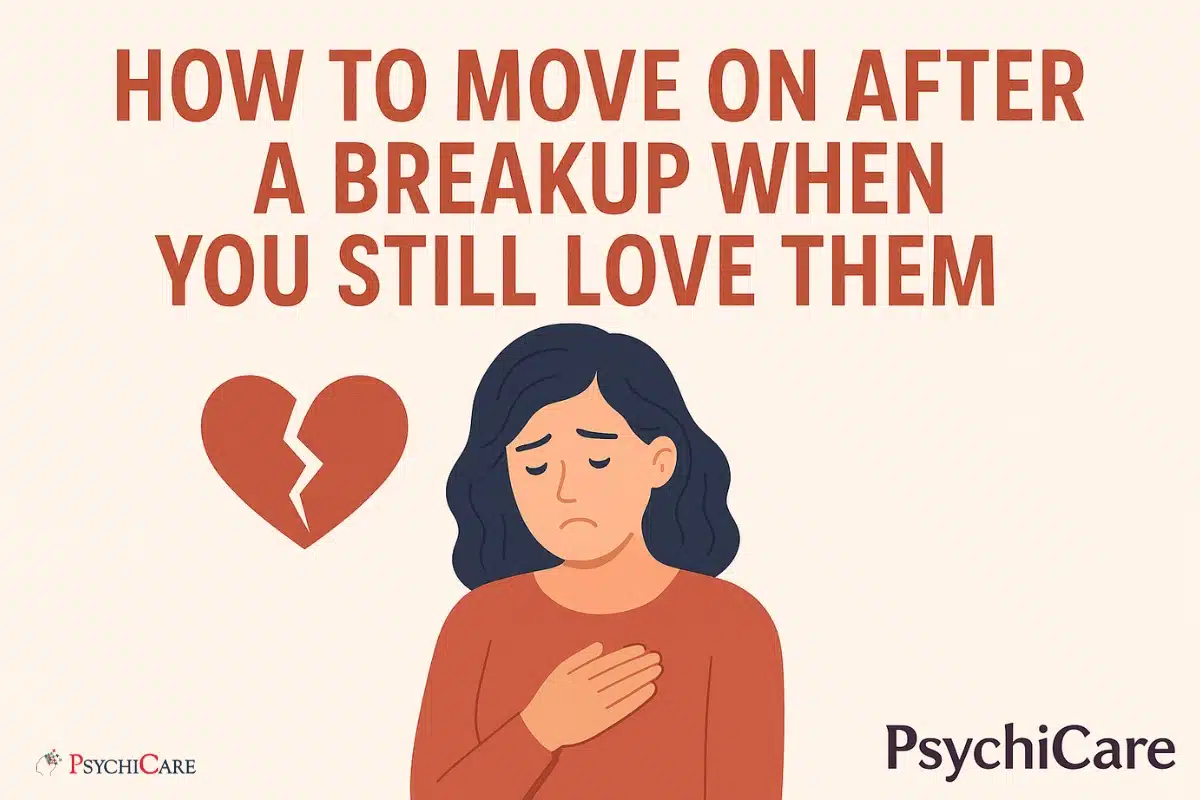
Breaking up when you still love someone feels impossible. Your heart says hold on, but reality says it’s over.
Science explains why. Brain scans show heartbreak activates the same areas as physical pain. Dopamine and oxytocin, the “bonding” chemicals, drop suddenly, creating withdrawal symptoms.
Over one-third of young adults go through a breakup within two years, and nearly half report higher stress or lower life satisfaction afterward. Around 58% describe their breakup as dramatic or messy.
Modern culture makes it harder. Social media keeps exes visible. Algorithms resurface photos and memories. Ghosting, casual dating, and shifting views on marriage mean relationships today often end more abruptly.
The good news? Healing is possible. Moving on doesn’t mean erasing love; it means learning new ways to carry it.
(And if you feel stuck, therapy can provide a safe space to process and move forward.)
Why Do Breakups Happen? Common Reasons Relationships End

Infidelity in Relationships: Why People Cheat Even When They’re Truly Loved
Cheating isn’t always about missing love. Many people betray partners who gave them everything: loyalty, care, and real affection. They cheat not because you weren’t enough, but because they were chasing something else.
Why people cheat even when loved:
- They want the thrill of being desired by someone new.
- They confuse attention with affection and chase constant validation.
- They feel restless with routine, even in a stable relationship.
- They keep “backup options” alive through DMs or apps.
- They lack the courage to end the relationship, so they sabotage it instead.
Remember this: you weren’t the one who failed. Your love was real. It’s their loss to cheat on someone as genuine as you.
Financial Problems in Relationships: When Money Breaks Love Apart
Money fights don’t always come from poverty; often, it’s from choices. These days, many people spend for show, live on credit, or lean entirely on their partner to carry the weight. Love can survive tough times, but it struggles when money turns into secrecy or selfishness.
Why financial issues destroy relationships even when love exists:
- They show off to impress others, buying things just for status.
- They host parties, trips, or outings while neglecting real responsibilities.
- They spend on themselves first, ignoring their partner’s needs.
- They depend fully on one person for emergencies and bills.
- They blow through their salary on enjoyment, then expect you to cover until the next paycheck.
Emotional Neglect in Relationships: When Love Fades Into Silence
Not every breakup happens with shouting or betrayal. Many end quietly when one person stops showing up emotionally. You still love them, but you start feeling invisible.
How emotional neglect shows up in real life:
- They scroll their phone for hours but don’t notice when you’re hurting.
- They forget birthdays, milestones, or simply don’t make the effort anymore.
- They never ask how your day was, or they give one-word answers.
- They avoid deeper talks, keeping everything surface-level.
- They share laughs and energy with friends, but give you silence at home.
If this was your breakup, hear this: you weren’t “too needy.” Wanting attention, care, and effort is not asking too much. Love without presence isn’t love that lasts.
Poor Communication in Relationships: When Every Talk Turns Into a Fight
Some breakups don’t come from one big mistake, but from a thousand small arguments. Love might still be there, but constant miscommunication and fights turn the bond into exhaustion.
How poor communication breaks relationships in real life:
- Every discussion turns into blame instead of understanding.
- Small issues explode into big fights because nothing gets resolved.
- One person shuts down (stonewalling) while the other begs to be heard.
- Important feelings are left unsaid until they come out as anger.
- You feel more like opponents than partners, keeping score instead of solving problems.
If this was your story, remember: needing healthy communication doesn’t make you demanding. You can still love someone deeply, but without safety in words, the love gets drowned out by noise.
Unequal Emotional Labor: When One Partner Pretends They “Can’t”
Some breakups happen not because love is missing, but because the balance is. One partner carries the relationship, while the other hides behind excuses or “incompetence.” Over time, that weight crushes the love.
How unequal effort shows up in real life:
- They act clueless about housework, so you do it all.
- They forget important tasks, forcing you to double-check everything.
- They depend on you for emotional support but don’t offer the same back.
- They expect you to manage schedules, bills, and responsibilities alone.
- They excuse laziness as “not knowing how,” leaving you drained.
If this was your breakup, remember: you weren’t asking for too much, you were asking for partnership. Love can’t survive when one person carries all the weight.
Multiple Partners and Online Access: When Love Isn’t Enough for Them
Dating apps, DMs, and endless options have changed modern relationships. Some people keep “backups” or juggle multiple connections, even when they already have someone who loves them. It’s not about lack of love from you; it’s about their inability to commit.
How this looks in real life:
- They secretly stay active on dating apps while in a relationship.
- They flirt or build “emotional affairs” over social media.
- They keep exes or “options” around, just in case.
- They compare you to people online, making you feel less valued.
- They chase attention everywhere else while ignoring what’s in front of them.
If this was your breakup, remember: your love wasn’t the problem. Their need for endless attention says more about their emptiness than about your worth.
Mismatch in Life Goals: When Love Isn’t Enough to Align Futures
Sometimes breakups happen not because love is gone, but because your paths don’t match. You may care deeply for each other, yet the future you want together doesn’t exist.
How mismatched goals show up in real life:
- One wants marriage, the other avoids commitment.
- You dream of kids, they don’t see children in their life.
- Careers or education take them to a different city or country.
- Values clash with religion, family traditions, or lifestyle choices.
- They want freedom and adventure, you want stability and home.
If this was your breakup, remember: love alone can’t erase differences in direction. You weren’t wrong for loving them but the future needs more than feelings, it needs alignment.
Unmet Expectations: When Love Exists but Effort Doesn’t
Some breakups aren’t about betrayal; they’re about silence. You still love them, but your needs never get met because they avoid vulnerability or effort.
How unmet expectations show up in real life:
- They avoid serious talks, leaving problems hanging.
- They shut down when you try to share your feelings.
- They never express appreciation, making you feel invisible.
- They resist commitment or deeper steps in the relationship.
- They expect love to survive without giving reassurance or effort.
Why It Hurts So Much When You Still Love Them
Breakups hurt so much when you still love them because your brain is wired to crave the person even after they’re gone. Love creates habits, chemical bonds, and a sense of safety. When that ends, it feels like withdrawal.
Even if the relationship wasn’t right, your heart remembers the comfort, the routines, and the good moments more than the bad. That’s why moving on feels like fighting against your own body and mind.
Why it feels impossible to move on:
- Daily habits trigger memories of them.
- Your brain craves the dopamine and oxytocin they once gave.
- You replay good times, editing out the hurt.
- Social media keeps them in sight, reopening wounds.
- Real love doesn’t disappear overnight.
Truth: The pain doesn’t mean you’re weak, it means your love was real. Healing is about letting your body and mind slowly detach, even if your heart still remembers.
Attachment Styles and Breakup Pain
Breakups feel different depending on your attachment style, because each style processes love and loss in its own way. Anxious partners often struggle the most, while avoidant partners may suppress emotions, and secure partners recover with more balance.
Your style doesn’t decide if you hurt, it decides how you hurt and what keeps you stuck.
How attachment styles affect breakup pain:
- Anxious style → Obsessive overthinking, constant urge to reconnect.
- Avoidant style → Act “fine” on the surface but bury feelings deeply.
- Secure style → Accepts pain, leans on healthy coping, and trusts healing.
- Anxious-avoidant mix → Torn between craving closeness and pushing it away.
- Disorganized style → Swings between clinging to love and fearing it.
Truth: Your attachment style explains your reaction, but it doesn’t define your future. Healing is possible for all especially when you learn healthier ways to connect and let go.
10 Ways to Move On After a Breakup When You Still Love Them

1. Redefine Yourself After the Breakup (Uncoupling Theory)
I know it hurts. You wake up with that heavy ache in your chest, and it follows you everywhere into your meals, your work, even your sleep. Friends invite you out, but nothing feels worth it. You wish you could just skip a few months until this pain fades.
Here’s the truth: breakups don’t just take away a person; they take away a part of your identity. You’re no longer a “we,” and learning to be “me” again feels empty at first. That’s what psychologists call uncoupling. It’s not just losing them, it’s losing the life and routines you built around them.
But this stage, as unbearable as it feels, is also where healing begins. With time (and often with therapy), you start putting pieces of yourself back together, your routines, your values, your choices. You discover that you’re still whole, even without the relationship.
2. Allow Grief and Growth to Coexist (Dual Process Coping)
Yes, it’s hurting. You had plans for a home together, career goals side by side, maybe even a family in the picture. And now? It feels like all of it collapsed overnight. Suddenly, you don’t have anything to work on. They left, and with them went your motivation. No money goals, no life goals, nothing pulling you forward.
I know what happens next: you just want to lie somewhere, sleep, drink, shut out the world. It feels easier than trying. But life doesn’t stop. Allow yourself to be sad, because it is sad. Cry, break down, admit the emptiness. But also allow yourself to take small steps forward. That’s what psychologists call dual process coping, grief and growth moving side by side.
Both matter. Both are healing. Every time you let yourself cry and still get up to do one thing for yourself, you’re proving you’re not weak without them. You’re still capable of building, of thriving, even when love is gone.
3. When Pain Feels Like Home (Resistance to Letting Go)
You wake up and the first thing you do is check your phone, half-hoping for their name to pop up. At night, you replay old chats or scroll through photos, knowing it’ll break you but still doing it. The pain is heavy, but it feels safer than the emptiness of not having them at all.
That’s the trap: heartbreak becomes a habit. You hold onto the pain because it’s the only thing that still connects you to them. Skipping meals, lying in bed all day, reading old texts… it feels like keeping them close. But the truth is, it’s only keeping you stuck.
Letting go doesn’t mean forgetting them overnight. It means slowly choosing yourself instead of the pain. Not checking their profile today. Eating that one proper meal. Saying yes when a friend asks you out. Each small choice reminds you: you can survive without holding on to hurt.
4. Name It to Tame It (Emotional Approach Coping)
When you don’t put words to what you’re feeling, everything blends into one big ache. But naming it helps you face it.
Maybe for you it’s:
- “I was cheated on.”
- “I was used for sex.”
- “I was taken advantage of for money.”
- “I was just someone’s timepass.”
- “I was used to boost their social status or ego.”
These are heavy truths, but writing them down or saying them out loud takes the sting away from the shame. It shifts the weight off your chest and turns it into something your mind can actually process.
Try this: instead of drowning in “I’m broken,” say “I feel betrayed because they used me.” That’s not weakness, that’s clarity. And clarity is the first step toward healing.
5. The Power of Stillness (Healing Through Presence)
After a breakup, most people do anything but sit still. You scroll their Instagram at 3 a.m., hoping they post something that explains why they left. You binge shows with the volume high just so your brain won’t wander. Some people hook up quickly, drink until they pass out, or bury themselves in work, anything to avoid being alone with the silence.
But here’s the hard truth: silence is exactly where the healing begins. Stillness feels brutal because it forces you to face the reality, they’re not coming back, and life has to go on without them. The first nights of sitting alone in your room, staring at the ceiling, crying until your body feels empty, those are the nights your mind slowly starts to accept the breakup.
Stillness doesn’t mean doing nothing forever. It means giving yourself moments without distraction, where you let the grief pass through instead of running from it. That’s when your body learns: yes, it hurts, but I can survive this pain without numbing it.
6. Healing in Community (Without Losing Yourself)
After the breakup, you called your best friend in the middle of the night. You needed someone to listen, to say you’re not crazy for still loving them. Maybe you cried on your mom’s shoulder, or vented to strangers online because it felt safer than telling family.
This is normal. We’re wired to seek comfort in others. But sometimes you lean too much. You repeat the same story, night after night. You wait for someone to give you the “perfect answer” that takes the pain away.
Support is powerful, but it can’t replace your own healing. Friends can remind you you’re not alone. Therapy gives you space to unload everything without guilt. But at the end of the day, you have to learn to stand up for yourself too.
7. Reinventing Yourself After a Breakup
Right now, it feels like your whole life was tied to them. The routines, the weekends, even future plans. Without them, you don’t know what to do with your time.
This is where reinvention begins. Go back to things you dropped for the relationship. Pick up the hobby you kept pushing aside. Hit the gym, start painting, or take that online course.
It’s not about distracting yourself. It’s about proving to yourself you’re still a full person. Every new skill, every small achievement reminds you — you’re more than someone’s partner, you’re someone with a life of your own.
8. Travel as Therapy
After a breakup, staying in the same place feels suffocating. Every corner, every café, every street holds a memory of them. It’s like the whole city is against you.
Travel gives you a reset. Even a short trip breaks the cycle. New faces, new streets, new routines, they remind your brain there’s a world beyond your heartbreak.
It doesn’t have to be a big vacation. A weekend away, a solo train ride, even visiting a friend in another city helps. Changing your environment helps you change your perspective.
9. The “Let Them” Theory
You keep asking yourself, “Why did they do this to me?” You replay every moment, hoping it’ll make sense. The truth is, their actions already gave you the answer.
If they chose to lie, cheat, or walk away, let them. If they couldn’t see your worth, let them. Holding on won’t change who they are.
This is not about giving up on love. It’s about giving up the fight to control someone else. That energy belongs to you now to rebuild, to heal, to grow stronger.
10. Build Boundaries With Your Memories
You’ll catch yourself replaying the same nights, the same kisses, the same promises. At first, it feels like comfort, but it only keeps you stuck.
Set boundaries with your own mind. When a memory comes, remind yourself: “That was then, this is now.” Shift your focus, write it down, go for a walk, call someone.
You can’t erase memories, but you can stop them from controlling you. That’s how you take your power back.
What Not to Do After a Breakup
Breakups make you desperate for relief. You’ll want to text them, stalk their socials, or numb yourself just to escape the ache. But these quick fixes only dig the wound deeper.

What to avoid:
- Don’t drunk-text or call them at midnight. You’ll regret it in the morning.
- Don’t stalk their Instagram or WhatsApp “last seen.” It keeps you stuck.
- Don’t rush into rebounds just to prove you’ve moved on.
- Don’t drown the pain with alcohol or endless parties.
- Don’t beg for closure; their silence is already an answer.
Every time you avoid these traps, you take back a piece of your strength. That’s how healing begins.
Therapies to Help With a Breakup
Breakups don’t just hurt your heart; they shake your mind, body, and sense of self. That’s why therapy after heartbreak isn’t weakness, it’s medicine for your emotions. So many people quietly turn to counselling after a breakup, and it truly helps.
Therapies that support breakup recovery:
- Talk Therapy (CBT): Helps you reframe negative thoughts like “I wasn’t enough” into healthier perspectives.
- Mindfulness-Based Therapy: Teaches you to stay present instead of drowning in “what ifs” or replaying the past.
- Grief Counselling: Breakups are a loss; grief-focused therapy guides you through sadness in safe steps.
- Couples Closure Sessions: Sometimes a structured session with a therapist helps end things with clarity instead of chaos.
- Online Counselling at PsychiCare: Accessible, private, and flexible support from licensed therapists who understand what you’re going through.
Final Thoughts
Moving on when you still love them is one of the hardest journeys you’ll ever take. Right now, the pain feels endless, but it won’t always stay this sharp. With every small step getting out of bed, eating a meal, choosing yourself over their memory, you’re proving you can live without them.
Here’s what I want you to remember: their decision doesn’t make you less worthy. You are still lovable, still valuable, and you still deserve a future that feels safe and fulfilling.
And if the weight feels too heavy to carry alone, you don’t have to. At PsychiCare, we help people heal after breakups through professional online counselling. So many people quietly choose therapy after heartbreak, and it works; it helps you process the pain, stop the cycle of self-blame, and rebuild your strength. There’s no shame in reaching out; it’s one of the bravest steps you can take.
Healing doesn’t mean forgetting them. It means reclaiming your peace, your identity, and your future. And you deserve every bit of that.