Last Updated on September 26, 2025
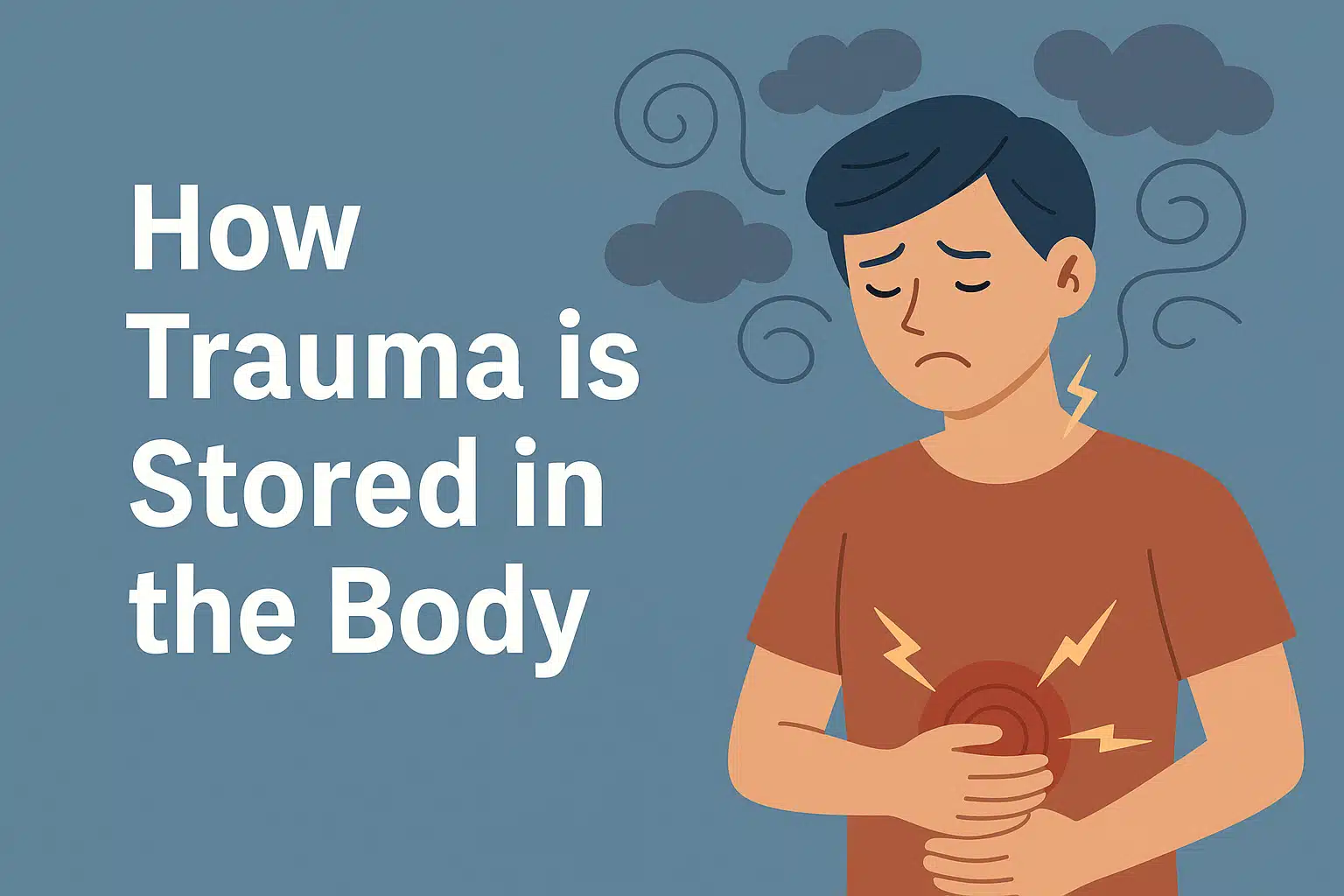
Trauma doesn’t always stay in the past. It can live on in the body, tight muscles, a restless mind, or a sudden knot in the stomach that makes no sense at the moment. These reactions aren’t random. They’re traces of the body remembering what the mind might prefer to forget, often surfacing years after the original event.
What It Means When Trauma Lives in the Body
Trauma is not always stored as a traditional memory that you can recall or describe. Instead, it lingers as fragments of sensation and emotion. The nervous system, designed to respond instantly to danger, braces itself when trauma occurs. Heart rate spikes, muscles tighten, and adrenaline flows.
If the threat passes safely, the body usually discharges this energy and restores balance. But when the experience is overwhelming, the body’s protective cycle remains incomplete. Energy is trapped inside, and the nervous system does not recognize that the danger is over.
This is why you might feel panic in a safe room, or a sudden knot in your stomach during a normal day. Your body is holding the memory, even when your conscious mind tries to move forward.
Signs of Trauma Stored in the Body
Recognizing stored trauma can be difficult. Symptoms often appear as unrelated health issues or emotional struggles until patterns are revealed.
Physical Signs of Stored Trauma:
- Muscle pain, especially in the neck, shoulders, or back
- Sleep disturbances such as insomnia or vivid nightmares
- Digestive discomfort, headaches, or fatigue
- Startle responses or feeling on edge without reason
Emotional Signs of Stored Trauma:
- Anxiety, panic, or persistent sadness
- Emotional numbness or disconnection from loved ones
- Difficulty trusting or maintaining relationships
- Sudden mood swings triggered by reminders of the past
Behavioral signs:
- Loss of motivation or drive
- Struggles with focus or memory lapses
- Withdrawing from activities that once felt meaningful
- Difficulty expressing thoughts or feelings
Cognitive signs:
- Difficulty concentrating or staying present
- Racing or intrusive thoughts
- Memory problems, especially around stressful events
- Feeling “spaced out” or detached from reality
Relational Signs of Trauma in the Body:
- Fear of abandonment or rejection
- Difficulty setting healthy boundaries
- Overdependence on others or fear of closeness
- Patterns of conflict or withdrawal in relationships
The Science Behind How Trauma Is Stored in the Body
Modern research helps explain why trauma is stored this way.
- The amygdala acts as an internal alarm system, becoming oversensitive after trauma.
- The hippocampus normally organizes memories into a timeline, but traumatic experiences may fragment this process.
- The prefrontal cortex, which allows rational thought, may shut down during trauma, leaving raw emotional memory instead of a coherent story.
The Polyvagal Theory describes how trauma locks the nervous system into survival states. Fight, flight, or freeze responses may continue long after the event, creating hyperarousal or emotional numbness.
A National Institute of Mental Health study shows how post-traumatic stress disorder is linked to lasting changes in brain regions responsible for fear and stress regulation. Another research review published confirms that trauma alters the body’s stress hormones and contributes to chronic health symptoms.
These findings highlight what many survivors already know from experience: trauma is not “all in your head.” It reshapes both mind and body.

How Childhood Trauma Shapes the Adult Body
The body often remembers what the mind tries to forget. Childhood is a time when the nervous system is forming patterns of safety, trust, and connection. When a child grows up in an environment of neglect, abuse, or instability, the body learns to brace for danger. Muscles tense, breathing becomes shallow, and the developing brain organizes itself around survival instead of curiosity and play.
These early imprints do not always fade with age. Adults who experienced childhood trauma may carry forward patterns such as chronic restlessness, difficulty with intimacy, or persistent health issues. A study published in Comprehensive Psychoneuroendocrinology found that childhood trauma is strongly linked to anxiety, depression, and low self-esteem later in life.
Therapy helps untangle these old imprints, giving the body a chance to experience safety again and supporting lasting resilience.
How to Release Trauma Stored in the Body
Healing is not about erasing the past. It is about helping the nervous system finish what was left incomplete, allowing the body to return to safety and balance.
- Somatic practices such as yoga, breathwork, and mindfulness encourage awareness of physical sensations. By learning to notice and release tension gradually, the body learns it is safe to relax.
- Therapy provides a secure space to process overwhelming memories. Trauma-informed approaches and somatic psychotherapy target both cognitive and bodily reactions. These therapies integrate fragmented sensations and help the nervous system return to calm states.
- Creative expression can also support recovery. Through art, music, or movement, these outlets give survivors a way to transform inner experiences into outward expression, creating a bridge between what was once hidden and what can now be shared with strength and clarity.
Practical Steps to Begin Releasing Trauma
Healing from trauma is a gradual process, and professional guidance is often essential. Yet there are gentle practices that can support the body and mind along the way. These practices are not cures on their own, but they help create a foundation of calm and resilience.
- Grounding exercises: Placing both feet firmly on the ground, noticing textures, or naming objects in the room can remind the nervous system that the present moment is safe.
- Breathing practices: Slow, deep breaths encourage the body to shift out of fight-or-flight mode and into a state of regulation.
- Journaling: Writing about sensations, emotions, or struggles can help make sense of patterns that feel overwhelming.
- Mindful movement: Gentle stretching, yoga, or walking can release tension stored in the muscles.
These small steps help reconnect you with your body in compassionate ways. As you practice, you build the capacity to notice what your body is carrying without being consumed by it. When combined with therapy, these tools become powerful companions in the journey of releasing trauma and reclaiming creativity.
Why Sensitivity Can Increase the Impact of Trauma
Many people carry a heightened sensitivity that makes them more open to both joy and pain. This openness can create greater awareness and connection, but it can also leave someone more exposed to overwhelming experiences.
- Performance demands can trigger fear of failure.
- Harsh criticism may reopen old wounds.
- Public visibility or scrutiny can fuel anxiety and self-doubt.
When trauma is stored in the body, it can interrupt natural expression and connection. A person may feel their voice disappear, their rhythm vanish, or their sense of confidence fade. Approaches that address these unique struggles foster healing and help restore balance, clarity, and strength.
Healing Trauma Through EMDR
Eye Movement Desensitization and Reprocessing (EMDR) is a trauma-focused therapy that helps the brain and body reprocess overwhelming experiences. EMDR for creatives builds on this approach to release stored trauma and restore balance, resilience, and authentic expression. The benefits of EMDR include:
You Can Release Trauma Stored in Your Body
EMDR helps your body let go of the tension and reactions that have stayed trapped long after the painful experience ended. With each session, you may begin to feel lighter, calmer, and more at ease in your own skin.
You Can Restore Balance and Flow
As your nervous system settles, you begin to feel calmer, more present, and able to move through life with greater ease. Daily stress becomes less overwhelming, and you regain the ability to respond rather than react.
You Can Turn Painful Memories Into Strength
Memories that once left you feeling stuck or powerless can become integrated in a way that supports resilience and confidence. Instead of controlling you, these memories take their place as part of your story without defining who you are.
You Can Reconnect With Your Full Sense of Self
EMDR helps you rediscover parts of yourself that may have been hidden by trauma, allowing you to feel whole and authentic again. This reconnection brings a deeper sense of identity, making it easier to live with clarity and purpose.
You Can Build Lasting Resilience
Beyond relief in the moment, EMDR equips you with the ability to face challenges without being overwhelmed by the past. Over time, this creates a foundation of strength and stability that supports long-term healing.
People who undergo EMDR often describe it as a process of regaining access to parts of themselves they thought were lost. What was once blocked by fear or emotional pain becomes accessible again, opening the way for healing, expression, and authentic living.
Finding Freedom After Trauma
When trauma is released, survivors often notice deep shifts:
- Breathing feels open and steady.
- Sleep and energy improve.
- Emotions feel grounded and balanced.
- Creativity returns with renewed inspiration.
Healing trauma is not about forgetting, but about reclaiming the body as a safe home. This process restores emotional health and allows you to live with greater clarity, connection, and freedom.
Healing the Body, Restoring Freedom
Trauma may be stored in the body, but it does not need to remain there. With therapy, somatic practices, and approaches like EMDR, it is possible to release unfinished survival responses and reconnect with resilience.
This journey brings more than relief from symptoms. It restores the ability to express, perform, and create with a clear and authentic voice. The body carries both pain and potential. When guided toward healing, it becomes the foundation for a life of freedom and creativity.
FAQs About Trauma Stored in the Body
How does the body store trauma?
The body stores trauma through the nervous system and muscles. When stress responses are not completed, energy stays trapped and may resurface as tension, panic, or numbness later.
What are the signs of trauma stored in the body?
Common signs include chronic pain, fatigue, anxiety, digestive problems, and emotional disconnection. These symptoms often feel unrelated but connect back to past experiences.
Can trauma cause physical pain years later?
Yes, unresolved trauma can lead to long-term muscle tightness, headaches, gut issues, and sleep disturbances. The body continues to react as if the danger never ended.
What therapy helps release trauma from the body?
Somatic therapy, EMDR, mindfulness, and trauma-informed psychotherapy help release stored trauma. These methods calm the nervous system and support recovery.
This guest post was contributed by Dr. Mihaela Ivan Holtz. For more on her work, visit Creative Minds Psychotherapy. Published in partnership with PsychiCare.