Last Updated on October 29, 2026
Your partner used to enjoy spending time with you. Now, they barely talk after work, avoid physical affection, and seem irritated by small things.
You start wondering whether they’re depressed or losing interest in the relationship.
If you’re experiencing depression yourself, you may recognise the other side. You still care about your partner, but even a normal conversation can feel exhausting.
Depression can affect relationships without necessarily changing how much someone loves their partner. It can reduce emotional energy, interest in shared activities, and the ability to manage everyday responsibilities.
But depression doesn’t explain every relationship problem. Sometimes emotional distance comes from unresolved conflict, and sometimes both difficulties exist together.
How Does Depression Affect Romantic Relationships?
Depression affects more than mood. Changes in energy, concentration, sleep, motivation, and pleasure can influence how someone participates in a relationship.
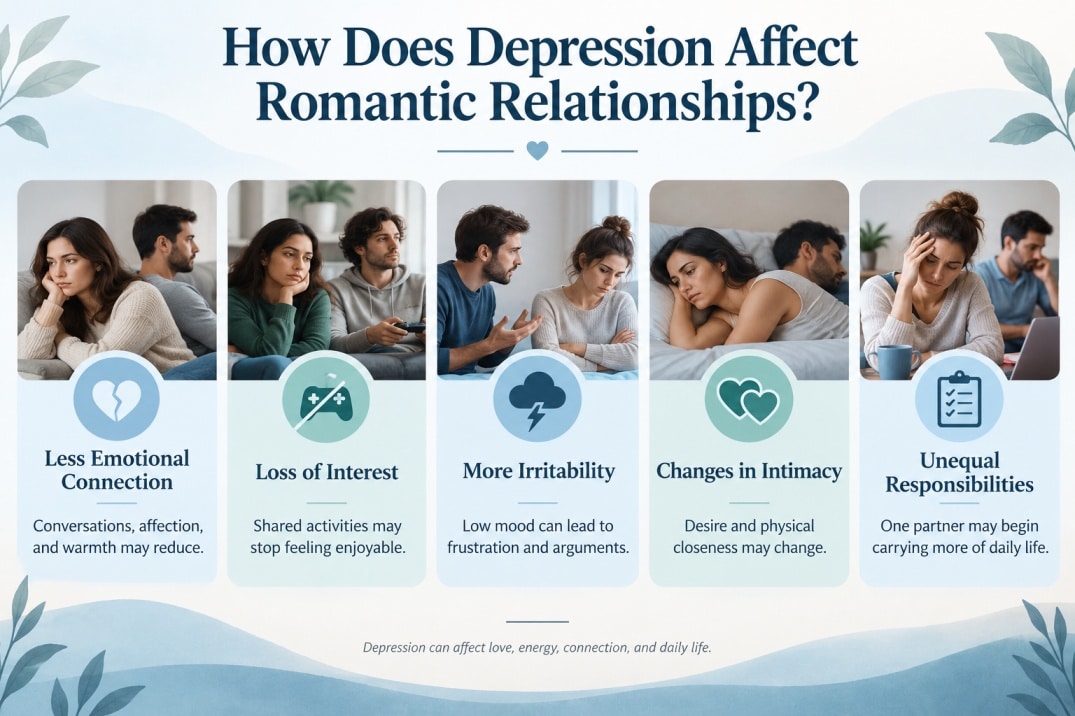
1. Less Emotional Connection and Affection
Someone experiencing depression may become quieter, less responsive, or less interested in conversation.
They might stop initiating hugs or asking about their partner’s day because they feel emotionally drained.
For example, someone who previously enjoyed chatting after dinner may now go straight to bed. Their partner feels ignored, while they feel too exhausted to engage.
Without understanding what’s happening, both may begin interpreting the distance differently.
2. Losing Interest in Spending Time Together
Depression can reduce someone’s ability to enjoy activities that previously felt rewarding. This symptom is called anhedonia.
It may affect hobbies, friendships, dates, and other shared experiences.
Someone might agree to go out but feel little excitement during the activity. Their partner may assume they no longer enjoy being together.
If the loss of interest extends into several areas of life, depression or another health concern may be involved. If it mainly concerns the relationship, unresolved relationship difficulties also deserve attention.
3. Irritability and More Arguments
Depression doesn’t always appear as sadness.
Some people become unusually impatient or easily frustrated. Poor sleep and low energy may make everyday demands harder to manage.
A routine question about household responsibilities might trigger a sharp response, leaving the other partner reluctant to raise concerns.
Although irritability can accompany depression, it doesn’t excuse threats, insults, or aggressive behaviour.
4. Changes in Sex and Physical Intimacy
Depression may reduce sexual desire, arousal, or interest in physical closeness.
Fatigue, emotional distress, and some antidepressant medications can contribute to these changes.
One partner may interpret reduced intimacy as a loss of attraction, even when the cause is more complicated.
It’s worth discussing whether the change involves sexual desire, physical affection, emotional connection, or several of these.
If sexual difficulties begin after starting medication, consult the prescribing clinician rather than stopping treatment independently.
5. Unequal Responsibilities at Home
Depression can make cooking, cleaning, childcare, decision-making, and other routine tasks difficult.
The other partner may gradually take on additional responsibilities.
Over time, they may feel exhausted or resentful, particularly if the situation continues without additional support.
This practical imbalance needs attention alongside the emotional symptoms.
Why Does Someone With Depression Pull Away From Their Partner?
Withdrawal may happen because someone has little energy for social interaction or feels overwhelmed by emotional demands.
Others experience guilt or worthlessness and believe they’re disappointing their partner.
Imagine someone who has spent weeks struggling to get through work. Their spouse asks why they never want to go out anymore.
They hear the question as criticism and withdraw rather than explain how exhausted they feel.
Their spouse interprets the reaction as rejection.
Neither fully understands what the other is experiencing.
However, withdrawal can also reflect resentment, unresolved disagreements, or other relationship concerns. Depression should not be assumed simply because someone has become distant.
Is It Depression or Are They Losing Feelings for You?
No single behaviour can reliably distinguish depression from fading romantic feelings.
Reduced affection, less intimacy, and emotional distance can occur in both situations.
The broader pattern matters.
| What you’re noticing | What it may indicate |
|---|---|
| Loss of interest in hobbies, friendships, and enjoyable activities | A broader loss of pleasure associated with depression |
| Changes in sleep, appetite, energy, or concentration | Possible depressive symptoms or another health concern |
| Hopelessness, excessive guilt, or worthlessness | Symptoms that warrant professional assessment |
| Distance mainly following repeated arguments | Unresolved relationship difficulties may contribute |
| Persistent symptoms affecting daily life | A reason to seek professional evaluation |
Understanding the difference between sadness and depression may help when changes in mood and functioning continue beyond an ordinary difficult period.
Can Someone Still Love Their Partner but Feel Emotionally Numb?
Yes.
Depression can reduce emotional responsiveness and pleasure, including in relationships a person values.
Someone may still care about their partner without experiencing affection or excitement as strongly as before.
But emotional numbness doesn’t prove that love remains unchanged.
A person can be depressed and genuinely unhappy in their relationship at the same time.
Rather than relying on reassurance alone, consider what has changed in the person’s overall wellbeing and whether the relationship has unresolved problems of its own.
Can Relationship Problems Make Depression Worse?
Depression and relationship distress can influence each other.
One partner withdraws because they’re struggling emotionally. The other feels rejected and becomes more demanding or frustrated.
The first partner then feels overwhelmed and pulls away further.
This can create a cycle of loneliness and conflict.
The direction can also be reversed. Ongoing criticism, betrayal, financial problems, or lack of support may contribute to emotional distress.
Some people experience emotional burnout in marriage after prolonged conflict and unmet needs. Relationship burnout and clinical depression can overlap, but they aren’t the same condition.
When both are present, addressing depressive symptoms alone may not resolve longstanding relationship difficulties.
What to Do When You’re Depressed in a Relationship

1. Tell Your Partner What You’re Experiencing
Your partner may notice that you’ve become distant without understanding why.
You could say:
“I’ve been exhausted and struggling to enjoy things lately. I know we haven’t spent much time together, but this is affecting other parts of my life too.”
You don’t need to explain every feeling. Giving your partner some context can prevent unnecessary assumptions.
If you’re also unhappy about something in the relationship, discuss that separately.
2. Maintain Connection in Manageable Ways
Long outings or demanding conversations may feel difficult when you’re depressed.
A short walk, eating together, or spending a little quiet time with your partner may be more realistic.
Choose activities you can manage rather than repeatedly making plans that leave you feeling overwhelmed.
If basic activities have become extremely difficult, seeking treatment should take priority.
3. Seek Appropriate Treatment
Your partner can provide support, but they cannot treat depression for you.
If symptoms persist for two weeks or longer, affect daily functioning, or become severe, seek a professional assessment. Get help sooner if symptoms are worsening.
Treatment may include psychotherapy, medication, or both, depending on your needs.
PsychiCare offers online depression counselling for people experiencing persistent low mood, emotional withdrawal, and related difficulties.
How to Support a Partner With Depression Without Losing Yourself
Supporting someone with depression can be difficult, especially when your own emotional needs are going unmet.
1. Ask What They’re Experiencing
Instead of assuming their withdrawal means rejection, ask what feels difficult.
For example:
“I’ve noticed you’ve been spending more time alone. Are conversations feeling exhausting, or is something between us bothering you?”
This allows them to explain their experience without forcing an immediate discussion about whether they still love you.
2. Offer Practical Help
Specific offers may be more useful than general encouragement.
Ask whether they’d like help arranging an appointment, managing a household task, or finding professional support.
Avoid taking control of their treatment or making decisions without involving them.
3. Be Honest About Your Own Limits
You can support your partner and still feel overwhelmed.
If you’ve been managing most responsibilities alone, discuss what needs to change.
You might say:
“I know things have been difficult for you, but I’m struggling with how much I’ve been handling. Can we look at getting some extra help?”
This acknowledges both partners’ needs without blaming someone for their symptoms.
4. Maintain Your Own Support
Continue spending time with trusted friends, maintaining routines, and seeking help when needed.
You are not responsible for curing your partner or managing every aspect of their recovery.
Depression also doesn’t excuse controlling behaviour, threats, or abuse. If you feel unsafe, prioritise your safety and seek individual support.
When Should Couples Seek Therapy for Depression and Relationship Problems?
Professional support may be helpful when depressive symptoms interfere with daily life, conflict becomes frequent, or one partner feels overwhelmed by the situation.
Individual depression treatment addresses symptoms such as persistent low mood, loss of pleasure, hopelessness, and impaired functioning.
Couples therapy may help when communication problems, conflict, or reduced mutual support are contributing to distress.
Sometimes both approaches are appropriate.
The UK’s NICE guidelines for depression in adults recommend considering behavioural couples therapy when relationship difficulties may contribute to depression or partner involvement could support treatment.
PsychiCare provides online couples therapy for partners dealing with emotional distance, recurring disagreements, and relationship difficulties.
A qualified professional can help determine which treatment approach is appropriate.
Where abuse or coercive control is present, routine couples therapy may be unsafe. Individual support and safety assessment should come first.
If someone has suicidal thoughts, a plan to harm themselves, or is in immediate danger, seek urgent medical or emergency assistance.
Final Thoughts
Depression can change how someone communicates, shows affection, and participates in a relationship. These changes may hurt both partners, even when they care deeply about each other.
But depression isn’t always the reason a relationship is struggling.
Understanding the symptoms, recognising genuine relationship problems, and seeking appropriate support can help both partners decide what needs attention.