Last Updated on November 2, 2026
It’s been weeks since your breakup. You still wake up thinking about your ex, struggle to concentrate at work, and feel exhausted even after sleeping.
Your friends say you need to move on. You try meeting people or doing things you previously enjoyed, but nothing feels the same.
You begin wondering whether you’re experiencing normal heartbreak or depression after a breakup.
The answer isn’t determined by how long you’ve been separated or how often you think about your ex. What matters is how the loss is affecting your mood, your sense of self, and your ability to function in everyday life.
Can a Breakup Cause Depression?
Yes, a breakup can contribute to the onset of clinical depression, particularly when the relationship was emotionally significant or the person has other vulnerabilities. However, feeling devastated after a relationship ends doesn’t automatically mean you have a depressive disorder.
There are several possible experiences.
You may be grieving the relationship, missing your partner, and struggling to adjust to life without them. This can be extremely painful without necessarily being a mental health condition.
Some people experience an adjustment disorder, where emotional or behavioural difficulties following a stressful event cause clinically significant distress or interfere with daily life.
Others develop a depressive episode involving a broader pattern of low mood or loss of pleasure, alongside additional symptoms.
A mental health professional considers your symptoms, previous mental health history, and current circumstances before determining whether a diagnosis is appropriate.
How Do You Know If It’s Breakup Grief or Depression?
Breakup grief and clinical depression can look remarkably similar.
Both may involve crying, disturbed sleep, appetite changes, difficulty concentrating, and feelings of loneliness.
One useful distinction is whether your distress remains mainly connected to losing the relationship or has become part of a wider change in how you experience yourself and your life.
| What you’re experiencing | What it may indicate |
|---|---|
| You become upset when reminded of your ex but can still enjoy some activities | May be consistent with breakup-related grief |
| You’ve lost interest in friends, hobbies, work, and activities unrelated to your ex | Broader loss of pleasure that may occur with depression |
| You miss your partner and feel hurt about the rejection | Understandable distress following relationship loss |
| You feel worthless, hopeless, or excessively guilty across different areas of life | Possible depressive symptoms needing assessment |
| You’re struggling significantly with eating, sleeping, working, studying, or personal care | Distress or impairment that deserves professional attention |
These differences can help you understand your experience, but they aren’t diagnostic rules. Someone grieving a breakup may experience severe symptoms, while a person with depression may still enjoy occasional moments with friends or family.

Does Feeling Depressed for Two Weeks Mean You Have Clinical Depression?
Not necessarily.
A major depressive episode generally involves a qualifying pattern of symptoms lasting at least two weeks, including depressed mood or markedly reduced interest or pleasure.
But two weeks of crying, loneliness, or missing your ex doesn’t automatically mean you have clinical depression.
The number, severity, and impact of symptoms matter, along with your medical history and other possible explanations.
Our article on the difference between sadness and depression explains these distinctions in greater detail.
You don’t need to wait for a particular number of days before seeking help, especially if your distress is severe or affecting your ability to manage everyday life.
Why Can’t You Stop Thinking About Your Ex, Even When the Relationship Is Over?
After a breakup, it’s natural to revisit conversations, remember happy moments, or wonder why the relationship ended.
Sometimes, however, reflection becomes rumination, where you repeatedly return to painful questions without reaching a useful conclusion.
Imagine replaying your final argument every night.
You wonder whether the relationship would have survived if you’d said something differently. Then you remember another disagreement and start questioning that too.
Instead of understanding what happened, you end up finding more reasons to blame yourself.
Rumination can become particularly distressing when your thoughts shift from what went wrong in the relationship to what must be wrong with you.
A longitudinal study published in Stress and Health followed 87 women after romantic breakups over 30 weeks. Researchers identified different patterns of depressive symptoms, including faster recovery, slower recovery, and persistent distress. Higher rumination was associated with slower recovery and persistent distress, although the findings do not establish cause and effect.
Thinking about your ex isn’t itself a mental health problem. The concern is when repetitive thoughts increasingly interfere with concentration, sleep, or your ability to engage with other parts of life.
If you’re repeatedly checking their social media, imagining conversations, or searching for closure, our guide on how to stop thinking about someone explores these patterns in more detail.
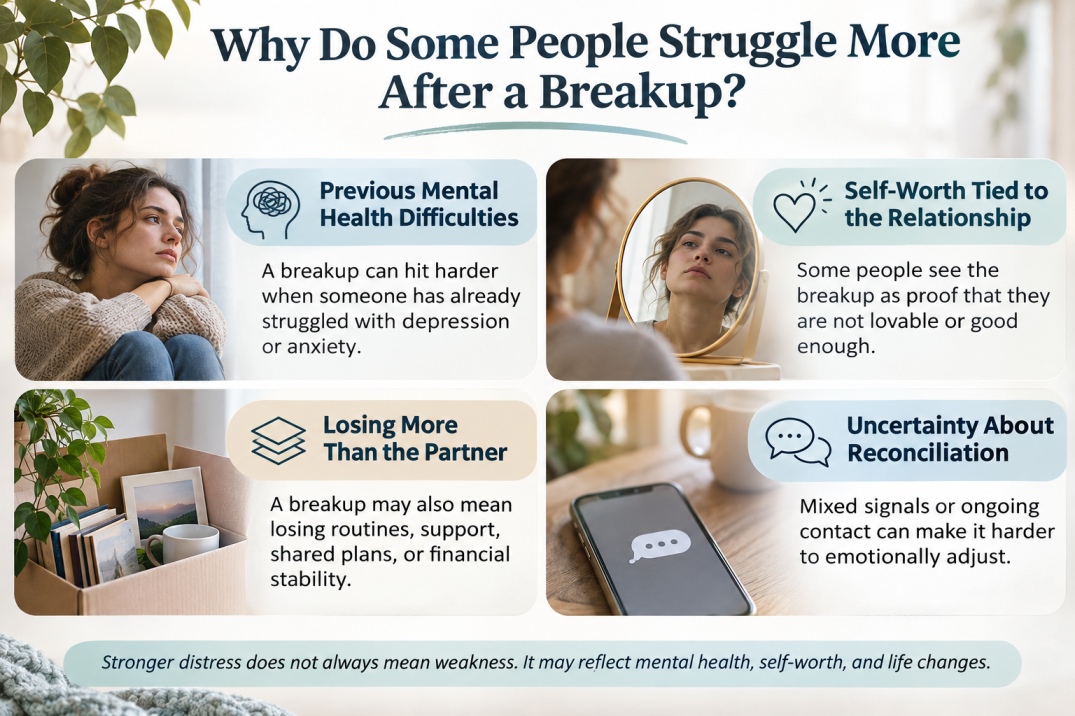
Why Do Some People Struggle More After a Breakup?
Two people can experience similar breakups but respond very differently.
The length of the relationship or intensity of love doesn’t fully explain that difference. Previous mental health, beliefs about oneself, and the practical consequences of separation can all matter.
Previous Mental Health Difficulties
Someone who has experienced depression before may be more vulnerable to another episode during a major life stressor.
This doesn’t mean a breakup will inevitably trigger depression. But a noticeable return of depressive symptoms may warrant assessment, especially if previous episodes required treatment.
When Your Self-Worth Depends on the Relationship
For some people, losing a partner also changes how they see themselves.
Instead of thinking, “This relationship didn’t work,” they start believing, “Nobody will ever love me” or “I’m not good enough for anyone.”
These conclusions turn a painful relationship experience into a broader judgement about personal worth.
Attachment-related expectations can influence how people interpret separation, although an attachment style alone cannot predict depression. PsychiCare’s guide to attachment styles in adults explains these patterns in more detail.
Losing More Than Your Partner
A breakup may also involve losing a shared home, financial stability, mutual friendships, or plans for marriage and children.
Someone who lived with their partner for years may suddenly face responsibilities they previously shared.
These ongoing pressures can complicate recovery because the practical consequences of separation continue long after the relationship ends.
For some people, uncertainty about getting back together adds another difficulty, especially when communication continues without a clear decision about the relationship.
Not all post-breakup distress is depressive. Some people primarily experience fear, restlessness, or anxious anticipation. Our article on why breakups trigger anxiety explains that experience separately.
Why Am I Still Depressed Months After My Breakup?
There is no clinically established deadline for recovering from a breakup.
Some people begin feeling more settled within weeks, while others experience significant emotional difficulties for months.
Research has identified different patterns of recovery following romantic breakups. These findings don’t establish a universal timeline or mean that distress persisting beyond a certain month is necessarily a mental disorder.
What matters is how your wellbeing is changing.
You might still miss your ex while gradually managing work, friendships, responsibilities, and activities that matter to you.
Alternatively, you might find that your mood, motivation, or ability to function has remained substantially affected, even when nothing directly reminds you of the relationship.
Persistent symptoms deserve closer attention, particularly when they are worsening rather than improving or are making ordinary activities difficult.
A professional can help determine whether you’re experiencing ongoing breakup-related distress, a depressive episode, or another difficulty requiring support.
What Should You Do If You Feel Depressed After a Breakup?
The most useful response depends on what’s actually happening in your life.
Someone who has painful memories but continues managing daily responsibilities may need different support from someone who is struggling to eat, sleep, or get through a working day.
If You’re Struggling to Eat, Sleep, or Function
Notice which activities have become difficult.
Are you frequently missing work because you cannot concentrate? Sleeping only a few hours? Going long periods without eating properly? Struggling with basic personal care?
These changes are important because significant impairment can indicate a need for professional assessment, regardless of whether the immediate trigger was a breakup.
Where possible, maintain essential routines such as regular meals, adequate opportunities for sleep, and necessary daily responsibilities.
However, routine changes alone are not a treatment for major depression. If basic functioning is substantially impaired, seek professional help rather than relying on self-management.
If You’re Constantly Blaming Yourself
Pay attention to whether your thoughts concern specific behaviours or have become sweeping conclusions about your worth.
For example:
“I regret how I handled that argument” reflects on something that happened.
“I ruin every relationship because I’m impossible to love” turns one painful experience into a judgement about your entire identity.
That distinction matters because excessive guilt and feelings of worthlessness can be part of depression.
Psychological approaches such as cognitive behavioural therapy can help people examine these patterns, develop more balanced interpretations, and reduce repetitive self-critical thinking.
This doesn’t require pretending the relationship was perfect or denying mistakes you may have made.
If You’ve Lost Interest in Almost Everything
Missing activities you shared with your ex is understandable.
But if you’ve lost interest in nearly everything, including experiences you enjoyed before the relationship, this deserves closer attention.
A widespread reduction in pleasure is called anhedonia, which can occur in depression and other conditions.
Rather than forcing yourself to enjoy things, consider whether this loss of interest is part of a broader change in your mental health.
A professional assessment can help identify what is contributing to the symptoms and whether treatment is needed.
When Should You Seek Therapy for Depression After a Breakup?
Consider speaking with a mental health professional when breakup-related distress is persistent, difficult to manage, or interfering significantly with everyday life.
The type of support depends on your symptoms.
Breakup counselling may be helpful when you’re struggling to process the separation, manage persistent self-blame, or adapt to major changes following the relationship.
PsychiCare offers online breakup counselling for people dealing with relationship loss and its emotional effects.
If you’re experiencing broader depressive symptoms, a clinical assessment may be appropriate to determine whether you need structured depression counselling, medical evaluation, or another form of treatment.
Clinical depression can be treated using evidence-based psychological therapies, medication, or a combination, depending on symptom severity, previous treatment history, and individual needs.
If you’re experiencing suicidal thoughts with an intention to act, urges to harm yourself, or feel unable to stay safe, seek emergency help immediately. Severe self-neglect also requires prompt professional attention.
Final Thoughts
Missing your ex months after a breakup doesn’t automatically mean you have depression.
But if the loss is accompanied by persistent hopelessness, reduced pleasure across your life, or difficulty managing basic responsibilities, it may be more than heartbreak.
Understanding what’s happening can help you seek appropriate support instead of feeling pressured to recover according to someone else’s timeline.