Mental Disorder

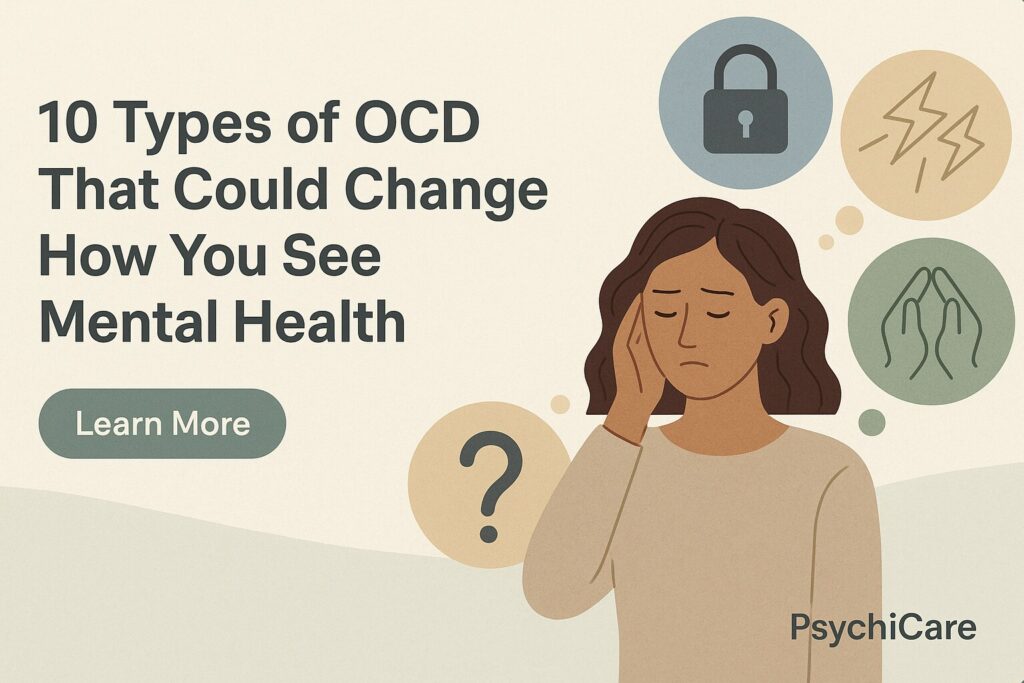
Illustration of a thoughtful woman surrounded by mental health symbols with the text “10 Types of OCD That Could Change How You See Mental Health,” a Learn More button, and PsychiCare branding.

10 Types of Obsessive Compulsive Disorder (OCD) You Should Know

Updated: November 2025 · Added clearer breakdown of OCD subtypes and updated clinical language. Obsessive-Compulsive Disorder (OCD) is not just about being tidy or cautious, it’s a mental health condition that affects how people think, feel, and act. Obsessions → unwanted, repetitive thoughts or fears (e.g., germs, safety, morality). Compulsions → behaviors or mental rituals […]

10 Types of Obsessive Compulsive Disorder (OCD) You Should Know Read More »
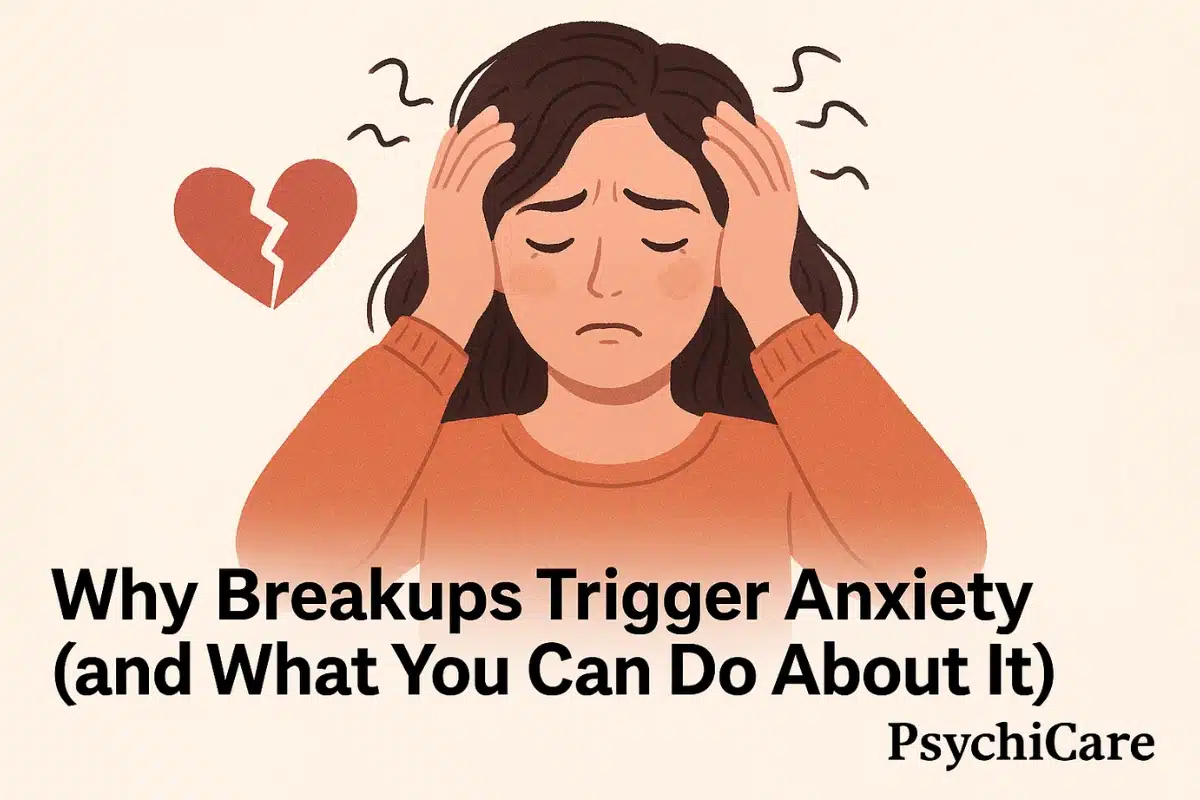
Breakups can trigger intense anxiety and emotional distress. PsychiCare explains why this happens and what you can do to cope and heal in healthy ways.

Why Breakups Trigger Anxiety (and What You Can Do About It)

“I feel like I’m losing my mind since the breakup.” “My chest feels tight, like I’m having a heart attack.” “I can’t sleep, I replay every conversation in my head.” These are the exact words many of my clients share after heartbreak. And maybe you feel the same, restless nights, racing thoughts, panic attacks, or

Why Breakups Trigger Anxiety (and What You Can Do About It) Read More »

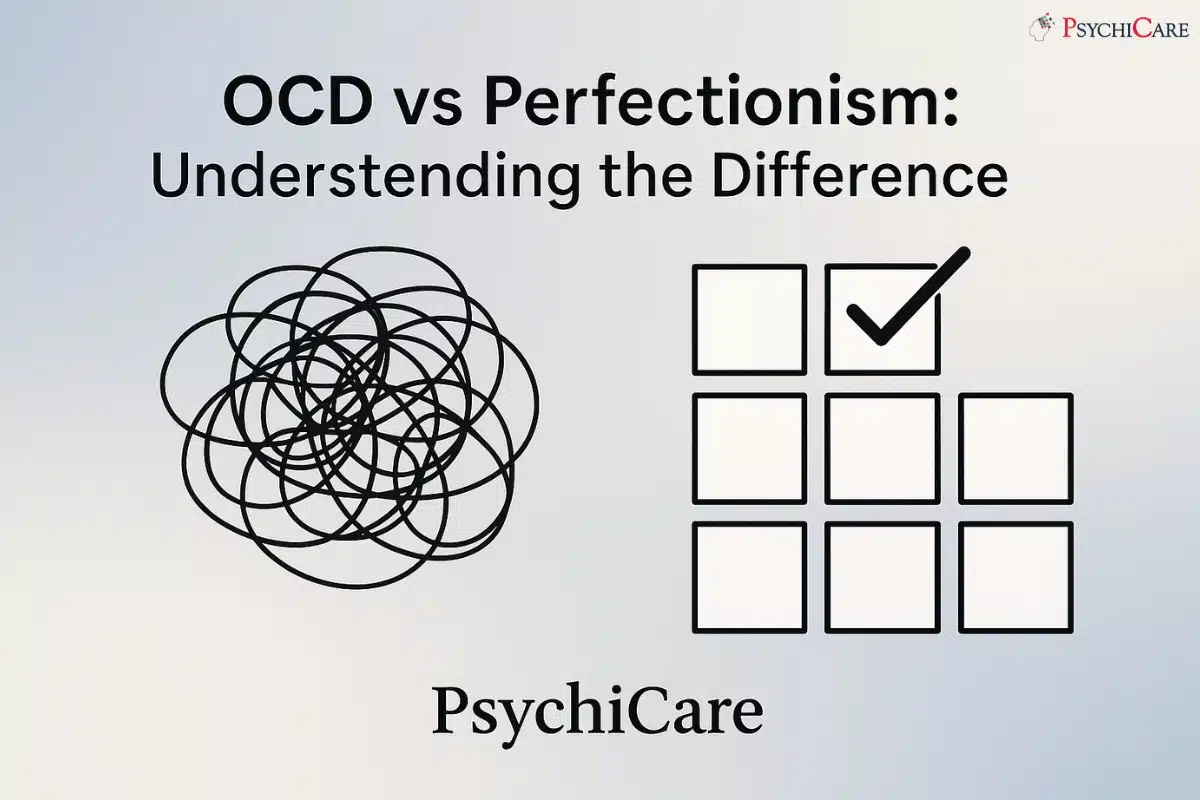
Abstract illustration showing chaotic scribbles on one side symbolizing OCD and neatly aligned boxes with a checkmark on the other side symbolizing perfectionism, with PsychiCare branding.

OCD vs Perfectionism: Understanding the Difference

“I’m so OCD about my desk.” You’ve probably heard that line or maybe even said it yourself. But here’s the thing: Wanting things clean or organized doesn’t mean you have OCD. And being a perfectionist doesn’t automatically mean you’re dealing with a mental disorder. The truth is, OCD and perfectionism are not the same thing,

OCD vs Perfectionism: Understanding the Difference Read More »

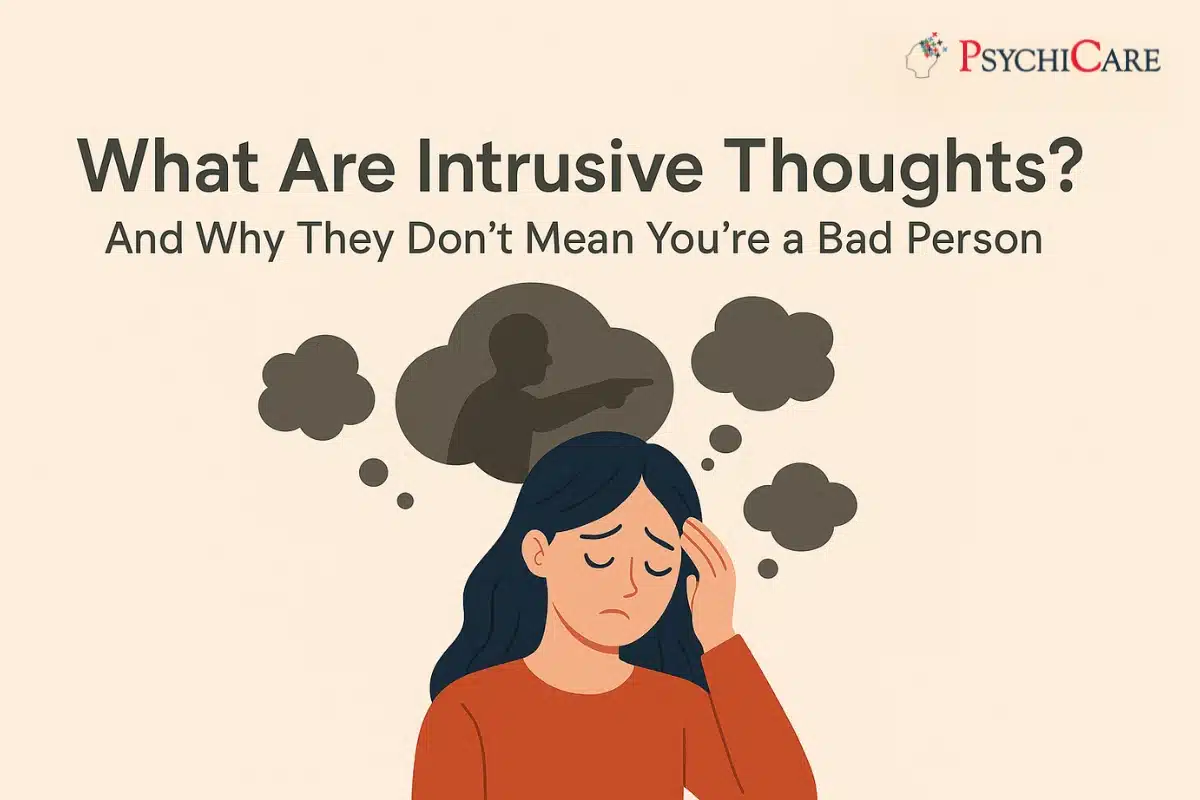
What Are Intrusive Thoughts? And Why They Don’t Mean You’re a Bad Person

What Are Intrusive Thoughts? And Why They Don’t Mean You’re a Bad Person

Ever had a scary thought like this? “What if I swerve my car and crash?”   “What if I say something horrible during prayer?”   “What if I just… jump?” They’re called intrusive thoughts.   And no, they don’t mean anything is wrong with you. You’re not broken. You’re not dangerous. You’re not a bad person. In fact,

What Are Intrusive Thoughts? And Why They Don’t Mean You’re a Bad Person Read More »

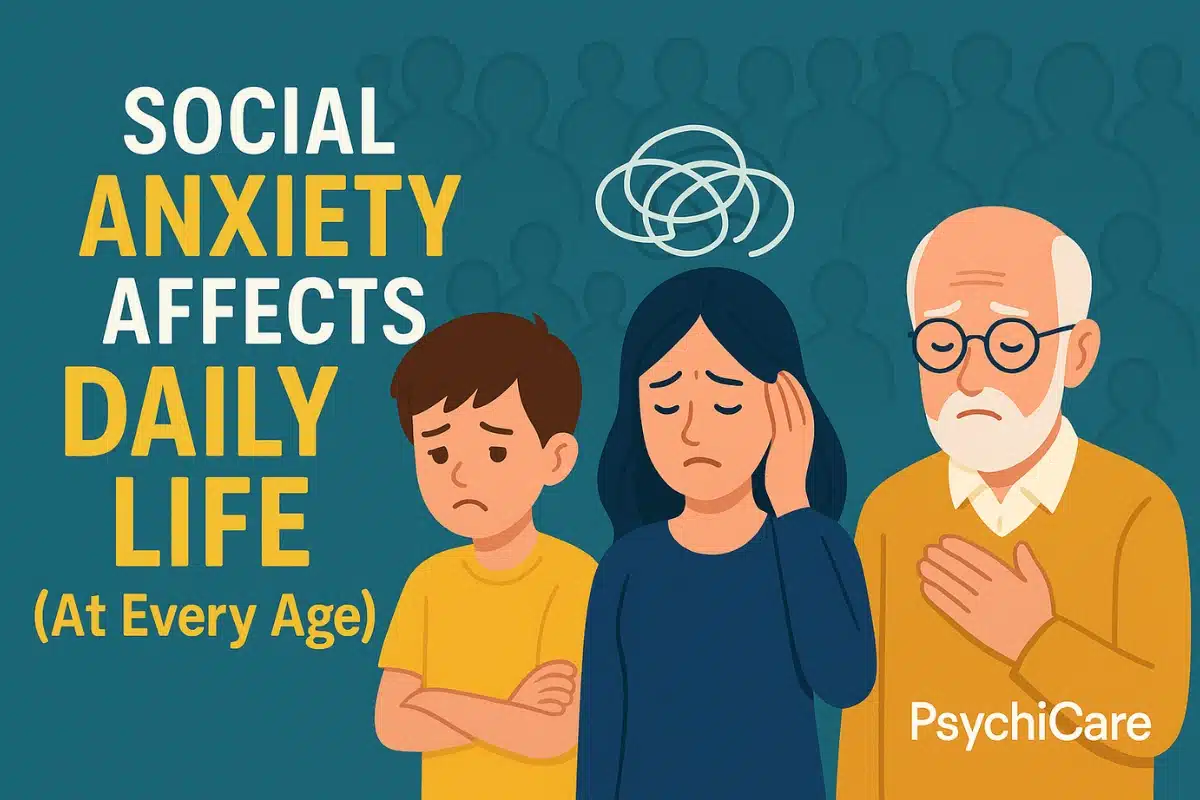
Illustration of a child, adult woman, and elderly man looking anxious against a teal background. The text "Social Anxiety Affects Daily Life (At Every Age)" appears on the left, with the PsychiCare logo on the bottom right.

How Social Anxiety Affects Daily Life (At Every Age)

Do you feel your chest tighten when it’s your turn to speak? Does your body shake a little in silence even when nothing’s wrong? Do you avoid eye contact, not because you’re rude, but because it feels physically painful? That’s what social anxiety feels like for millions of people around the world, not just a

How Social Anxiety Affects Daily Life (At Every Age) Read More »

Horizontal feature image with the title “Physical Symptoms of Anxiety: What’s Normal and What’s Not” over a dark background showing a shadowed figure clutching their chest, with PsychiCare branding at the bottom.

Physical Symptoms of Anxiety: What Your Body’s Trying to Tell You

Anxiety isn’t just in your mind; it shows up in your body too. Many people first notice physical symptoms of anxiety before realizing what’s going on. You might feel a racing heart, shortness of breath, stomach problems, or even chest pain. Some experience strange sensations like tingling, dizziness, or a burning feeling, and often wonder,

Physical Symptoms of Anxiety: What Your Body’s Trying to Tell You Read More »