Last Updated on October 26, 2025
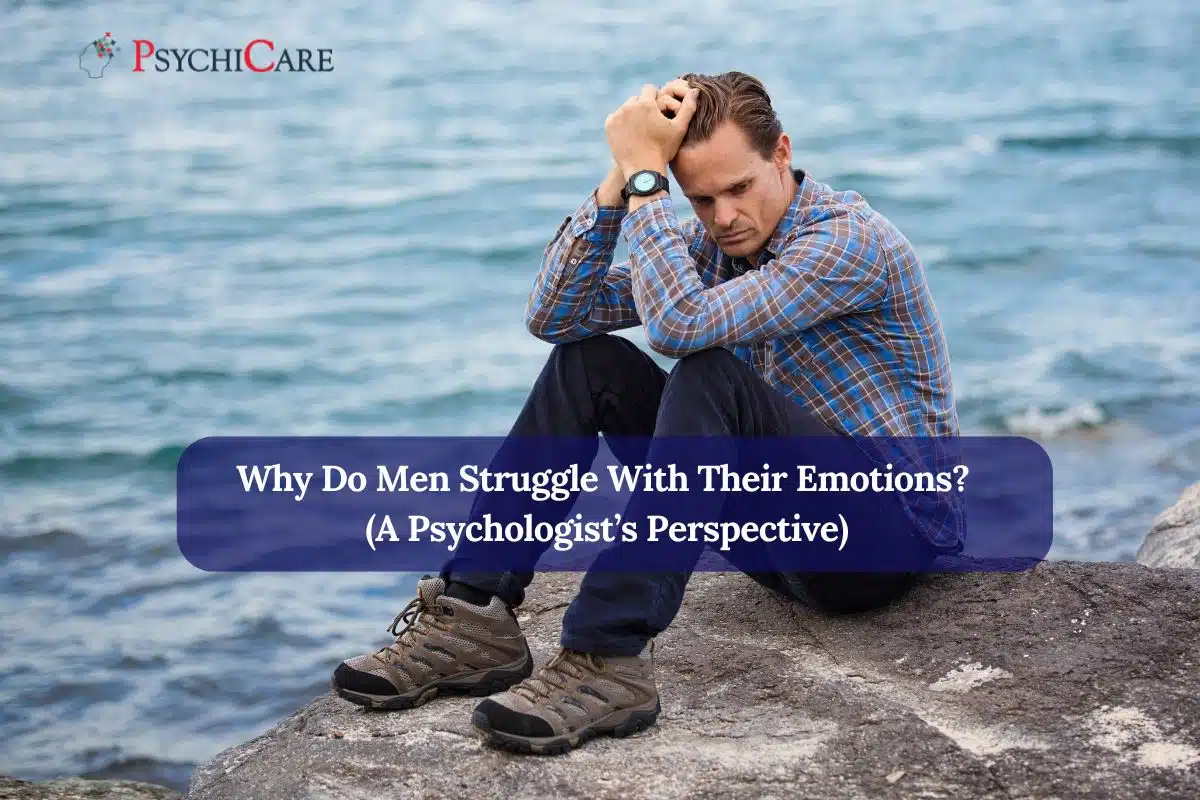
Men often struggle with emotions because they’re raised to be stoic, fear appearing weak, and rarely learn emotional vocabulary. From childhood conditioning to workplace pressure and relationship expectations, many men suppress feelings until it becomes second nature. This emotional repression can affect mental health, relationships, and self-worth but awareness and therapy can help men reconnect with what they truly feel.
Ask a man, “How are you feeling?” and you’ll often get one of three answers – I’m fine, I’m busy, or I’ll manage.
None of them usually mean “I’m okay.”
Behind that calm voice is a quiet storm – stress, guilt, loneliness, exhaustion but expressing it feels foreign, almost unsafe. From childhood, men are told to “man up,” to push through pain, to fix rather than feel. That unspoken rulebook follows them into college, careers, relationships, and fatherhood, shaping how they experience love, anger, loss, and connection.
For many, emotions become a private language, one they were never taught to speak. The result? Misunderstood relationships, bottled anger, and a sense of distance even from the people they love most.
Understanding why this happens isn’t about blaming men or culture; it’s about recognising how emotional suppression becomes second nature and how awareness can undo it.
In this article, we’ll walk through 11 reasons men struggle with their emotions from early childhood conditioning to modern social pressures and how therapy and self-awareness can help men rebuild emotional strength from the inside out.
11 Realistic Reasons Why Men Struggle With Their Emotions
Every man’s emotional journey begins in childhood but continues through school, relationships, and adulthood. From early conditioning to modern pressures, these are the real, lived reasons why so many men find it hard to express what they truly feel.
1. Childhood: When Feelings Are Ignored Instead of Understood
Many men grow up in homes where emotions are met with indifference rather than empathy. When a child says, “I’m sad,” and the response is “You’re overreacting,” he learns early that his inner world doesn’t matter. Emotional pain gets dismissed, curiosity gets silenced, and comfort rarely follows.
Over time, that child stops seeking understanding, not because he doesn’t feel, but because he’s learned no one will really listen. As an adult, he struggles to trust that his emotions are valid or worth expressing at all.
2. Teenage Years: When Sensitivity Feels Like Social Suicide
Teenage boys quickly learn that emotions can cost them respect. Online and offline, being open gets mocked, while being “chill” gets admired. So they hide pain behind jokes and confidence, learning that silence protects them better than honesty.
What makes it worse:
- Social media: Vulnerability gets trolled; numbness gets likes.
- Peer beliefs: “Girls don’t like cry-babies” becomes teenage gospel.
- Busy homes: Working or distracted parents miss emotional cues.
- Tense families: Expressing feelings can spark anger or ridicule.
- Protective silence: Many hide pain to avoid worrying their parents.
By adulthood, that silence feels natural but it’s really just loneliness in disguise.
3. College Years: When Independence Comes Without Emotional Tools
College is supposed to bring freedom but for many young men, it also brings confusion they can’t name. Away from home for the first time, they face breakups, failure, pressure, and identity shifts without ever having learned how to process emotions. So they distract instead of dealing, study harder, party longer, and pretend stronger.
What usually happens:
- Surface friendships: Deep talks feel awkward, so bonding stays at humour or shared activities.
- Breakup silence: Heartbreak turns into jokes, rebound flings, or denial instead of healing.
- Coping with chaos: Emotions are numbed with alcohol, gaming, or overworking.
- No safe outlet: Men rarely approach counsellors, they think emotions mean weakness.
- Loneliness masked as control: “I’m fine” becomes a cover story for feeling lost.
College becomes the place where emotional habits solidify, where boys stop just hiding feelings and start believing they shouldn’t have them at all.
4. Early Careers: When Survival Demands Emotional Silence
Entering the workforce often feels like stepping into a silent competition. Men are praised for being composed, logical, and “professional,” which quickly translates to: don’t show emotion. Every meeting becomes a performance of calm, even when stress is burning underneath.
What men often face:
- Workplace image: Showing stress risks being seen as incompetent or unstable.
- Hustle mindset: Rest or reflection feels like laziness, so burnout becomes normal.
- No outlet: Emotions are channelled into long hours, gym sessions, or isolation.
- Fear of failure: Vulnerability feels dangerous in environments built on comparison.
- Loss of identity: Success becomes their only emotional validation.
Soon, “I’m busy” turns into the new emotional shield, a socially acceptable way to hide exhaustion, confusion, and self-doubt.
5. The Provider Pressure: When Worth Is Measured by What You Earn
As men grow older, emotional value starts getting tied to performance – job title, salary, house, or status. Many carry an invisible belief that love and respect must be earned through achievement. When they fall short, they don’t just feel disappointment; they feel personal failure.
What this looks like in real life:
- Success = safety: Emotional peace depends on career stability or income.
- Constant comparison: Other men’s progress quietly fuels self-doubt.
- Silent stress: Financial pressure replaces honest conversations at home.
- Guilt of rest: Taking breaks feels undeserved, even when exhausted.
- Love through responsibility: They show care by providing, not by expressing.
Over time, these patterns teach men to chase validation instead of connection – achieving more, yet feeling less.
6. Relationships: When Love Feels Unsafe in a World That Glorifies Control
In today’s culture of short-term love and instant gratification, sharing emotions often feels like a losing game. Men learn that honesty can be used against them, that when they open up, someone might label them “too emotional,” “too soft,” or simply walk away. So they start holding everything in, not out of pride, but protection.
What modern men quietly experience:
- Fear of emotional exploitation: Past experiences teach them that feelings can be turned into weapons during arguments or breakups.
- Casual intimacy, emotional distance: Many sleep together but don’t truly connect – physical closeness without emotional safety.
- Trust erosion: Repeated heartbreaks and betrayals make vulnerability feel dangerous.
- Pressure to appear “alpha”: Men feel they must look confident, unaffected, and financially strong; emotions don’t fit that image.
- Worth linked to success: In many relationships, a man’s value still feels tied to money, not affection or emotional presence.
So, men start loving quietly and hurting privately, believing that the less they feel, the less they’ll lose. But emotional disconnection isn’t protection; it’s slow heartbreak in disguise.
7. Family Responsibilities: When Caring Means Carrying Everything Alone
For many men, family love is expressed through responsibility, paying bills, solving problems, and keeping everyone safe. They believe protecting their loved ones means shielding them from their pain. So even when they’re breaking inside, they smile and say, “Everything’s fine.”
What this looks like in everyday life:
- Invisible pressure: They silently absorb stress to avoid worrying their spouse or parents.
- Role conditioning: Generations of “men don’t burden the family” create quiet suffering.
- Unspoken guilt: They feel weak if they can’t fix everyone’s problems.
- Emotional bottling: Instead of talking about fear or failure, they double their efforts at work.
- Peacekeeper mode: They hide anger, sadness, and exhaustion just to keep the house calm.
Behind the image of the “dependable man” is someone terrified of letting others down, yet too conditioned to admit he’s human.
8. The Social Media Mirror: When Life Becomes a Performance of Strength
In today’s hyperconnected world, men aren’t just living, they’re performing. Every scroll reminds them of someone richer, fitter, more successful, more “alpha.” The internet doesn’t reward vulnerability; it rewards dominance, confidence, and control. So men start curating themselves, not expressing themselves.
How this shapes emotions:
- Constant comparison: Online “highlight reels” make normal struggles feel like failure.
- Pressure to project power: Men post gym photos, not therapy updates.
- Fear of ridicule: Emotional honesty risks becoming a meme or screenshot.
- Validation addiction: Likes and followers replace genuine connection.
- Digital isolation: Endless scrolling numbs pain but deepens loneliness.
Men are told to “be real,” but the online world punishes realness. So they build digital armour, carefully filtered versions of themselves that hide the parts still aching to be seen.
9. Friendships: When Loyalty Replaces Emotional Honesty
Most men grow up believing friendship is about loyalty, not vulnerability. You have your circle, the guys you hang out with, drink with, maybe even fight for but rarely the ones you can cry with. Real emotions are swapped for banter, jokes, and favours.
What really happens beneath the surface:
- Emotions as weakness: Sharing pain feels like losing status or control.
- Friendship favours: Some friends show up only when they need money or help, not when you need listening.
- Fear of betrayal: Many men open up once, get mocked or ignored, and never try again.
- Transactional bonds: Friendships built on favours, not feelings, collapse under real pain.
- Longing for depth: Men secretly crave that one safe friend, someone they can cry, scream, laugh, and confess with, without judgment.
True male friendship isn’t just about loyalty in fights; it’s about safety in feelings. And sadly, that’s what most men never get to experience.
10. Emotional Burnout: When Feeling Nothing Feels Safer Than Feeling Too Much
After years of swallowing pain, pretending strength, and keeping everything under control, many men reach a point where they simply stop feeling. Not because they’ve healed — but because they’re drained. It’s not peace, it’s numbness wearing calm as camouflage.
How emotional burnout shows up:
- Flat emotions: Nothing feels exciting anymore, not success, not love.
- Sleep but no rest: The body shuts down, but the mind keeps running loops of stress.
- Short fuse: Small triggers cause explosive anger or sudden withdrawal.
- Loss of empathy: They stop connecting deeply, even with loved ones.
- Hidden depression: They function perfectly but feel empty inside.
This stage is dangerous because it looks like composure from the outside. But inside, men are quietly collapsing, too tired to keep pretending, yet too conditioned to reach out for help.
11. Midlife and Beyond: When Everything You Buried Starts Speaking Back
At some point, life stops letting men outrun their emotions. It might happen after a divorce, a health scare, losing a parent, or simply sitting in a quiet house that once echoed with noise. All the feelings they buried for years, grief, guilt, love, regret, begin to rise like old debts demanding to be paid.
What this reckoning often looks like:
- Sudden breakdowns: A small trigger unleashes years of suppressed emotion.
- Restlessness: Questioning the meaning of success, marriage, or identity.
- Late empathy: They start feeling everything they once ignored, pain and tenderness alike.
- Fear of change: Admitting unhappiness means rethinking everything they built.
- Desire for depth: Many start craving real conversations, peace, and connection, not noise.
It’s the moment many men finally realise that being strong was never about holding it all in; it was about having the courage to finally let it out.
When Suppression Becomes a Survival Skill and a Silent Prison
What long-term emotional suppression leads to:
- Automatic disconnection: Feelings fade, but so does joy and excitement.
- Hidden exhaustion: Calm on the outside, chaos on the inside.
- Anger as outlet: Emotions leak out through irritability or control.
- Physical symptoms: Stress turns into headaches, fatigue, or body pain.
- Relationship distance: Loved ones feel the absence of emotional warmth.
- False stability: Appearing strong becomes more important than being real.
- Sudden collapse: One trigger, a fight, a breakup, a failure, breaks the façade completely.
- Quiet regret: Realising years later that silence protected no one, it only deepened the ache.
How Men Can Relearn Emotional Expression
Real ways to rebuild emotional strength without losing your edge:
- Name what you feel, not what you think: Don’t analyse it, just acknowledge it. Start small: “I feel disappointed,” “I feel lonely.” Naming turns chaos into clarity.
- Find one emotionally safe person: A single genuine conversation with someone who listens without judging can break years of silence.
- Listen to your body before your mind: Tight chest, restless legs, clenched jaw, your body often expresses what your words can’t.
- Write without editing: Journaling isn’t for perfect sentences, it’s for honesty. Even one raw sentence can release bottled tension.
- Choose grounding over escaping: Instead of numbing pain through work, alcohol, or scrolling, pause, breathe, walk, or sit with your thoughts.
- Redefine masculinity: Real strength isn’t silence; it’s being real even when it’s uncomfortable. Vulnerability is discipline, not defeat.
- Practice emotional reps: Just like fitness, emotions strengthen with repetition, talk, reflect, feel, repeat.
- Seek therapy without shame: Therapy isn’t weakness; it’s training for your emotional muscles. Professionals help you make sense of what you’ve survived.
- Build a safe circle: Keep people who respect your honesty and distance yourself from those who weaponise it.
- Forgive yourself for unlearning late: You weren’t taught emotional fluency, you’re teaching it to yourself now, and that’s courage.
Learning to express emotions doesn’t make men less masculine, it makes them more human, more grounded, and more capable of love that actually lasts.
10 Questions to Ask a Man for a Deep Emotional Conversation
When men finally feel safe enough to talk, they often need the right questions, ones that feel curious, not critical. These gentle prompts can open emotional doors without pressure or judgment.
Try asking:
- “What’s something you’ve been carrying lately but haven’t said out loud?”
- “When was the last time you felt truly understood?”
- “What kind of moments make you feel most at peace?”
- “What do you miss about your younger self?”
- “What’s one thing you wish people knew about you but don’t?”
- “When do you feel safest being vulnerable?”
- “What’s been harder to express lately, anger, sadness, or fear?”
- “How do you usually deal with stress when it builds up?”
- “What does love mean to you when words fall short?”
- “What’s one small thing that helps you feel grounded on difficult days?”
These questions aren’t about fixing him, they’re about meeting him where he is. When asked with patience and empathy, they help a man realise he’s not being interrogated, but invited, and that’s how trust begins to grow.
Final Thoughts
After years of holding everything in, most men eventually realise one truth: the weight doesn’t go away just because you hide it. It only becomes heavier in silence.
What every man deserves to remember:
- Emotions don’t make you weak; denial does.
- You’re allowed to feel tired, scared, or lost. That’s not failure, it’s being human.
- Love doesn’t need perfection. It needs presence, honesty, and effort.
- You can start over emotionally at any age. Awareness is the first real act of courage.
- Seeking help isn’t surrender, it’s repair. Therapy helps you turn pain into understanding instead of shame.
You don’t have to keep being the quiet, steady one who holds everyone else together while falling apart inside. The world doesn’t need more silent men, it needs men who are brave enough to feel, to speak, and to heal.
If any part of this feels familiar, know that it’s never too late to reconnect with yourself. PsychiCare’s experienced psychologists and counsellors can help you unpack years of silence, one safe conversation at a time.
FAQs About Men and Emotions
Why do men struggle with their emotions?
Men struggle with emotions because they’re raised to value control and toughness. From childhood, they learn to suppress feelings, fearing judgment or rejection, which later makes recognising and expressing emotions uncomfortable or confusing.
Do men feel emotions as deeply as women?
Yes. Men experience the same emotional intensity as women but often express it differently. Social norms and masculine conditioning push them toward silence or action rather than open emotional sharing.
Why are men afraid to open up?
Men fear emotional openness because vulnerability is often mistaken for weakness. Many worry about being judged, dismissed, or misunderstood, especially in relationships or competitive spaces where strength equals respect.
How can I help a man open up emotionally?
Create a safe environment where he feels accepted. Ask gentle, open questions, listen without interruption, and avoid criticism. When he senses emotional safety, he’ll begin sharing naturally without feeling pressured.
Why do men show anger instead of sadness?
Men often express anger instead of sadness because it feels more socially acceptable. Anger provides a sense of control, while sadness exposes vulnerability that many were conditioned to hide.
Do men talk about emotions with their friends?
Rarely. Most male friendships revolve around humour or shared activities, not emotional honesty. Without safe spaces, men bottle up stress or pain rather than discussing what’s really bothering them.
Can therapy help men express emotions?
Absolutely. Therapy gives men structured emotional language, awareness of triggers, and healthy ways to communicate feelings. Over time, it helps men replace suppression with clarity and emotional confidence.
Why do men shut down during emotional conversations?
Men shut down because they feel overwhelmed, misheard, or afraid of conflict. Silence becomes a protective reflex that helps them avoid saying something wrong or losing emotional control.
How can men rebuild emotional connection after years of distance?
Rebuilding connection starts with small honesty, naming feelings, listening actively, and being patient with discomfort. Therapy and vulnerable conversations help men relearn how to trust and express emotions safely.
What’s the biggest misconception about men and emotions?
The biggest myth is that men don’t feel deeply. In reality, they feel intensely but have been taught that emotional restraint equals strength, leaving them unseen rather than unfeeling.