
Last Updated on November 23, 2026
You have a flight booked for next month. Instead of planning your trip, you’re already looking for excuses to cancel it.
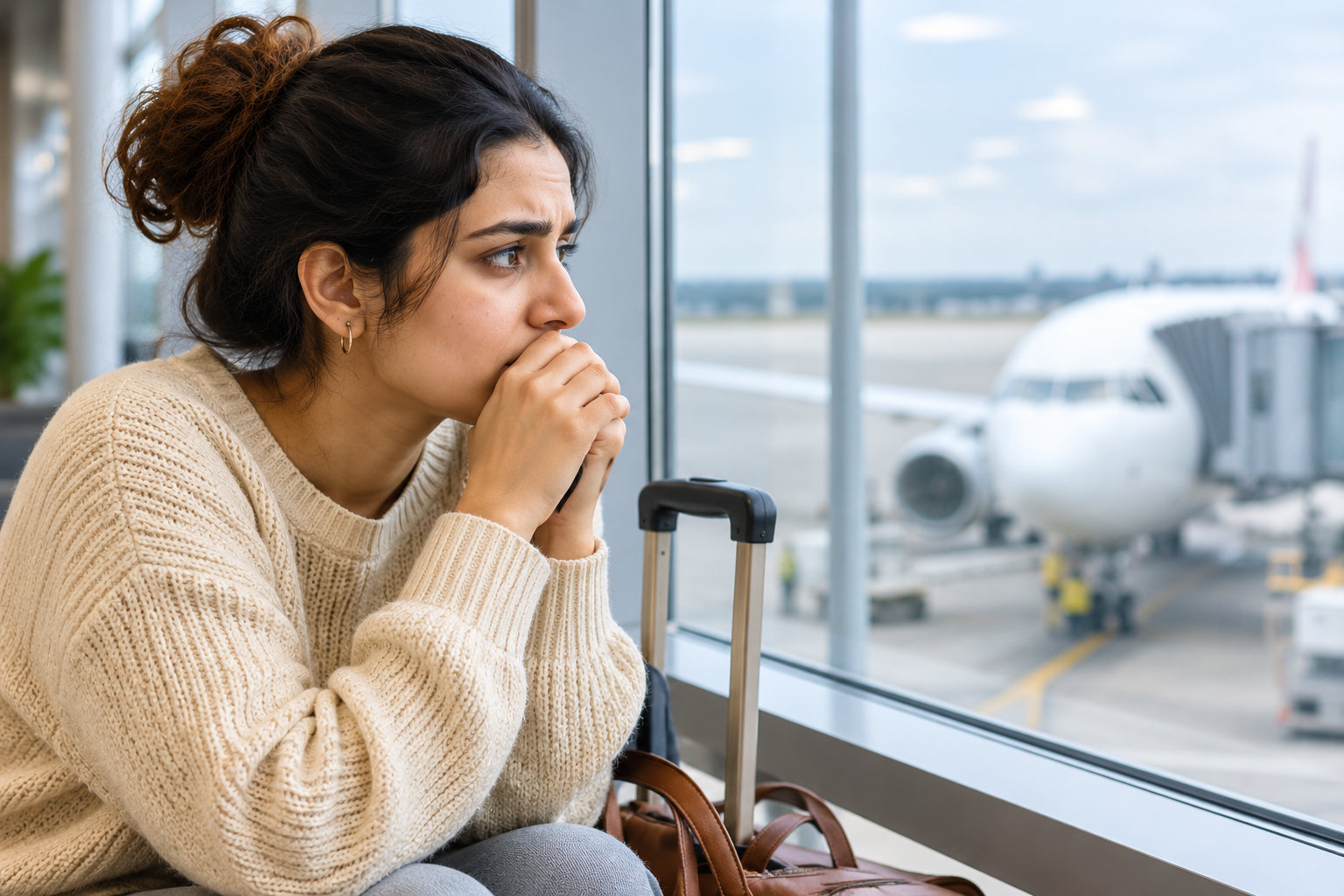
You know that millions of people fly safely every day. Still, the thought of being on a plane makes your heart race.
Perhaps flying isn’t your problem. You might feel the same way about heights, needles, dogs or enclosed spaces.
When fear starts influencing where you go and what you do, everyday decisions can become difficult.
If you’ve been searching for treatment, you may have come across hypnotherapy. But can hypnotherapy help with phobias, and is it the right treatment for your fear?
Hypnosis-based techniques may be useful for some people, particularly as part of a broader treatment plan. However, their effectiveness for specific phobias is not well established.
Here’s what you should understand before deciding whether to try it.
When Does an Ordinary Fear Become a Phobia?
Being afraid of something doesn’t automatically mean you have a phobia.
You might feel nervous before your first flight or uncomfortable when looking down from a tall building. These reactions can be normal.
A specific phobia involves an intense fear of a particular object or situation that is much greater than the actual danger.
The fear is typically persistent for at least six months and causes significant distress or interferes with everyday life.
For example, someone with a needle phobia may repeatedly postpone necessary blood tests. A person afraid of lifts might climb several flights of stairs every day, even when doing so becomes physically exhausting.
The reaction can begin before the situation happens.
You might experience sweating, trembling, nausea, dizziness or a racing heartbeat simply by thinking about what frightens you.
You may recognise that your fear is excessive. Unfortunately, knowing this doesn’t always make the physical reaction disappear.
A psychologist can help determine whether you’re experiencing a specific phobia or another anxiety-related condition.
How Might Hypnotherapy Help With a Phobia?
Hypnotherapy involves focused attention, guided imagery and therapeutic suggestions.
During hypnosis, you’re generally aware of what’s happening and can respond to the therapist. It isn’t the same as being unconscious or allowing someone to control your thoughts.
When used for phobia-related concerns, hypnosis may involve practising different ways of responding to feared situations.
Mentally Preparing for Difficult Situations
Imagine you’re frightened of travelling in a lift.
The moment you see the doors closing, you picture getting trapped. Your mind immediately searches for a way out.
A therapist using hypnosis-based imagery might guide you through imagining a lift journey while practising how to respond to uncomfortable sensations.
You could mentally rehearse entering, noticing your anxiety and coping without immediately trying to escape.
Such exercises may help you prepare for a challenging experience.
However, mental rehearsal alone doesn’t necessarily change a persistent phobia. Real-world learning and other therapeutic approaches may also be needed.
Working With Frightening Predictions
People with phobias often anticipate the worst possible outcome.
If you’re afraid of dogs, you might assume that any dog approaching you is about to attack.
Therapeutic suggestions may encourage you to consider the situation more realistically rather than responding automatically to the most frightening possibility.
This doesn’t mean convincing yourself that every dog is harmless or every situation is safe.
The aim is to develop responses that reflect the actual circumstances.
Whether hypnotic suggestions produce meaningful, lasting improvements in a diagnosed phobia remains uncertain.
What Happens During a Hypnotherapy Session for Phobias?
Your first appointment should involve understanding your difficulties before deciding which techniques to use.
The therapist may ask when the fear began, what triggers it and how it affects your life.
For example, if you’re afraid of flying, they may want to know whether your main concern is turbulence, being unable to leave the aircraft or experiencing a panic attack.
These details help identify what you’re actually afraid of.
If hypnosis-based work is considered suitable, the therapist may guide you into a state of focused attention using verbal instructions, breathing exercises or imagery.
You may be encouraged to imagine a particular situation or practise responding differently to the thoughts and sensations associated with it.
After the exercise, you can discuss your experience and whether the techniques felt useful.
A responsible treatment plan should also explain how progress will be evaluated.
If your fear has prevented you from visiting a dentist, for instance, the goal might be to attend an appointment and manage the experience more effectively.
Feeling relaxed during hypnosis can be pleasant, but the more important question is whether treatment helps you function better outside the session.
Does Clinical Research Support Hypnotherapy for Phobias?
Hypnosis has been investigated for several psychological and medical concerns, but evidence for treating specific phobias remains limited.
A 2016 clinical review examined studies involving hypnosis for anxiety and phobic disorders.
The researchers found that the available evidence was insufficient or negative for establishing hypnosis as an effective treatment for chronic anxiety disorders, including phobias.
You can read the published review on hypnosis for anxiety and phobic disorders.
This finding doesn’t establish that hypnosis can never be helpful.
Some people may find guided imagery or hypnotic techniques useful when preparing for anxiety-provoking experiences. But individual experiences cannot tell us how reliably a treatment works for other people.
Researchers have also studied hypnosis for managing anxiety during medical and dental procedures.
Those findings need to be interpreted carefully. Helping someone feel calmer during a procedure is not necessarily the same as treating a longstanding phobia that repeatedly causes avoidance.
If you’re considering hypnotherapy, it’s reasonable to ask what evidence supports the particular approach being recommended for your fear.
Is Hypnotherapy or CBT Better for Treating Phobias?
If a phobia is limiting your life, exposure-based therapy is generally the recommended first-line psychological treatment.
Exposure therapy helps you gradually approach what you fear through planned, manageable experiences.
It is often delivered as part of Cognitive Behavioural Therapy (CBT).
Suppose you’re afraid of dogs.
Your therapist might begin by helping you observe photographs of dogs or watch a video. Later, when appropriate, you may practise being near a calm dog in a controlled setting.
The steps are chosen according to your needs. You aren’t expected to confront your most frightening situation immediately.
Through these experiences, you can learn that anxiety may rise and then become manageable without having to escape. You can also discover whether the outcomes you anticipate actually happen.
Some programmes use virtual reality or other structured methods when appropriate.
The Indian Psychiatric Society’s clinical practice guidelines for CBT identify exposure therapy as the treatment of choice for specific phobias.
Hypnotherapy uses different techniques, although a clinician may sometimes incorporate hypnosis-based exercises into a broader treatment approach.
The important point is that hypnosis has not been shown to provide consistently better outcomes than established exposure-based treatment.
If you’re interested in understanding the approaches more broadly, read how hypnotherapy differs from psychotherapy.
When Might Hypnotherapy Not Be the Right Treatment?
Not every intense fear is a straightforward specific phobia.
Consider someone who avoids buses because they’re worried about having a panic attack and being unable to escape.
Their difficulty may involve agoraphobia rather than a phobia of buses themselves.
Similarly, someone whose fear developed after a traumatic experience may have symptoms that require assessment for a trauma-related condition.
These distinctions affect treatment planning.
What About Blood and Needle Phobias?
Blood and needle-related fears sometimes involve a different physical response from other phobias.
Some people experience a sudden drop in blood pressure, which can lead to fainting.
A psychologist may recommend a behavioural technique called applied tension, which involves learning to tense particular muscle groups to help manage this response.
This technique should be taught and used appropriately, particularly if you have a history of fainting or other medical concerns.
The point isn’t that hypnosis must always be avoided.
It’s that the treatment should match the nature of your symptoms rather than assuming every fear responds to the same technique.
If anxiety affects several areas of your life, you can also read PsychiCare’s guide to hypnotherapy for anxiety.
What Can You Do When Fear Starts Limiting Your Life?
One of the difficult things about a phobia is that avoiding what frightens you can bring immediate relief.
You cancel the appointment or change your travel plans, and the anxiety settles.
But the next time you encounter the same situation, the fear may feel just as strong.
You can begin by noticing how this pattern affects your decisions.
Identify what you’re missing because of the fear.
Perhaps you’ve stopped visiting friends who live far away, avoided medical appointments or turned down opportunities that involve travelling.
This helps you identify what you would like to change.
Think about what you expect to happen.
Are you worried about being injured, losing control, fainting or being unable to escape?
Different fears may require different treatment strategies.
Notice how you usually respond.
Do you constantly seek reassurance? Leave situations quickly? Ask someone else to complete activities for you?
These behaviours can provide useful information during an assessment.
Seek help with a realistic goal.
Instead of expecting yourself to become completely fearless, consider what you’d like to manage differently.
For example, attending a medical appointment without repeatedly cancelling it may be a meaningful first goal.
If your fear is severe, don’t attempt overwhelming exposure exercises on your own. A qualified professional can help you plan safe and appropriate steps.
What Should You Ask Before Booking Hypnotherapy?
Before choosing a practitioner, make sure you understand their qualifications and approach.
A therapist should be able to explain their professional mental health training, additional hypnosis training and experience working with phobias.
You can also ask how they assess your condition and why they believe hypnosis-based techniques are appropriate.
Another important question is what happens if the treatment isn’t helping.
A practitioner should be willing to review progress, consider established alternatives or refer you to another qualified professional when necessary.
If you’re interested in remote sessions, discuss whether the suggested treatment can be delivered appropriately online. Some exercises may require planning or additional support outside the appointment.
PsychiCare offers online hypnotherapy sessions for people considering hypnosis-based psychological support.
You can contact the team to explain your concerns, discuss the available professionals and ask what type of assessment or treatment would be suitable before booking.
Frequently Asked Questions
Can hypnosis permanently remove a phobia?
No treatment can guarantee that a phobia will disappear permanently. While some people may find hypnosis-based techniques helpful, evidence does not establish hypnosis as a reliable standalone cure for specific phobias. Treatment should focus on meaningful, sustainable improvements in how you respond to feared situations.
Can hypnotherapy help with fear of flying?
Hypnotherapy may be used for imagery and coping exercises related to flying. However, exposure-based treatment has stronger clinical support for flying phobia. A psychologist can help identify whether you’re afraid of the aircraft, turbulence, enclosed spaces or another aspect of the journey.
Do you have to face your fear during therapy?
Exposure-based treatment usually involves gradually approaching feared situations or related cues. The process should be explained clearly and planned with your agreement. It does not involve forcing you into an overwhelming experience without preparation.
How many hypnotherapy sessions are needed for a phobia?
There is no scientifically established number of hypnotherapy sessions that reliably treats specific phobias. The duration depends on your difficulties, the approach used and your progress. Ask your therapist to establish clear goals and review whether treatment is helping.
Can phobias be treated through online therapy?
Some psychological treatments for phobias can be provided or supported online. Therapists may use video sessions, structured exercises or virtual reality where appropriate. The suitability of remote treatment depends on your particular phobia, clinical needs and the methods involved.
Final Thoughts
You may have spent years arranging your life around something that frightens you. Perhaps you’ve become so used to avoiding it that you no longer question how much it affects your choices.
Seeking support doesn’t mean you have to confront your greatest fear immediately.
A qualified psychologist can help you understand what’s maintaining the problem and choose an appropriate treatment.
You may still feel anxious as you begin making changes. What matters is gradually becoming more able to participate in the parts of life you’ve been avoiding.