Last Updated on November 30, 2025
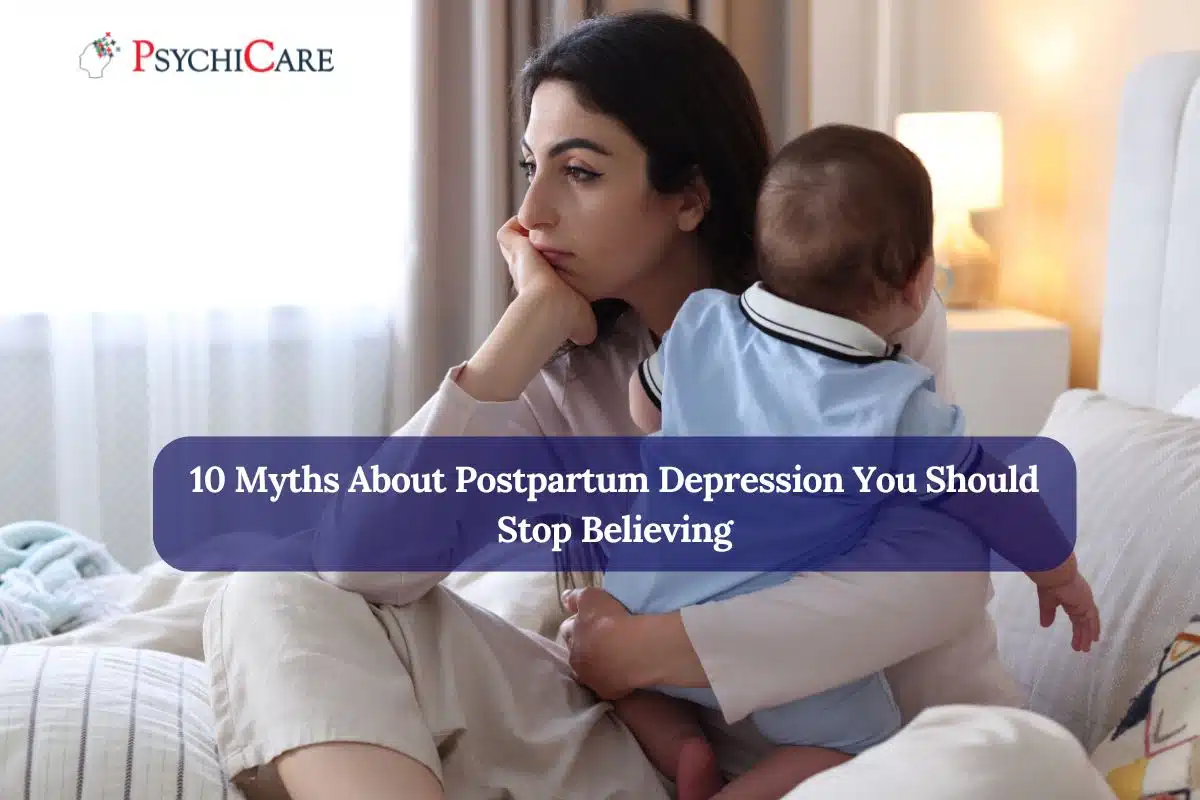
Postpartum depression isn’t rare, but the silence around it makes many parents think they’re the only ones struggling. Most people don’t recognise the signs early because they’ve been told misleading things about what PPD “should” look like.
Here’s the truth – postpartum depression can feel like:
- A heaviness you can’t explain
- Anxiety that spikes for no reason
- Feeling disconnected from your baby or your old self
- Guilt or shame, you don’t know how to talk about
- Exhaustion that doesn’t improve with sleep
And harmful myths make this even harder.
Myths like “it’s just baby blues,” “you’ll get over it,” or “good mothers don’t feel this way.”
This guide cuts through the noise by breaking down the 10 biggest myths about postpartum depression and giving you the real, research-backed facts every parent deserves.
What Is Postpartum Depression?
Postpartum depression is a serious form of depression that can appear anytime after pregnancy, including 3 months, 7 months, or even 9 months postpartum. It’s very different from the short-term baby blues. Baby blues last a few days. Postpartum depression lasts longer, feels heavier, and needs real support, not reassurance.
It affects how a parent thinks, feels, bonds, and functions day-to-day. Many mothers describe it as a quiet emotional fog, you’re doing everything for your baby, but inside, you feel overwhelmed, anxious, numb, or disconnected.
And despite the myth that postpartum depression only happens to mothers, research shows it can also affect fathers and partners, especially when sleep is disrupted or support is limited.
Postpartum depression is not a sign of weakness.
It’s not a lack of love.
It’s not something you “snap out of”.
It’s a treatable mental health condition shaped by hormonal changes, exhaustion, identity shifts, emotional pressure, and in some cases, biological or genetic vulnerability.
What Causes Postpartum Depression?
There is no single cause, and that’s why so many misconceptions exist. Postpartum depression comes from a mix of biological, psychological, and social factors, including:

1. Hormonal Shifts After Birth
The sudden drop in estrogen and progesterone can affect mood, energy, and emotional stability. These are the same hormones linked to mood changes in PMS but after childbirth, the shift is much more intense.
2. Genetics and Family History
If depression runs in your family, your risk may be higher. This doesn’t mean postpartum depression is guaranteed, only that your body may respond differently to stress and hormone changes.
3. Sleep Deprivation
Whether it’s breastfeeding, pumping, or simply trying to settle a newborn, lack of sleep makes postpartum depression worse. Many mothers say their symptoms appeared only after weeks of broken sleep.
4. Emotional and Social Stress
Relationship strain, financial worry, lack of support, or feeling isolated all play a major role, especially for first-time parents.
5. Traumatic or Difficult Birth
Emergency C-sections, NICU stays, or medical complications can trigger emotional shock and increase the risk of postpartum depression.
6. Previous Mental Health Conditions
A history of anxiety, OCD, or depression including prenatal depression, can make postpartum depression more likely.
7. High Expectations and Social Pressure
Many mothers carry guilt because they believed motherhood should “feel natural”. The gap between expectation and reality can deepen symptoms.
Postpartum depression isn’t caused by one thing; it’s the result of many layers of pressure happening all at once.
10 Myths and Facts About Postpartum Depression (A Psychologist’s Perspective)
As a psychologist, I see postpartum depression misunderstood more than almost any other condition. These myths don’t just confuse parents; they actively delay treatment, complicate recovery, and create unnecessary guilt. Below are the myths we hear most often in therapy rooms, along with the clinical reality behind them.
Myth 1: “Postpartum depression only affects mothers.”
Fact:
Clinically, we see postpartum depression in fathers and partners as well. Research shows up to 1 in 10 fathers experience depression after the birth of a baby. Their symptoms often present differently, irritability, withdrawal, increased work focus, or emotional numbness, and are frequently overlooked.
Postpartum depression affects the whole family system, not just the birthing parent.
Myth 2: “PPD begins right after delivery.”
Fact:
The onset is highly variable. Postpartum depression may begin at 3 months, 6 months, 7 months, or even 9 months postpartum. Many parents report being “fine at first” but deteriorating once the adrenaline fades, sleep deprivation accumulates, or support declines.
Clinically, late-onset postpartum depression is extremely common.
Myth 3: “Postpartum depression will go away on its own.”
Fact:
Baby blues resolve without intervention, but postpartum depression does not reliably resolve without support. Left untreated, it can last many months and, in some cases, transition into chronic depression.
Therapy prevents long-term complications in both the parent and the child.
Myth 4: “A mother with postpartum depression doesn’t love her baby.”
Fact:
This is emotionally damaging and clinically untrue. In therapy, I often see mothers who love their babies deeply but feel disconnected or overwhelmed because depression blunts emotional responsiveness.
Depression affects expression, not capacity for love.
Myth 5: “Women with postpartum depression cry constantly.”
Fact:
While crying is possible, many mothers don’t cry at all. Clinically, PPD may appear as:
- Irritability
- Emotional numbness
- Anxiety or panic
- Intrusive thoughts
- Loss of confidence
- Feeling “detached” or “not like myself”
This myth prevents parents from recognising a wide range of symptoms.
Myth 6: “Postpartum depression is not as serious as other forms of depression.”
Fact:
Postpartum depression is equally serious, often more complex, because it affects the parent’s emotional health, relationship stability, and early-childhood attachment. Early parent–child interactions shape long-term development, which makes timely support crucial.
Myth 7: “PPD is caused only by hormonal changes.”
Fact:
Hormones play a role, but clinically we see postpartum depression arising from multiple interacting factors:
- Biological vulnerability
- Genetics
- Chronic sleep loss
- Unresolved trauma
- Relationship stress
- Identity shifts
- Social or cultural pressure
- NICU experiences
- Breastfeeding challenges
This is why two people can have the same childbirth experience but very different emotional outcomes.
Myth 8: “Parents with postpartum depression might harm the baby.”
Fact:
PPD does not make someone violent or dangerous. The risk often misattributed to PPD is actually associated with postpartum psychosis, a rare and separate condition.
Untreated postpartum depression is far more likely to cause:
- Emotional withdrawal
- Difficulty bonding
- Self-neglect
- Increased risk of self-harm in the parent
The danger is toward the parent’s wellbeing, not the baby.
Myth 9: “Postpartum depression happens to everyone after childbirth.”
Fact:
Feeling overwhelmed is common. Postpartum depression is not. Normal exhaustion becomes PPD when it affects functioning, bonding, emotional regulation, or daily life.
Minimising symptoms under the assumption that “everyone feels this way” delays treatment.
Myth 10: “If I admit I’m struggling, people will think I’m a bad parent.”
Fact:
Clinically, seeking support is one of the strongest predictors of recovery. Parents who ask for help early have significantly better emotional outcomes and stronger bonding with their child.
Postpartum depression is treatable. Shame is the barrier, not the condition itself.
How Online Counselling Helps With Postpartum Depression
Counselling is one of the most effective treatments for postpartum depression because it gives parents structure, clarity, and emotional regulation at a time when life feels unpredictable.

1. Helps You Understand Your Symptoms
Many parents don’t recognise their feelings as postpartum depression. Therapy helps identify what’s happening, whether it’s anxiety, intrusive thoughts, numbness, or late-onset depression at 7–9 months postpartum.
2. Reduces Shame and Breaks Myths
Therapists challenge harmful beliefs like “this happens to everyone” or “I should be coping better,” which often prolong suffering.
3. Supports Bonding With the Baby
Guided bonding exercises, responsive parenting strategies, and emotional regulation techniques help parents reconnect with their child at a manageable pace.
4. Reduces Anxiety and Overwhelm
Therapy teaches grounding skills, cognitive restructuring, and routines that stabilise mood, sleep, and daily functioning.
5. Protects Relationships
Partners learn how PPD affects behaviour, how to communicate better, and how to share responsibilities without resentment.
6. Prevents Long-Term Effects
Early treatment reduces the risk of prolonged depression and improves the child’s emotional development.
Online Therapies Used for Postpartum Depression
These evidence-based treatments are commonly used by clinical psychologists working with postpartum depression:
- CBT (Cognitive Behavioural Therapy)
Targets negative thoughts, guilt, anxiety, and functional impairment. - IPT (Interpersonal Therapy)
Highly effective for role transitions, identity changes, and relationship conflicts after childbirth. - Trauma-Focused Therapy
Recommended when birth trauma, NICU experiences, or medical complications trigger emotional distress. - Mindfulness-Based Therapy
Improves anxiety, panic symptoms, sleep, and emotional regulation. - Couples Therapy
Addresses communication breakdown, unmet expectations, and partner depression after childbirth. - Attachment-Focused Interventions
Strengthens bonding, parent–child attunement, and emotional connection. - Psychoeducation & Support Planning
Helps parents understand symptoms, build support systems, and create recovery routines.
Final Thoughts
Postpartum depression isn’t a sign that you’re failing, broken, or unprepared for motherhood. It’s a real, treatable condition that affects thousands of parents often silently, often much longer than they expected.
What matters most is not how long you’ve been struggling, but how soon you reach out for the support you deserve.
If you’re reading this and recognising even a small part of yourself, that’s your mind asking for care. With the right therapist, postpartum depression becomes lighter, clearer, and far more manageable. Most parents tell us they wish they had reached out sooner.
You don’t have to figure this out alone.
If you’re ready, PsychiCare’s licensed clinical psychologists are here to help you recover with compassion, expertise, and complete confidentiality.
FAQs
What if I’m exhausted but still can’t sleep when my baby sleeps?
This combination of deep fatigue and restless wakefulness is a common symptom of postpartum depression. It’s not “normal tiredness.” When exhaustion starts affecting mood, thinking, or bonding, it’s time to seek professional support.
Why do I feel guilty or ashamed instead of happy after having my baby?
Guilt and shame often appear when your emotions don’t match expectations. Postpartum depression can cause this emotional mismatch, making you feel like you’re failing even when you’re doing your best.
Can I have postpartum depression if I’m not crying constantly?
Yes. Crying isn’t the only sign. Many parents with postpartum depression experience irritability, anxiety, numbness, or emotional disconnection instead of tears. Lack of crying doesn’t rule out postpartum depression.
Why am I struggling months later, like at 7 or 9 months postpartum?
Postpartum depression doesn’t always appear immediately. Many parents develop symptoms later due to ongoing sleep loss, increased responsibilities, reduced support, or returning to work. Late-onset postpartum depression is clinically recognised and treatable.
Can physical pain after childbirth worsen postpartum depression symptoms?
Yes. Ongoing pain affects sleep, mobility, and emotional resilience. Clinical studies show a strong link between postpartum pain and increased risk of depression. Treating both physical discomfort and emotional health is essential.
Can fathers or partners experience postpartum depression too?
Absolutely. Around one in ten fathers experience postpartum depression, often showing irritability, withdrawal, or overworking rather than sadness. Partners can struggle emotionally due to exhaustion, stress, and major life changes.
Will postpartum depression go away if I wait long enough?
No. Baby blues resolve quickly, but postpartum depression does not reliably improve without support. Delaying treatment increases emotional strain and prolongs symptoms. Early counselling significantly shortens recovery time.
What if I feel disconnected from my baby? Does that mean I don’t love them?
Feeling disconnected is a symptom of postpartum depression, not a lack of love. Depression affects emotional expression, not attachment capacity. With support, bonding improves naturally as symptoms stabilise.
Why do I feel alone or misunderstood even with people around me?
Isolation is a major pain point in postpartum depression. Many parents feel unseen or judged, making it harder to reach out. Therapy provides validation, understanding, and non-judgmental guidance when support feels limited.
How long does recovery from postpartum depression take?
Recovery varies. Some parents feel better within weeks of therapy, while others need several months. Without treatment, postpartum depression can become long-term. Early intervention brings faster, more stable improvement.
Is postpartum depression a recognised medical condition?
Yes. Postpartum depression is a well-established mental health condition documented across major medical and psychological resources. You can read more in its dedicated article on Wikipedia, which outlines symptoms and science-based causes.