Last Updated on November 11, 2025
Updated: November 2025 · Clarified causes and expanded treatment explanation.
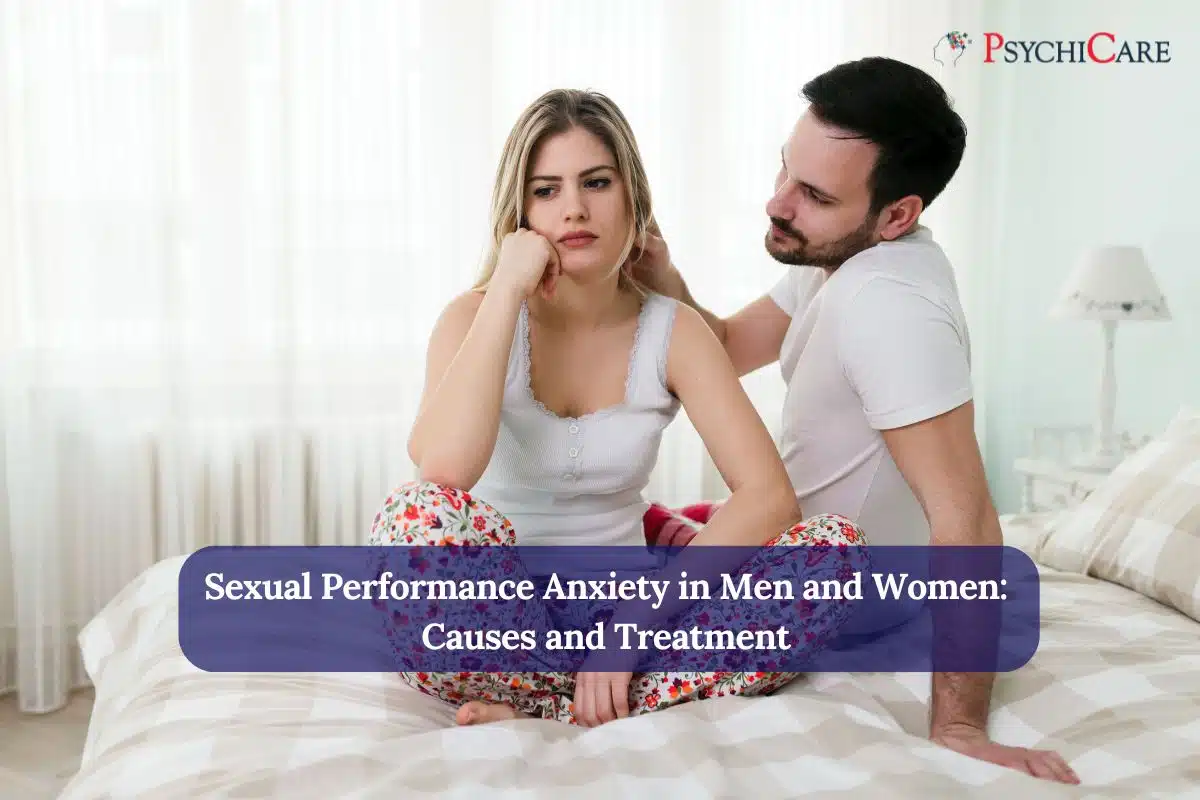
Sexual performance anxiety is a common issue that affects people of all genders and ages. It refers to the anxiety, fear, or pressure someone feels about their sexual performance before or during sex. This anxiety can interfere with desire, arousal, erection, lubrication, orgasm, and overall sexual satisfaction.
This is not a rare problem. Studies show that:
- 1 in 3 men experience sexual performance anxiety at some point in their lives.
- Up to 40 percent of women report anxiety about sexual performance, comfort, or body response.
- In India, sexual performance concerns are one of the top three issues discussed in online sex therapy sessions.
- In the United States, performance anxiety is frequently linked with stress, porn exposure, and pressure to perform.
- Globally, performance anxiety is commonly seen in both long-term relationships and new sexual relationships.
Sexual performance anxiety can happen for many reasons. Some worry about lasting long enough. Some fear losing an erection. Some struggle with arousal or orgasm. Others are concerned about their body, experience level, or whether they are satisfying their partner. When this pressure builds, the body responds by shutting down sexual response, leading to more anxiety the next time.
This does not mean there is something wrong with you. It means your mind and body are reacting to stress. With the right understanding and approach, sexual performance anxiety is highly treatable. Many people are able to restore confidence, pleasure, and connection in their sex life.
What Is Sexual Performance Anxiety?
Sexual performance anxiety is a psychological and physical response where stress or worry interferes with sexual activity. A person may want to have sex and may feel desire, but the fear of not performing well takes over. This creates tension in the body and disrupts natural sexual response.
This condition is recognised in clinical psychology and sex therapy. It is real, common, and treatable. It is sometimes referred to as:
- Sexual Performance Anxiety Disorder
- Performance Anxiety During Sex
- Performance Anxiety in Bed
Sexual performance anxiety can happen:
- Before sex (anticipatory worry)
- During sex (overthinking, body tension)
- After sex (self-criticism, embarrassment)
What Sexual Performance Anxiety Can Feel Like
Many people describe:
- Feeling nervous or tense before sex
- Racing thoughts during intimacy
- Worry about erection, orgasm, or lasting long enough
- Disconnection from pleasure and sensation
- Feeling judged, even in a loving relationship
Some people say:
“I’m in my head instead of in my body.”
“The harder I try to perform, the worse it gets.”
Is Sexual Performance Anxiety the Same as Erectile Dysfunction?
Not always.
- If the mind is anxious, the body often loses arousal or erection, even when desire exists.
- This is called performance anxiety ED, and it is reversible.
- Erectile dysfunction caused by medical conditions (like diabetes or hormonal issues) has a different pattern.
Many men worry, Is this ED or anxiety?
A simple way to tell:
If erection is fine during masturbation or waking up | Likely anxiety-based
If erection is rarely present in any situation | May be physical or medical
For women, sexual performance anxiety can show up as:
- Difficulty getting aroused
- Vaginal dryness despite wanting intimacy
- Trouble reaching orgasm
- Feeling mentally “shut down” during sex
This is known as female sexual performance anxiety, and it is also treatable.
Key Point
Sexual performance anxiety is not a character flaw and it is not about attractiveness or love. It is a stress response, and stress responses can change with the right approach.
Causes of Sexual Performance Anxiety
Sexual performance anxiety does not come from one single reason. It develops when the mind begins to connect sex with pressure, judgement, or the fear of doing something “wrong.” Here are the most common causes seen in both men and women.

1. Pressure to Perform Well
Many people feel they need to be “good at sex.”
This pressure often comes from:
- Pornography comparison
- Cultural expectations
- Belief that sex must look a certain way
- Fear of being judged or criticised
The more someone tries to control or “perform,” the more the body becomes tense, which interferes with natural arousal.
2. Worry About Erection, Orgasm, or Arousal
Men often worry about:
- Losing or not being able to get an erection
- Lasting long enough
- Satisfying their partner
This is where sexual performance anxiety and erectile dysfunction often overlap.
If anxiety is the primary cause, erection may work fine during masturbation or waking up, but become difficult during partnered sex.
Women may worry about:
- Getting aroused quickly enough
- Pain or discomfort
- Reaching orgasm
This is known as female sexual performance anxiety, and it is just as common.
3. Past Negative Experiences
A single uncomfortable sexual experience can change how someone feels the next time.
For example:
- A previous partner’s comment
- A moment of unexpected difficulty
- A first sexual experience that felt stressful
This can create what is known as a sexual performance anxiety cycle:
Worry → Tension → Difficulty → Embarrassment → More worry next time
4. Mental Health and Stress
Conditions like:
- Anxiety disorders
- Depression
- ADHD
- OCD
- Stress from work or daily life
can increase stress levels in the body and interfere with sexual response.
Many people with ADHD and sexual performance anxiety report that overthinking during sex makes staying present difficult.
5. Relationship Dynamics
Feeling emotionally distant, misunderstood, or pressured in a relationship can increase sexual anxiety.
Some people fear:
- Disappointing their partner
- Being compared to previous partners
- Losing closeness if sex is “not good enough”
This turns intimacy into a test instead of a shared experience.
6. Physical Health Factors
While sexual performance anxiety is primarily psychological, physical issues such as:
- Hormonal changes
- Pain conditions
- Medication side effects
- Sleep and lifestyle factors
can contribute to arousal difficulty and increase self-awareness during sex.
Symptoms of Sexual Performance Anxiety
Sexual performance anxiety shows up in both the mind and the body. A person may want to have sex, feel attracted, and care for their partner, yet their body does not respond in the way they expect. This can happen suddenly or gradually.
Below are the most common signs.
Emotional and Mental Symptoms
- Overthinking before or during sex
- Fear of being judged or disappointing a partner
- Feeling pressure to “perform” instead of enjoy
- Loss of interest in sex because of worry
- Feeling disconnected during intimacy
- Avoiding sex or making excuses to prevent intimacy
- Self-criticism or replaying past sexual experiences in your head
People often describe it as:
“My mind is racing. I’m not in my body. I can’t relax.”
Physical Symptoms in Men
Men may experience:
- Difficulty getting or keeping an erection
- Difficulty ejaculating or ejaculating too quickly
- Loss of erection during sex
- Tightness in the chest, stomach discomfort, or shaking before sex
- Feeling numb or unable to feel pleasure during sex
This is where sexual performance anxiety and erectile dysfunction overlap.
If erections are fine during masturbation or waking up, but difficult during partnered sex, the cause is most likely anxiety, not a physical disorder.
In some cases, anxiety can also trigger:
- Premature ejaculation
- Difficulty maintaining rhythm or arousal
- Brief loss of erection during penetration
This is known as performance anxiety ED, and it is reversible with the right approach.
Physical Symptoms in Women
Women may experience:
- Difficulty getting aroused even when mentally interested
- Vaginal dryness or discomfort due to tension
- Difficulty reaching orgasm
- Shallow breathing or sudden emotional shutdown during sex
- Feeling mentally “absent” despite wanting closeness
This is often referred to as female sexual performance anxiety.
Behavioural Signs
- Avoiding deep kissing or touching to prevent sex from starting
- Only wanting sex in certain positions where less of the body is seen
- Needing alcohol or substances to relax before sex
- Feeling guilt or shame after intimacy
Over time, anxiety can create a loop:
Stress → Performance difficulty → Embarrassment → More stress next time
This cycle is common and treatable.
How Sexual Performance Anxiety Affects the Relationship
Sexual performance anxiety does not only affect the sexual moment. It can influence how partners connect, communicate, and feel about themselves and each other. When anxiety shows up in intimacy, it can slowly begin to shape the relationship in ways that may feel confusing or emotionally difficult.

Emotional Distance
When sex begins to feel stressful instead of enjoyable, many people start to withdraw emotionally. You may care deeply about your partner but still feel a need to pull away because intimacy has become associated with pressure or worry. This distance is often misunderstood by the partner as rejection, lack of attraction, or loss of interest, even when the emotional bond is strong.
Miscommunication and Assumptions
If sexual anxiety is not discussed openly, both partners may start to make assumptions.
For example:
- One partner may think, “I am not attractive enough.”
- The other may think, “I am letting them down.”
Neither of these thoughts is usually true. The issue is anxiety, not love or desire. However, without communication, misunderstandings can grow.
Fear of Starting Intimacy
Some people begin avoiding situations that could lead to sex. This may look like:
- Ending evenings earlier than usual
- Avoiding physical closeness
- Staying busy to avoid private moments
The partner may feel confused, while the person experiencing anxiety may feel guilty. This can lead to frustration on both sides.
Loss of Confidence
Sexual performance anxiety can impact how a person sees themselves.
It may lead to:
- Feeling less confident in the relationship
- Self-doubt or shame
- Believing the issue makes them inadequate
This can create a quiet emotional strain that grows over time.
In Relationships That Are Otherwise Strong
It is important to say clearly:
You can have a loving, healthy, committed relationship and still struggle with sexual performance anxiety.
The issue is not about attraction, affection, or compatibility. It is about the nervous system and the pressure associated with sexual performance. When the pressure is removed and safety is restored, intimacy usually improves naturally.
Causes of Sexual Performance Anxiety in Men and Women
Sexual performance anxiety develops when the mind begins to associate sex with pressure instead of connection and pleasure. A person may want to have sex, feel desire, and care for their partner, but the fear of “not doing well enough” overrides the body’s natural sexual response.
There is no single cause. Most people experience sexual performance anxiety for more than one reason.
1. Pressure to Perform During Sex
Sex is often treated like something that must be “done correctly.”
This pressure can come from:
- Pornography comparisons
- Past sexual expectations
- Cultural ideas about masculinity or femininity
- Belief that orgasm or erection must happen perfectly every time
In India, men commonly report a fear of losing an erection or ejaculating too quickly, while women often report pressure to be responsive, confident, and orgasm easily.
In the US, anxiety is often linked with porn expectations and comparison to “ideal” bodies or performance.
This pressure activates the body’s stress response, which blocks arousal.
2. Fear of Sexual Difficulty or Failure
Many people worry they might:
- Not get aroused
- Lose erection during sex
- Take too long to orgasm
- Orgasm too quickly
- Not satisfy their partner emotionally or physically
This can cause:
- Sexual performance anxiety and erectile dysfunction
- Sexual performance anxiety and premature ejaculation
- Loss of desire or shutdown during sex
The fear becomes self-fulfilling: the more you try to control your body, the less it responds.
3. Past Sexual or Emotional Experiences
A previous experience that felt embarrassing, painful, or disappointing can affect future sexual confidence.
Examples include:
- A partner making a comment about performance or body
- A failed attempt that felt shameful
- A first sexual experience that felt rushed or stressful
One bad moment can lead to a sexual performance anxiety cycle:
Stress → Difficulty → Shame → Avoidance → More stress next time
4. Anxiety, OCD, ADHD and Overthinking
Sex requires presence. Anxiety, ADHD, and OCD can cause the mind to become overactive during sex.
This looks like:
- Thinking instead of feeling
- Analysing every sensation
- Monitoring yourself or your partner’s reactions
- Focusing on “doing it right” rather than connecting
This leads to mind-body disconnect, making arousal difficult.
5. Body Image and Self-Esteem
Feeling unsure about:
- Weight
- Muscle tone
- Genital appearance
- Facial expression or movements during sex
can create self-consciousness that blocks arousal.
Many men think their body or penis must look or perform a certain way.
Many women feel pressure to appear confident, sexually responsive, or “beautiful” while having sex.
This self-watching prevents natural pleasure.
6. Relationship Tension or Emotional Stress
If communication is strained, unresolved arguments are present, or emotional connection has weakened, sexual experiences may trigger anxiety.
Even in loving relationships, fear of disappointing a partner can become overwhelming.
7. Lifestyle and Physical Health Factors
Sleep, stress levels, alcohol use, medications, and hormonal shifts can also affect arousal.
However, these factors do not cause anxiety, they simply increase the vulnerability to it.
How Sexual Performance Anxiety Affects the Body (The Mind-Body Cycle)
Sexual response is not controlled by willpower. It is controlled by the nervous system. When the mind feels safe, relaxed, and connected, the body is able to respond with arousal, erection, lubrication, and orgasm. When the mind feels pressure or threat, the nervous system shifts into protection mode, which shuts down sexual response.
This is a biological survival process, not a personal failure.
The Stress Response
When someone feels nervous about sex, the brain activates the body’s fight-or-flight system. The body interprets the situation as stressful rather than pleasurable.
This releases stress hormones like adrenaline and cortisol, which:
- Increase heart rate
- Tighten muscles
- Reduce blood flow to sexual organs
- Interrupt arousal signals
When this happens:
- For men, erection may not happen or may fade quickly
- For women, arousal and lubrication may decrease, and orgasm becomes difficult
This is why trying harder makes the problem worse.
The more you try to force your body to respond, the more the stress response increases.
The Sexual Performance Anxiety Cycle
| Thought | Body Response | Sexual Effect |
| “What if I can’t perform?” | Tension increases | Arousal drops |
| “I need to fix this.” | Stress rises further | Erection or lubrication decreases |
| “I’m failing.” | Shame kicks in | Pleasure shuts down |
The cycle repeats the next time, making anxiety stronger.
This is known as the sexual performance anxiety loop.
Why You May “Shut Down” Even When You Want Sex
Many people say:
“I want to have sex, but my body won’t cooperate.”
This happens because desire is emotional, but arousal is physical.
If the emotional system is stressed, the physical system cannot respond.
Why It Feels Worse With a New Partner
New sexual situations come with:
- Higher uncertainty
- Fear of impression
- Desire to prove oneself
This is why sexual performance anxiety with a new partner is extremely common, even in confident people.
Why Alcohol Sometimes Seems to Help (and Why It Often Makes It Worse)
Alcohol reduces the thinking mind temporarily, which may lower anxiety for some people.
However:
- It weakens erection response
- Reduces sensation
- Increases chances of sexual difficulty
Over time, reliance on alcohol creates more anxiety, not less.
Key Point
Your body is not “failing.”
It is responding to pressure.
When pressure reduces, the body can return to natural sexual function.
How to Overcome Sexual Performance Anxiety
Sexual performance anxiety improves when we shift the focus from performance to connection and help the nervous system return to a relaxed state. The goal is not to “force” the body to respond, but to remove the pressure that is blocking your natural sexual response.
Below are practical, evidence-based strategies used in sex therapy to treat sexual performance anxiety for both men and women.

1. Slow Down and Focus on Sensation, Not Performance
Sex is not something you perform. It is something you experience.
When a person starts thinking about how they are doing, how they look, or what might happen next, the brain leaves the body. Intimacy becomes mental effort instead of physical connection.
What to do instead:
- Notice touch, warmth, breath, and body contact
- Stay in the moment rather than trying to predict outcomes
- Let go of “goals” like erection, orgasm, or lasting long enough
When the mind shifts from control to contact, the body responds more naturally.
2. Breathing and Relaxation Techniques
Your nervous system determines your sexual response. If the nervous system is tense, sexual response shuts down. Deep breathing helps reverse the stress response.
Simple breathing exercise to use before or during sex:
- Inhale slowly for 4 seconds
- Hold for 1 second
- Exhale slowly for 6 seconds
Repeat for 2 to 3 minutes.
This:
- Reduces heart rate
- Lowers stress hormones
- Helps erections, arousal, and lubrication return
This is an effective breathing exercise for sexual performance anxiety and is used in CBT-based sex therapy.
3. Stop Monitoring Your Body During Sex
Constantly checking:
- “Am I hard?”
- “Am I wet?”
- “Am I lasting long enough?”
- “Do they like this?”
triggers anxiety instead of arousal.
Try focusing on:
- Touch
- Temperature
- Rhythm
- Pleasure
- Sound
- Connection
This shifts the brain out of performance mode.
4. Start With Non-Sexual Physical Intimacy
If sex has been stressful, intimacy may need to be rebuilt gently.
Spend 2 to 3 days focusing on:
- Kissing
- Holding
- Touching
- Lying together
- Massage
- Eye contact
with no goal of sex.
This retrains the brain to associate touch with comfort, not pressure.
This technique is known as sensate focus and is one of the most effective methods for how to treat sexual performance anxiety in both men and women.
5. Communicate Openly With Your Partner
Keeping anxiety secret increases pressure.
Talking about it reduces it.
You do not need to explain everything.
A simple sentence can change the entire emotional atmosphere of intimacy:
“Sometimes I get anxious during sex, and I’m working on it. It doesn’t mean I don’t want you.”
This turns sex from a test into a shared experience, which is where healing begins.
6. Mindfulness and Body Awareness Exercises
Mindfulness helps break the sexual performance anxiety cycle by bringing awareness back to the body.
Examples:
- Guided imagery
- Pelvic floor relaxation
- Mindful touch
- Movement-based grounding
These approaches help reduce overthinking during sex.
There are also sexual performance anxiety apps and guided meditations that support this.
I can recommend specific ones if you’d like.
7. When to Consider Therapy
If anxiety repeats, becomes frequent, or causes emotional distance in the relationship, speaking with a therapist who understands sexual performance anxiety is helpful.
Therapy can support you with:
- Understanding the cause
- Rebuilding confidence
- Reducing overthinking
- Improving communication with your partner
- Re-establishing natural sexual response
Therapies that work well include:
- Cognitive Behavioural Therapy (CBT) for sexual performance anxiety
- Mindfulness-based sex therapy
- EMDR when past experiences are involved
- Hypnotherapy for automatic anxiety responses
These are evidence-based treatments used in India, the US, UK, and globally.
8. Medication and Supplements (Used Carefully)
Some people consider medication when anxiety is very high.
Options sometimes used:
- Propranolol for sexual performance anxiety (reduces adrenaline response)
- Buspirone and SSRIs in cases of chronic anxiety
- Viagra / Cialis when erection pressure is a main concern
These can help temporarily, but they do not solve the root cause.
Herbal support that some people find useful:
- Ashwagandha
- L-theanine
- Magnesium glycinate
Avoid relying on alcohol, which worsens performance long term.
If you want, I can create a safe medication guidance section (not prescriptive, but educational).
9. The Most Important Principle
You do not fix sexual performance anxiety by trying harder.
You fix it by reducing pressure and restoring connection, safety, and presence.
When stress goes down, sexual response returns.
Overcoming Sexual Performance Anxiety in Men and Women
Sexual performance anxiety does not show up the same way for everyone. Men and women tend to experience different worries, pressures, and physical responses. Understanding these differences helps in choosing the right approach.
Sexual Performance Anxiety in Men
For many men, sexual performance anxiety often centres around erection, stamina, and orgasm control.
The fear usually sounds like:
- “What if I lose my erection?”
- “What if I finish too quickly?”
- “What if I can’t satisfy my partner?”
- “What if this happens again?”
This pressure activates the body’s stress response, which interferes directly with erection, causing:
- Performance anxiety ED (erection difficulties that are anxiety-based)
- Premature ejaculation linked to tension and overthinking
- Avoidance of intimacy due to fear of repetition
How Men Can Reduce Sexual Performance Anxiety
- Shift away from performance goals
Do not measure intimacy by erection quality, stamina, or orgasm outcome.
Focus on connection, rhythm, movement, and shared pleasure instead.
- Use the slow-breathing technique before sex
This reduces adrenaline, which is the hormone that blocks erection.
- Practice physical intimacy without intercourse
This helps break the anxiety loop and rebuild confidence.
- Stop checking your erection
The more you monitor it, the faster it disappears.
- If needed, combine therapy with temporary medical support
Some men benefit from:
- Cialis or Viagra for confidence reset
- Propranolol to reduce adrenaline
- CBT or sex therapy to retrain the response long-term
- Medication helps reduce anxiety, but therapy resolves the cause.
Many men report improvement within a few weeks once pressure reduces.
Sexual Performance Anxiety in Women
Women experience sexual performance anxiety too, though it is discussed less.
Female sexual anxiety often centres around:
- Worry about being “sexy enough”
- Fear of not becoming aroused fast enough
- Difficulty reaching orgasm
- Concern about vaginal dryness or discomfort
- Feeling mentally disconnected during sex
These concerns can cause:
- Reduced desire
- Difficulty with arousal
- Feeling distracted during intimacy
- Tension in the pelvic floor muscles
How Women Can Reduce Sexual Performance Anxiety
- Slow down physical intimacy
Arousal in women increases gradually. Rushing increases stress and physical tension.
- Use “body-first” arousal
Start with touch, warmth, eye contact, breath, and closeness before genital stimulation.
- Communicate silently through touch
You do not need to speak extensively.
Slow, intentional movement tells the nervous system it is safe.
- Practice pelvic floor relaxation
Many women grip or tense the pelvic muscles during anxiety.
Releasing this tension increases natural lubrication and pleasure.
- Let go of orgasm as the “goal”
Orgasm is a response to pleasure, not a task.
Women regularly experience significant improvement when the emotional environment becomes relaxed, accepting, and pressure-free.
When Sexual Performance Anxiety Happens With a New Partner
This is extremely common.
New situations increase:
- Self-awareness
- Comparison
- Desire to impress
- Fear of judgment
The solution is not to rush into intercourse.
A few sessions of slow kissing, touch, breathing, and closeness without goals helps the body feel safe again.
If Your Partner Has Sexual Performance Anxiety
What to avoid:
- Pressure
- “It’s okay” said repeatedly in a pitying tone
- Taking it personally
What helps:
- Slow pace
- Non-sexual touch
- Curiosity instead of criticism
- Gentleness, not reassurance speeches
A simple, supportive line:
“We can go at a pace that feels comfortable for both of us. We don’t need to make anything happen.”
This reduces internal pressure instantly.
Final Thoughts
Sexual performance anxiety is common, and it affects both men and women in every age group and culture. It does not mean there is something wrong with you, your desire, your attraction, or your relationship. It simply means your mind and body are reacting to pressure. Once that pressure is reduced, your natural sexual response can return.
If this has been affecting your confidence or your relationship, remember that it is treatable. With the right understanding, pacing, communication, and emotional support, most people see steady and lasting improvement. You do not have to manage this alone, and you do not have to force your body to respond. Change happens by creating safety, not pressure.
If sexual performance anxiety has been causing stress, disconnection, or avoidance, speaking with a therapist who understands sexual concerns can be very helpful. Therapy provides a private, non-judgmental space to rebuild confidence and restore comfort in your sex life.
Frequently Asked Questions
1. Is sexual performance anxiety a real condition?
Yes. Sexual performance anxiety is recognised in clinical psychology as a real and treatable condition. It can affect arousal, erection, lubrication, and orgasm, even when attraction and desire are present.
2. What causes sexual performance anxiety?
Common causes include performance pressure, past sexual experiences, stress, body image concerns, relationship tension, and overthinking during sex. Conditions like anxiety disorders, ADHD, and OCD can also contribute.
3. Can sexual performance anxiety cause erectile dysfunction or premature ejaculation?
Yes. When the nervous system is stressed, it reduces blood flow to sexual organs. This can lead to difficulty maintaining an erection or ejaculating more quickly. This is known as performance anxiety ED or anxiety-induced premature ejaculation, and both are reversible.
4. How can I stop sexual performance anxiety quickly?
Slow breathing, reducing mental focus on performance, starting with non-sexual touch, and avoiding goal-oriented sex are the fastest short-term relief methods. Long-term improvement often comes from therapy or guided practice to break the anxiety cycle.
5. Does medication help with sexual performance anxiety?
Medication can help reduce physical anxiety responses. Some people use:
- Propranolol or beta blockers to reduce adrenaline
- Viagra or Cialis to support erection stability
- SSRIs or Buspirone for long-term anxiety management
Medication can help temporarily, but therapy resolves the root cause.
6. Does alcohol help sexual performance anxiety?
Alcohol may lower anxiety briefly, but it also reduces arousal and erection response. Regular use increases anxiety and performance problems over time. It is not a helpful long-term solution.
7. Does hypnotherapy or mindfulness help?
Yes. Hypnotherapy, mindfulness, and guided meditation can reduce the nervous system’s stress response. These approaches help bring the body back into a relaxed, receptive state during intimacy.
8. Can sexual performance anxiety be cured?
Yes. Most people can recover fully with the right approach. When pressure reduces and the nervous system relearns safety during intimacy, sexual confidence and natural physical response return.
| Rating | |
| SUMMARY | 5.0 |